Mascoutin Valley State Trail: Ripon to Berlin (West)
The western section of the Mascoutin Valley State Trail offers a pleasant ride through the countryside. Along the route, bicyclists experience a landscape of farm fields, hardwood forests, and low marshlands. These wetland areas are spotted with lakes and ponds, with reeds and cattails growing along their edges. Wooded hills and ridges rise in the distance. Trailheads and park benches along the way provide places to relax and enjoy the view.
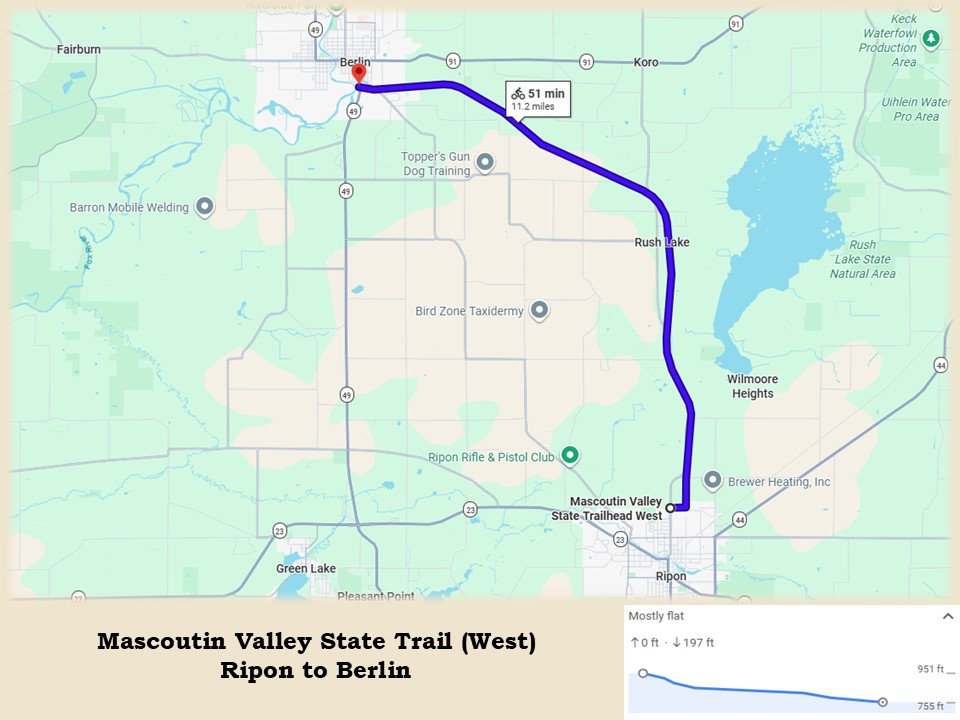
The Mascoutin Valley State Trail’s western segment travels 11.2 miles from Ripon to Berlin on an abandoned corridor of the Chicago, Milwaukee, St. Paul, and Pacific Railroad. The former Milwaukee Road line now serves trail-goers, as they journey through Fond du Lac, Winnebago, and Green Lake Counties. The surface of the path is crushed limestone, in very good condition in Fond du Lac and Winnebago Counties. The path’s surface changes drastically in Green Lake County. The condition of the trail over the last three miles is poor, having not been sufficiently groomed as in the other two counties.
The elevation along the entire trail decreases nearly 200 feet, creating a comfortable ride from Ripon to Berlin. A grassy path for horseback riders parallels the trail in certain places. However, equestrians are permitted full use of the Mascoutin Valley State Trail in Fond du Lac and Winnebago Counties. When meeting horseback riders going the opposite direction, bicyclists are advised to stop and allow them to pass. When overtaking horseback riders, it is recommended they pause to allow bicyclists to walk their bicycles by them. The desire is not to startle the equine. Horseback riding is prohibited in Green Lake County.
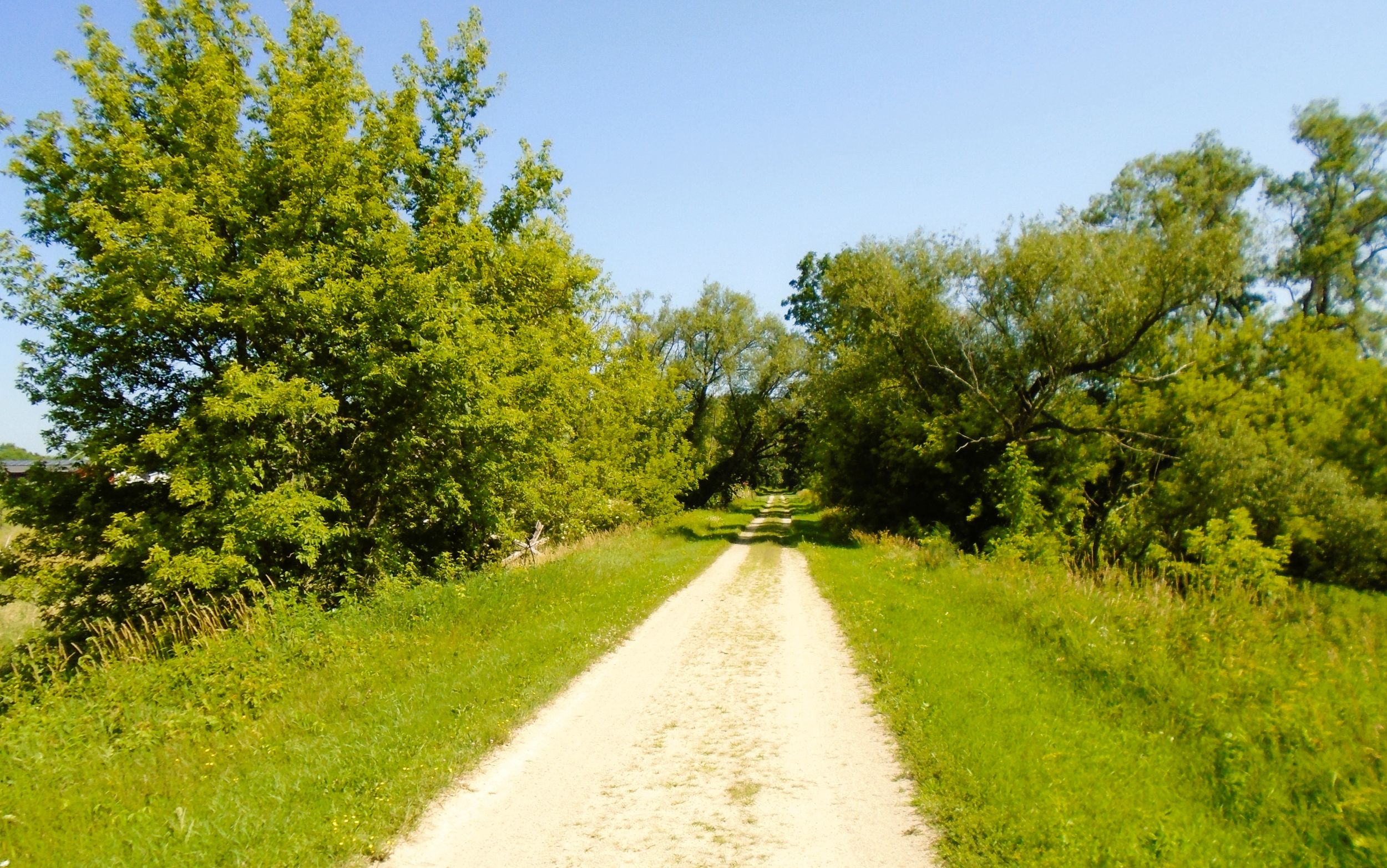
This section of the Mascoutin Valley State Trail begins in Ripon on the east side of County Highway E (Eureka Street). There are no facilities there. The closest place to park is at nearby Elizabeth Murray Park on Murray Park Drive. To reach the park by car, turn north onto Mayparty Drive from Wisconsin State Highway 44 (Oshkosh Street). Drive 0.2 mile and turn right (east) on Murray Park Drive. Follow the road as it turns left and goes north. Parking is available by the senior center, which has drinking water and restrooms. Another parking lot is located a little further north by the softball diamonds.
An obscure and rustic trail departs Murray Park Drive by the softball complex and goes east 0.3 mile to County Highway E (Eureka Street) and the Mascoutin Valley State Trail. This shortcut path is not well-groomed and is bumpy. Yet, it provides easy access to the trail. On the east side of County Highway E (Eureka Street), the Mascoutin Valley State Trail begins.
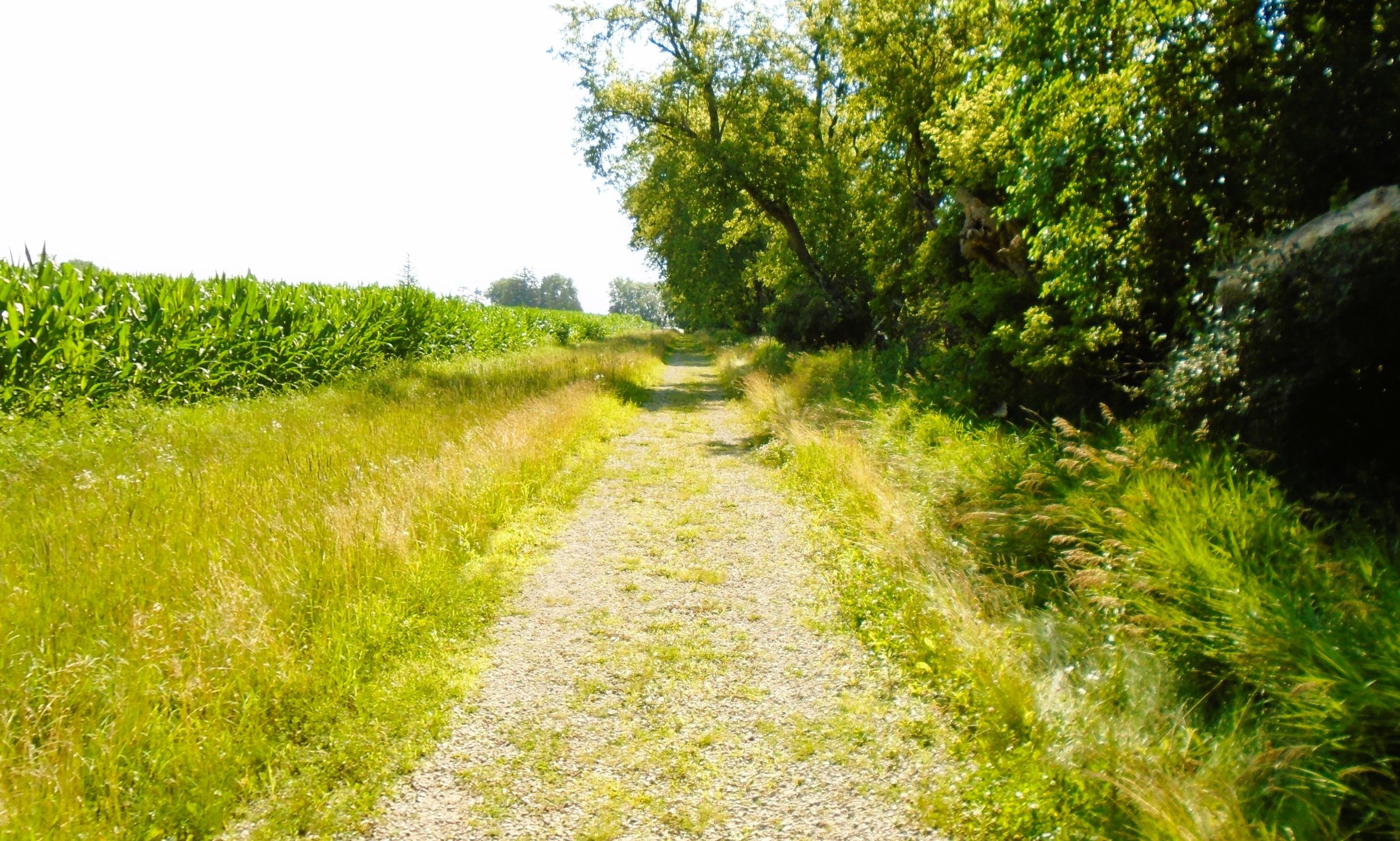
The trail travels east from the road between family residences and by farmfields. After 0.3 mile, it turns left (north) by a large factory. It advances past more farmfields for a half mile and crosses Locust Road. A trailhead is on the north side of the road. It has a parking lot, picnic shelter, and park benches. The trailhead is reached by car from County Highway E, north of Ripon. Turn right (east) on Locust Road, and drive 175 yards to the parking lot.
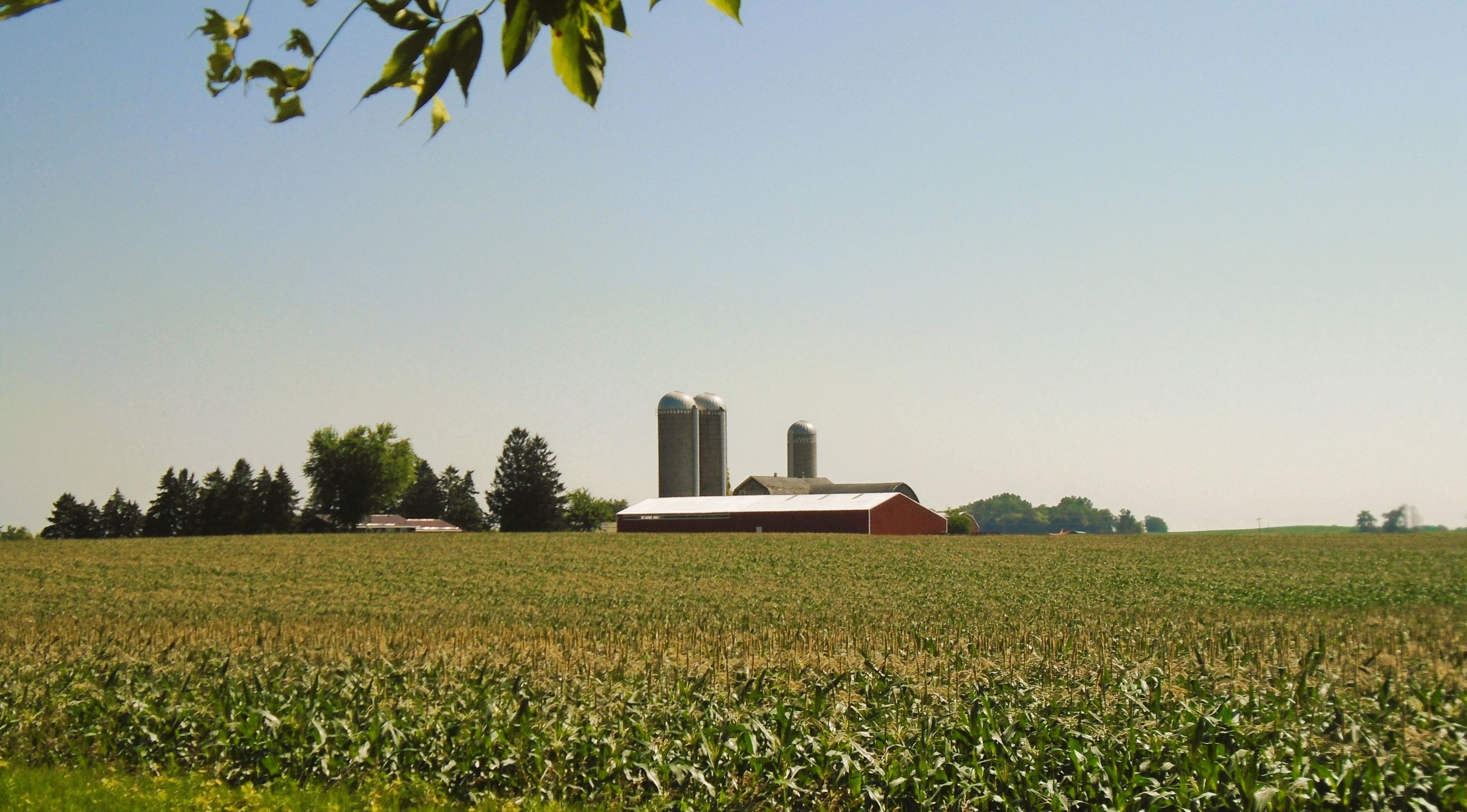
The Mascoutin Valley State Trail continues north from the trailhead next to County Highway E. While the road is visible from the trail at some places, trees and bushes line the path and hinder the view. The trail advances through fertile farm country. It is one mile to Cork Street Road, another 0.8 mile to Rich Road, and a short 0.3 mile to Tri-County Road. Here, the trail departs Fond du Lac County and enters Winnebago County.
It is a half mile to a second crossing of Rich Road. A third of a mile further north, Vines and Rushes Winery appears to the left (west). A sign and park bench mark the spur trail that leads a short distance to their building. The winery has a tasting area and fireside room, where visitors enjoy a selection of wine or cider. A strawberry and grape wine named Wiskonsan is very popular. The name comes from an alternate spelling of the state, courtesy of James Doty, the first governor. Their dining room features an Italian-made brick oven. Many cyclists park at the winery, bike on the trail, and return for pizza and a glass of wine.
Back on the Mascoutin Valley State Trail and heading north, the landscape changes from farmland to lowland forests and vast wetlands. While it is difficult to see through the trees and bushes, Rush Lake appears off in the distance to the right (east). Vistas of the reed-filled marshes surrounding the lake appear amidst clearings in the tree-lined trail for nearly three miles. This lake is over 2700 acres, with a maximum depth of only five feet. It is part of the largest prairie pothole marsh found east of the Mississippi River. The low wetlands provide magnificent views of vegetation and waterfowl, especially in the autumn.
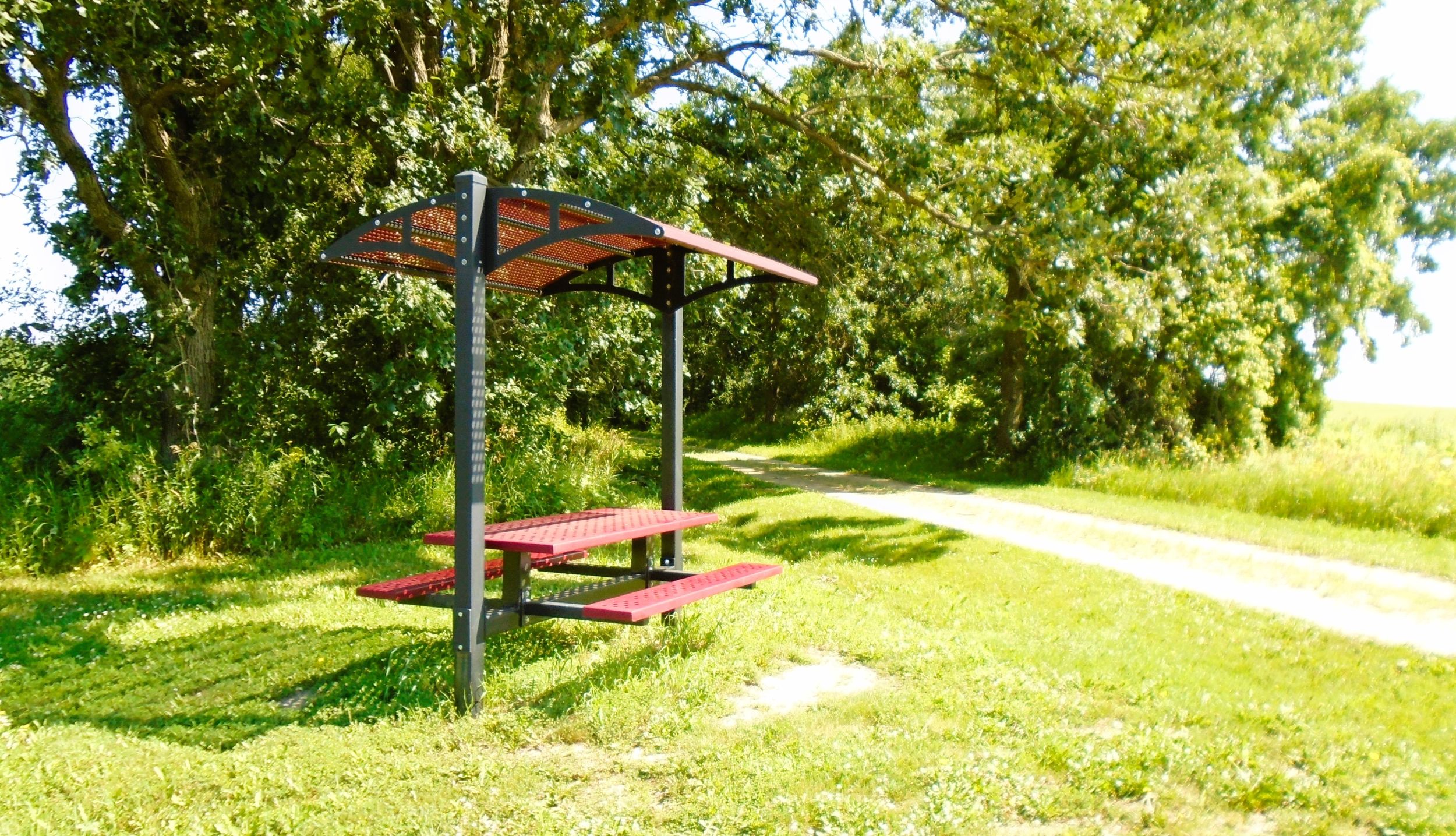
The community of Rush Lake sits on the left (west) side of the trail. A small trailhead is located there. It has self-service bicycle repair station, picnic tables, and park benches. Parking is available on a grassy lot. Because the Mascoutin Valley State Trail is open to horseback riding in Winnebago and Fond du Lac Counties, horse trailers frequently park in this lot. To reach the Rush Lake trailhead by car, turn east on Loop Road at its intersection with County Roads E and V. Drive a short distance to the parking area.
On the north side of the small hamlet of Rush Lake, the trail crosses Lake Road. Roadside parking for trail-goers is available there. After this intersection, the path begins a gradual turn to the northwest. The gradual bend occurs over 0.6 mile and concludes at the junction with County Highway E. From there, the trail continues to the northwest. It gradually descends downhill into the Prellwitz/Hein Glacial Habitat Restoration Area.
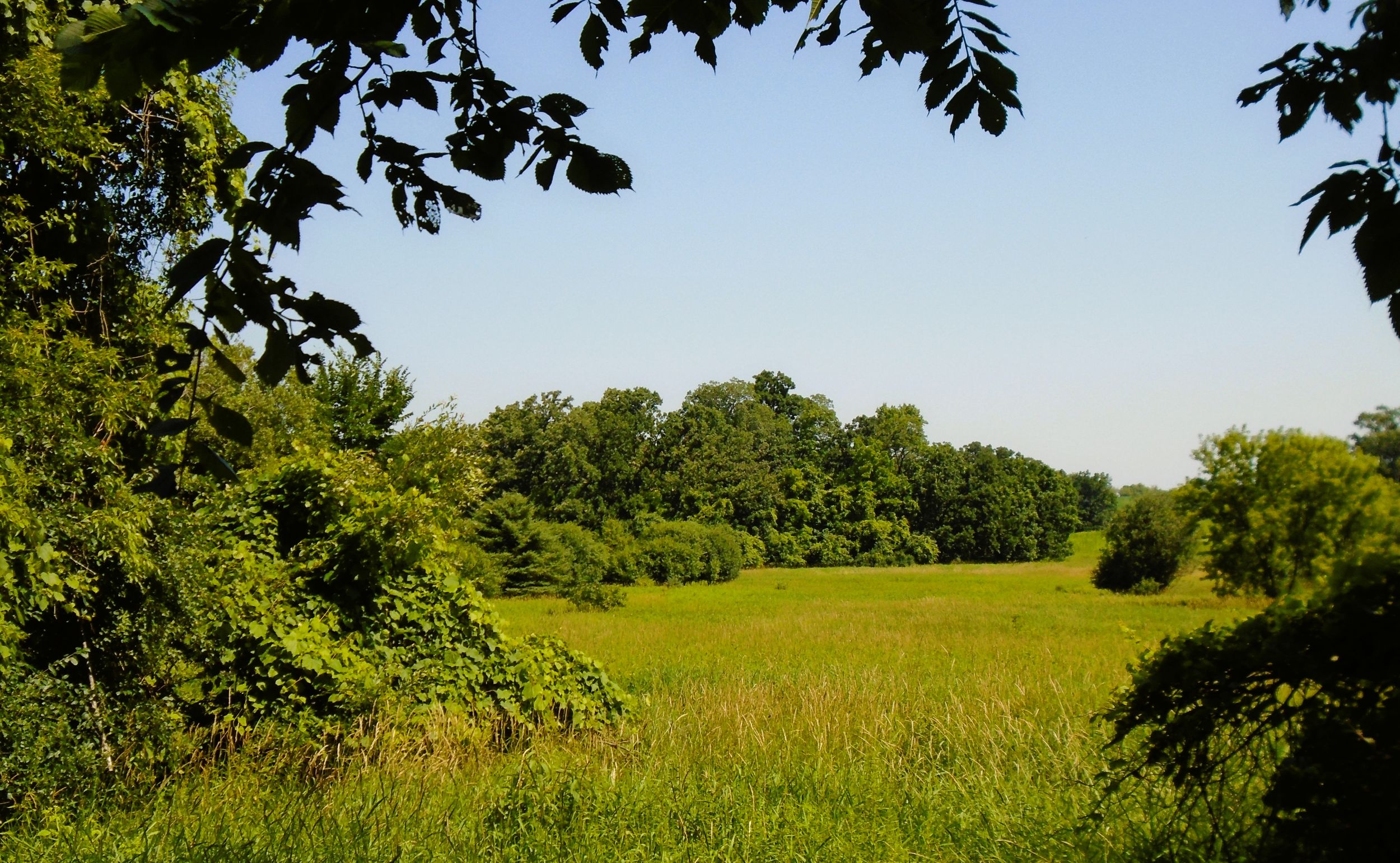
This preserved wildlife area was created to restore and maintain habitat for waterfowl, pheasants, and songbirds. Other restoration areas are found in Columbia, Dodge, Fond du Lac, and Winnebago Counties. Within the preserve, the trail traverses a causeway past a series of lakes, ponds, and marshes. Waterfowl flourish here and are seen in abundance, especially in the autumn. An interpretative sign, picnic table, and park bench lure bicyclists into pausing to enjoy the scenery. Trail-goers are reminded to watch out for the abundance of bird droppings that cover the path throughout this area.
After ascending out of the wetlands area and crossing Meadow Brook Road, the trail travels a half mile through Koro Railroad Prairie State Natural Area. This small stretch of prairie alongside the trail contains many species of native plants and grasses, such as big bluestem, New Jersey tea, prairie dock, and stiff goldenrod. In the past, the historic railroad line preserved the prairie due to frequent fires sparked by passing locomotives. Koro Prairie is owned by Winnebago County and was designated a State Natural Area in 1990.
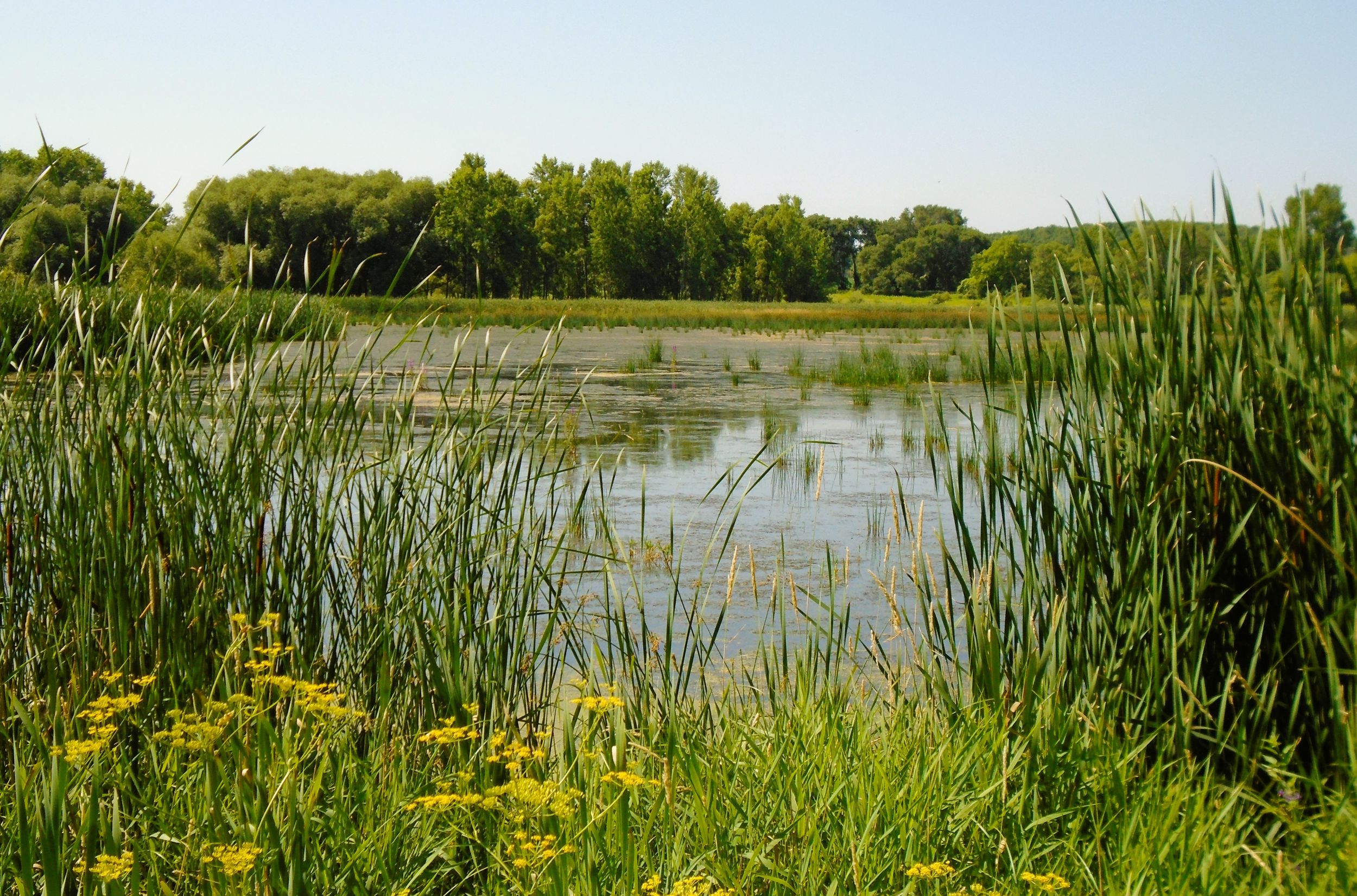
For the next 2.4 miles, the Mascoutin Valley State Trail travels uninterrupted through hardwood forests and marshland. Rolling farmland is visible in the distance. In this section, welcome signs greet trail-goers to Green Lake County, and indicate that horseback riding is prohibited on the trail there. The condition of the trail changes as it enters the new county. The path’s wide surface of crushed limestone narrows and turns to compacted earth. Also, vegetation has not been trimmed away from the trail’s edge, creating a more constricted ride.
At the intersection with Willard Road, the Berlin Fen State Natural Area is visible to the right (north). Noted experts on fens provide this definition of the unique landform, “Fens are peat-forming wetlands that rely on groundwater input and require thousands of years to develop and cannot easily be restored once destroyed. Fens are also hotspots of biodiversity. They often are home to rare plants, insects, and small mammals” (Weixelman & Cooper, 2009). This peat-filled swamp is filled with rivulets, and flooding frequently occurs there.
The fen can be easily missed due the distracting landfill mounds and facility of Waste Managment, Inc. on the left (south) side of the trail at Willard Road. On the west side of the landfill, trail-goers may experience a pungent aroma from another nearby company that converts grease and cooking oil into reusable fuel.
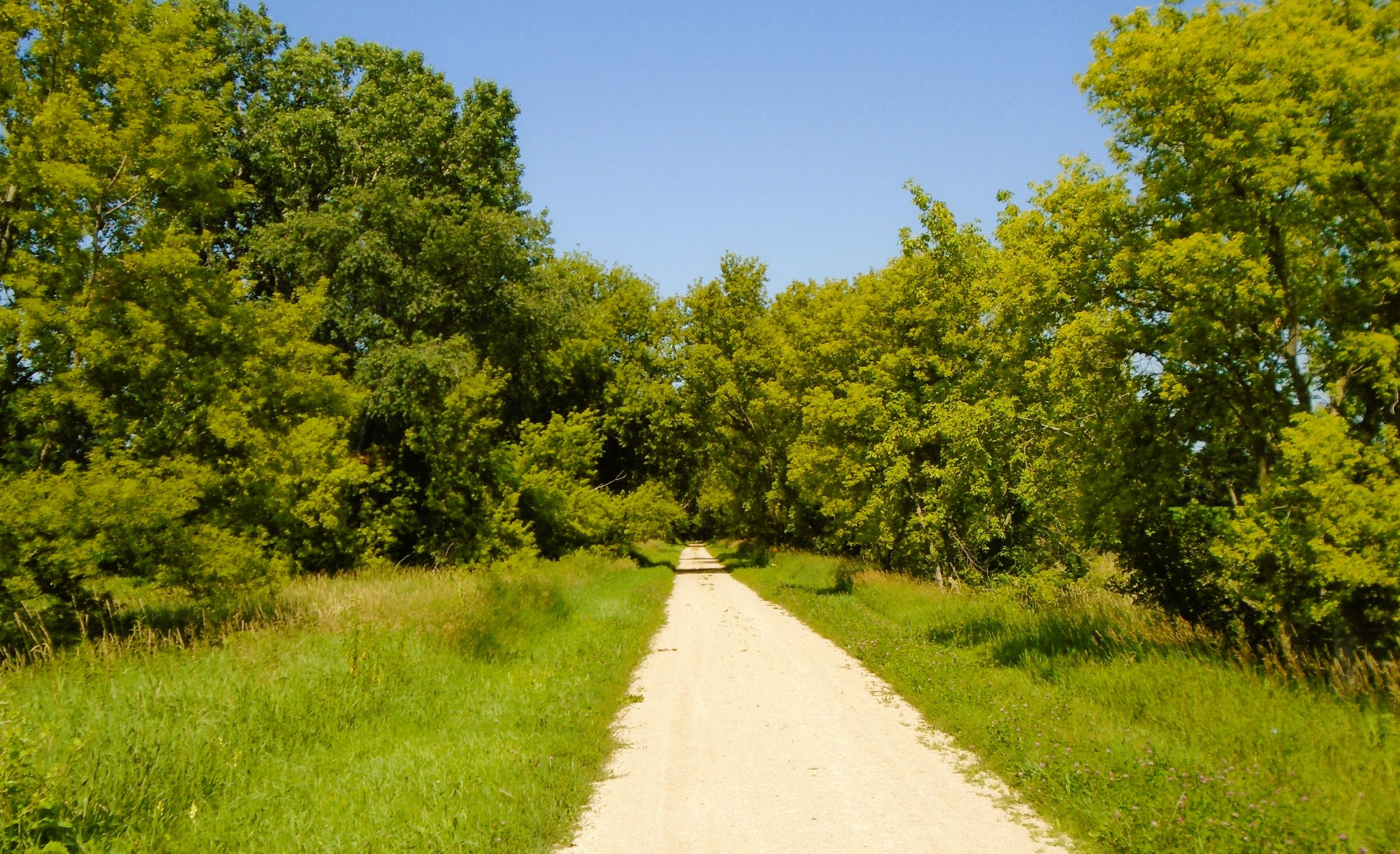
On the approach to Berlin, the Mascoutin Valley State Trail heads straight west. Less than a mile from Willard Road, the trail abruptly re-routes to the right (north). The original corridor running straight is closed to the public, due to firearm use at nearby Berlin Conservation Club. In this 0.6-mile diversion, the narrow path journeys through open marshlands. Two short boardwalks along the route traverse wetlands. Signs advise cyclists to walk their bikes in these segments. Several “bump-outs” allow for oncoming traffic to pass.
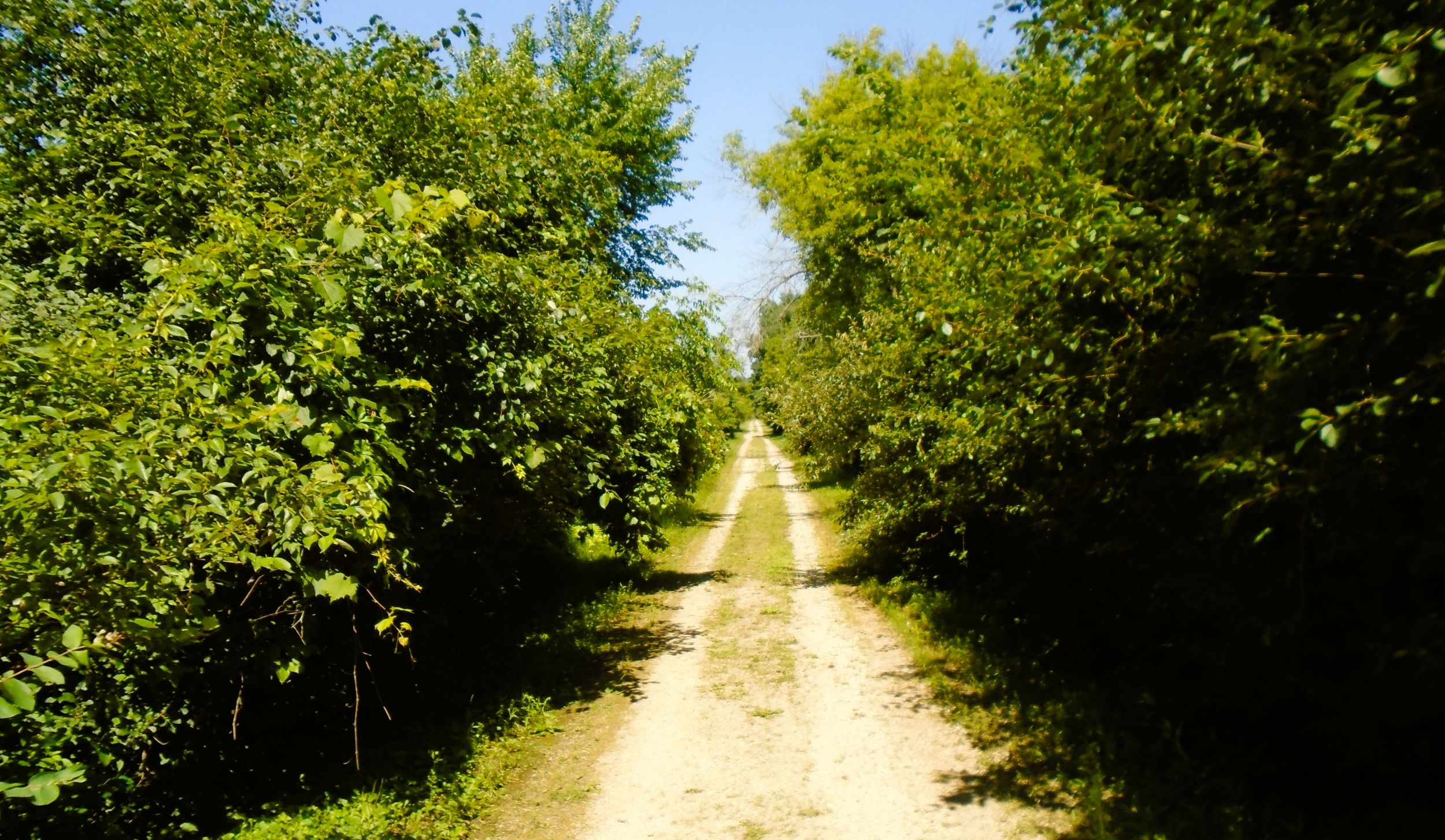
After returning to the main corridor, the trail continues its western direction toward Berlin. It crosses Quarry Road and Ripon Street. The condition of the Mascoutin Valley State Trail’s surface gradually deteriorates to a grassy path over the last half mile. The trail ends on the south side of Berlin at Wisconsin State Highway 49 (S. Church Street). It passes the Berlin Feed Store and a large grain elevator. The path crosses to the west side of the state highway where a trailhead is located. It has a small parking lot, bike rack, and picnic area.
Berlin was settled in 1845 and named Strong’s Landing, in honor of Nathan Strong. He was one of the city’s founders. In 1848, the name was changed to Berlin. The city has several establishments catering to trail-goers, especially in its downtown area. Another noteworthy place to stop is Shepherd’s Drive-In. Located on Highway 49 just north of the trailhead, this drive-in offers burgers, sandwiches, and ice cream treats during warm weather months.
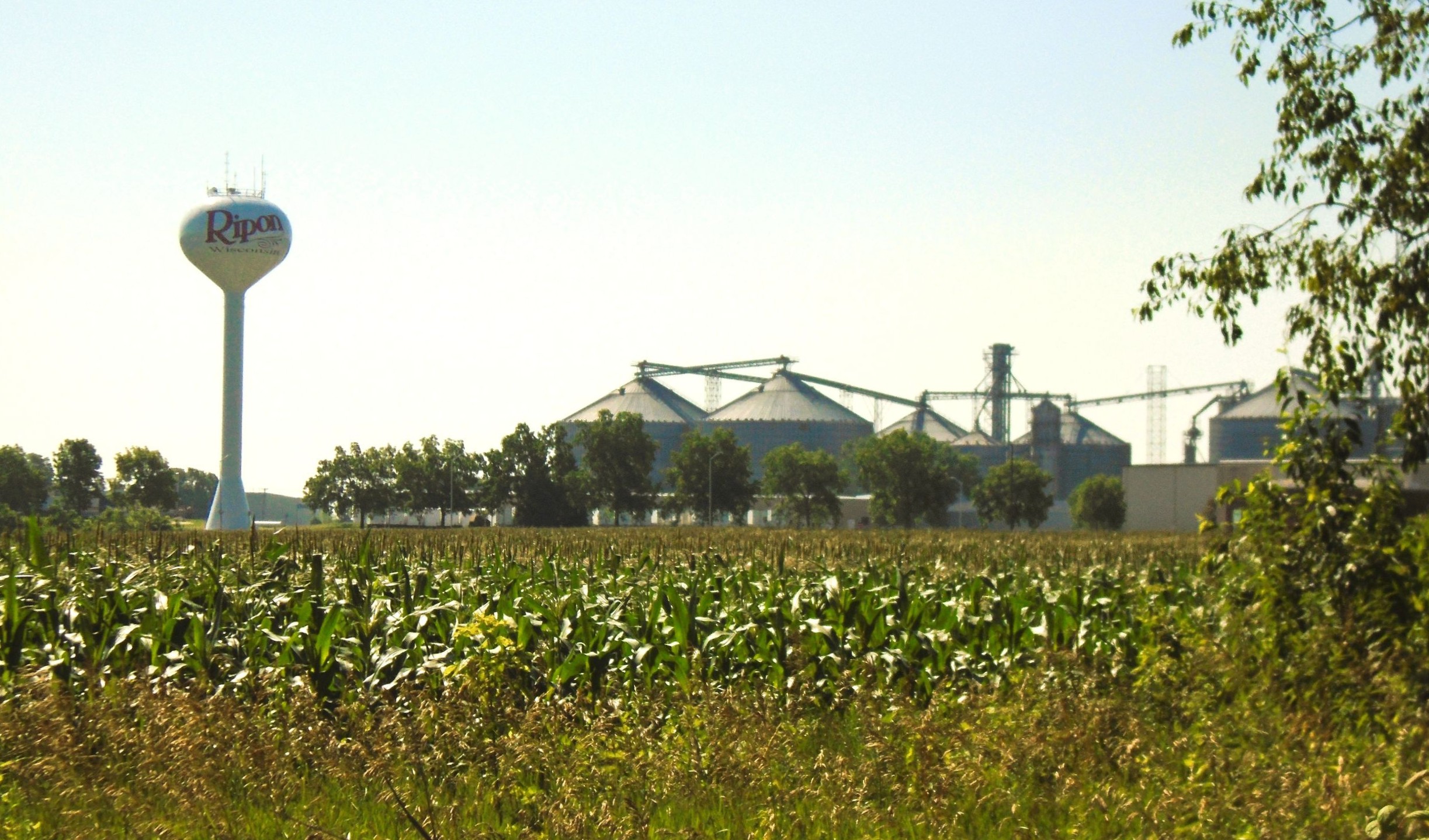
Ripon was founded in 1849 and named for the city in Yorkshire, England. It was home to the Wisconsin Phalanx, a 19th century socialist commune. Several of their buildings still remain. Ripon College, a liberal arts school founded in 1851, is located in Ripon. The small city is reported to be the birthplace of the Republican Party, when 30 adversaries of the Kansas–Nebraska Act met at a schoolhouse in March 1854 to organize a political party opposing slavery. The schoolhouse where they met is now a local museum.
Before or after a ride, cyclists may want to visit Ripon’s historic downtown district. Several establishments there are worth frequenting. Knuth Brewing Company features a beer hall and restaurant set in a restored building. J’s BBQ offers tasty comfort food. The wet brisket is highly recommended. Sweet ‘n Salty Ice Cream Parlor dishes up Cedar Crest Ice Cream treats. They also are known for their hot dogs and Italian beef sandwiches.
Map of trailheads and addresses along this section of the trail.
Returning to the Mascoutin Valley State Trail, a ride on this western section from Ripon to Berlin is slightly over 11 miles. The route passes through Fond du Lac, Winnebago, and Green Lake Counties. The crushed limestone surface of the path in Fond du Lac and Winnebago Counties is in good condition. The trail seems more neglected in Green Lake County. The entire route travels slightly downhill in elevation as it moves north and then west. The scenery along the way is rural countryside. Trail-goers may expect to view farm country, hardwood and tamarac forests, and open wetlands filled with reeds and cattails.
Trail ridden and documented in July, 2026.