La Crosse River State Trail: West Salem to La Crosse
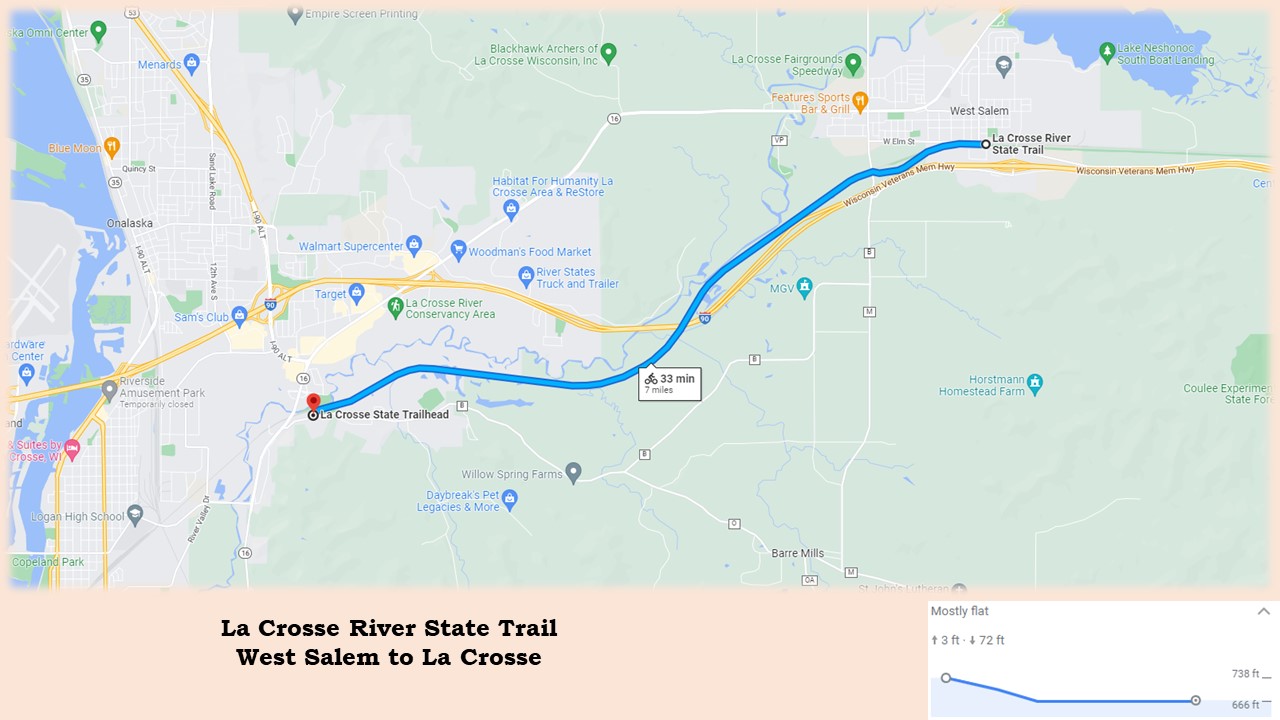
The La Crosse River State Trail journeys seven miles from West Salem to its end at a trailhead in La Crosse. The path continues on as the Great River State Trail. Although rarely visible, the trail closely follows to the La Crosse River. The trail travels through the valley’s wooded lowlands and open marshes. North of the trail, a pair of railroad tracks block the river’s view as it flows west to the Mississippi River on the north side of the tracks.
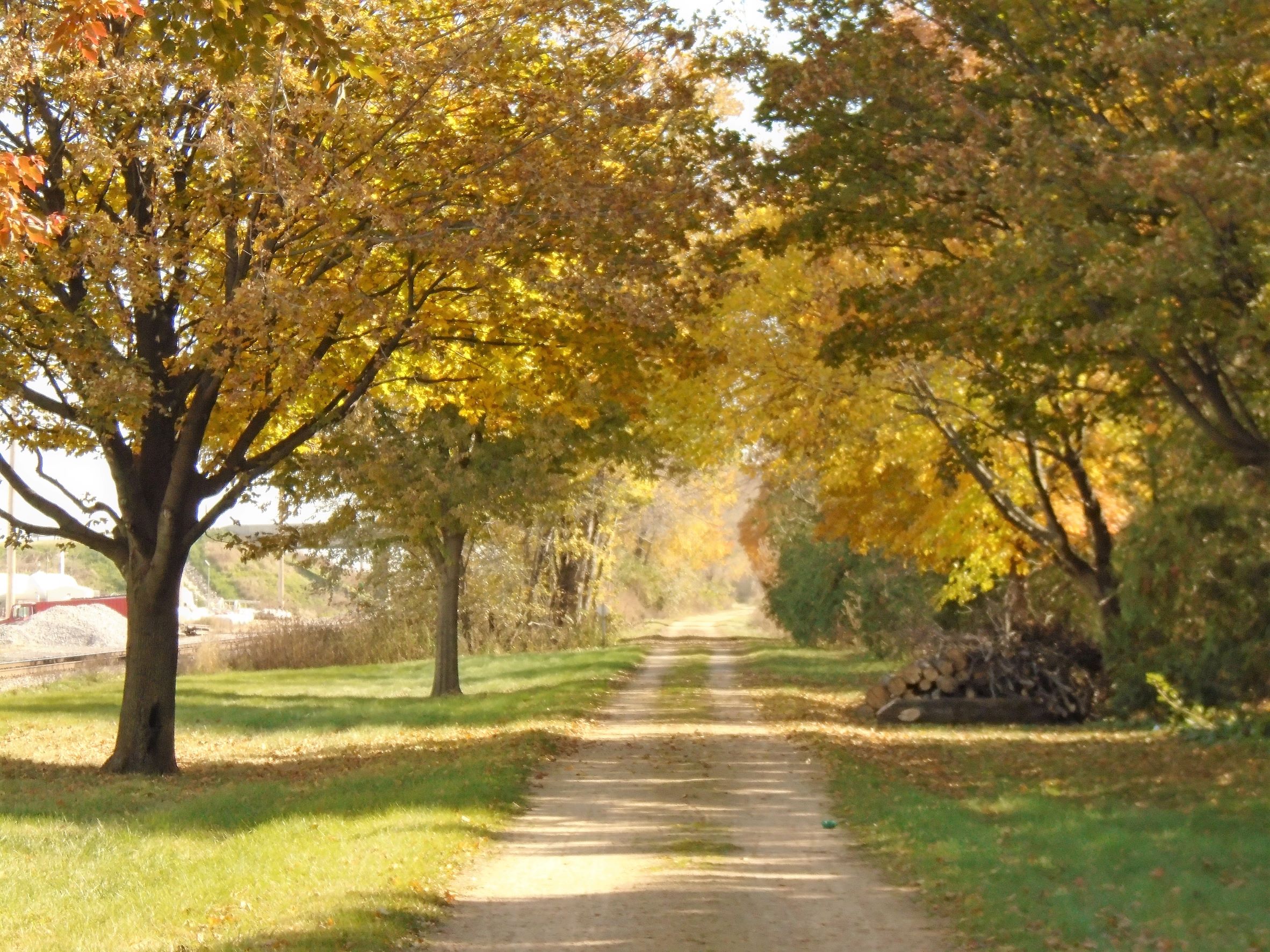
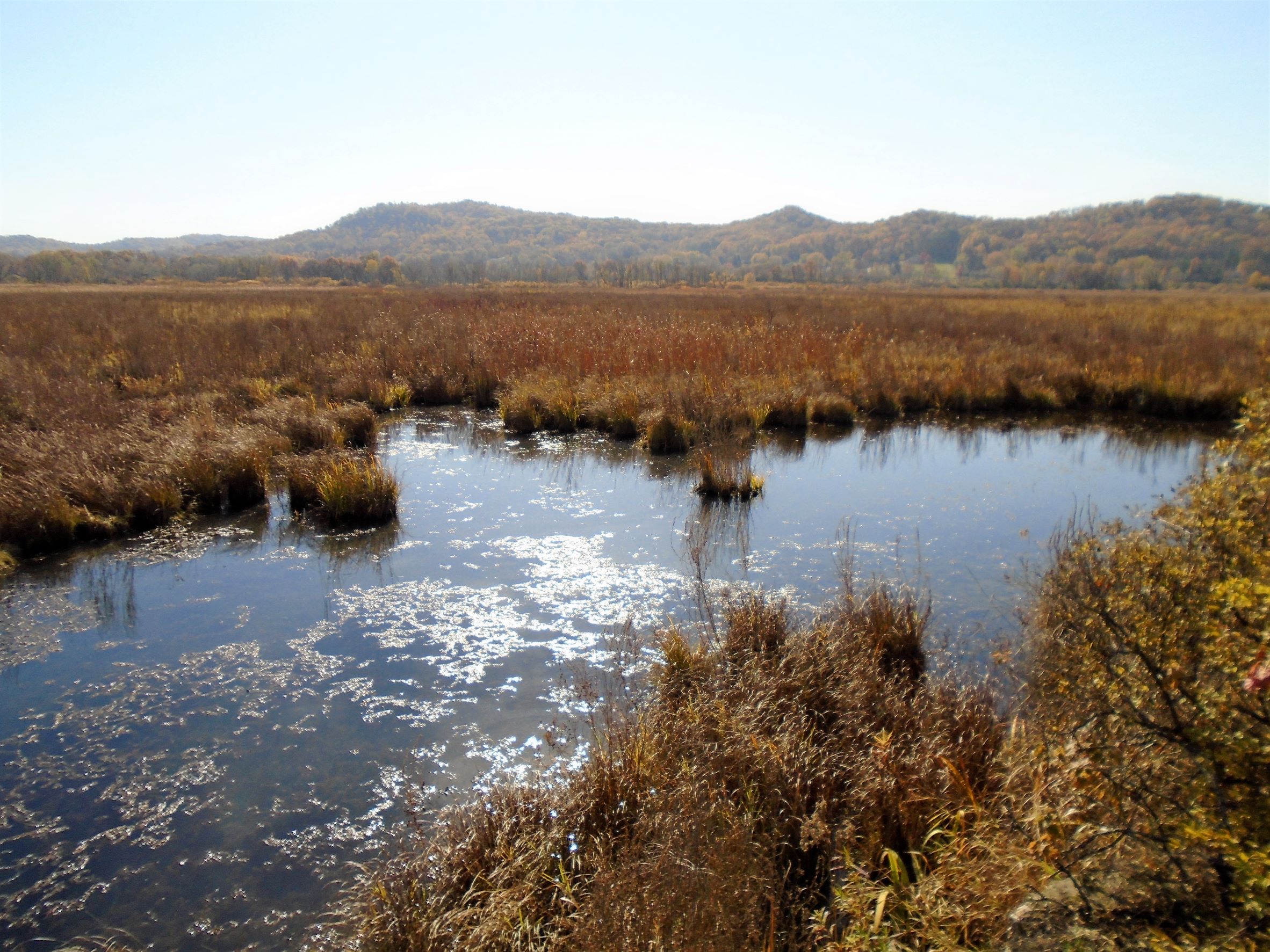
Although there are not consistent river views, the scenery throughout the route is still remarkable. The trail winds through deciduous forests, farm fields, and vast wetlands. In the distance, tall ridges and hills rise from the horizon. Wildlife sights are common, especially waterfowl in the open waters of the wetlands. Eagles soar overhead, while beaver and muskrat scurry about in streams and ponds.
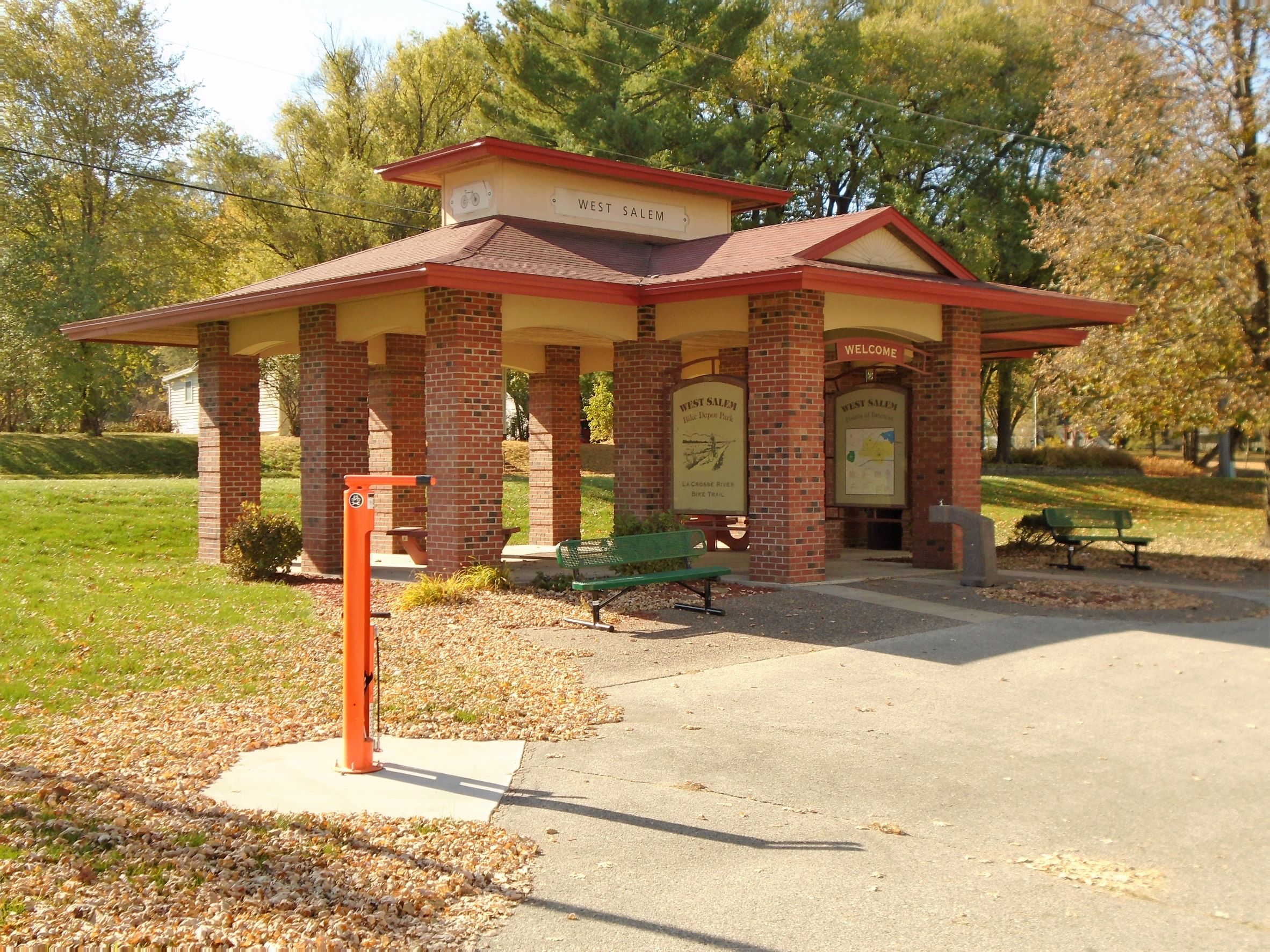
In West Salem, the trailhead is on Jefferson Street between Mill and Leonard Streets. It has a parking lot, covered shelter, bike rack, self-service bicycle station, information kiosk, park benches, and picnic tables. There are no restrooms at the trailhead, however. Because of this, trail-goers may want to use nearby West Salem Village Park as a trailhead. It has restrooms, a covered shelter, playground, ball diamond, and tennis courts.
West Salem’s trailhead is reached by car from Interstate Highway 90. Drive north on County Road C from exit 12. After 0.2 mile, turn left (west) on City Loop. Turn left again (west) on Jefferson Street. After a short distance, turn right (north) on Mill Street to the trailhead parking lot. Continue north on Mill Street to reach Village Park. It has roadside parking.
West Salem was first named Salem because the word meant “peace” in Arabic and Hebrew. The word “West” was added when mail was confused with another Wisconsin town of the same name. European American settlement began in the early 1850s, with people migrating from New England. A mile to the northeast another village called Neshonoc sprung up. The two villages were rivals until the railroad arrived. West Salem prospered with the railroad running through the village, while Neshonoc soon became a ghost town.
Pulitzer Prize winning author Hamlin Garland was born in West Salem in 1860. He returned in 1893, and spent summers there from 1893 to 1915. Garland passed away in California in 1940, and his ashes were returned to West Salem for interment in the Neshonoc Cemetery. Historical markers in the village convey Garland’s story and the history of Neshonoc.
West Salem has a lot to offer visiting trail-goers. It has hotels, restaurants, grocery stores, gas stations, and two campgrounds. Veterans Memorial County Park and Campground is accessible from the La Crosse River State Trail. It has over 100 sites, drinking water, flush toilets, showers, firewood for sale, electrical hook-ups, a dump station, and a camp store.
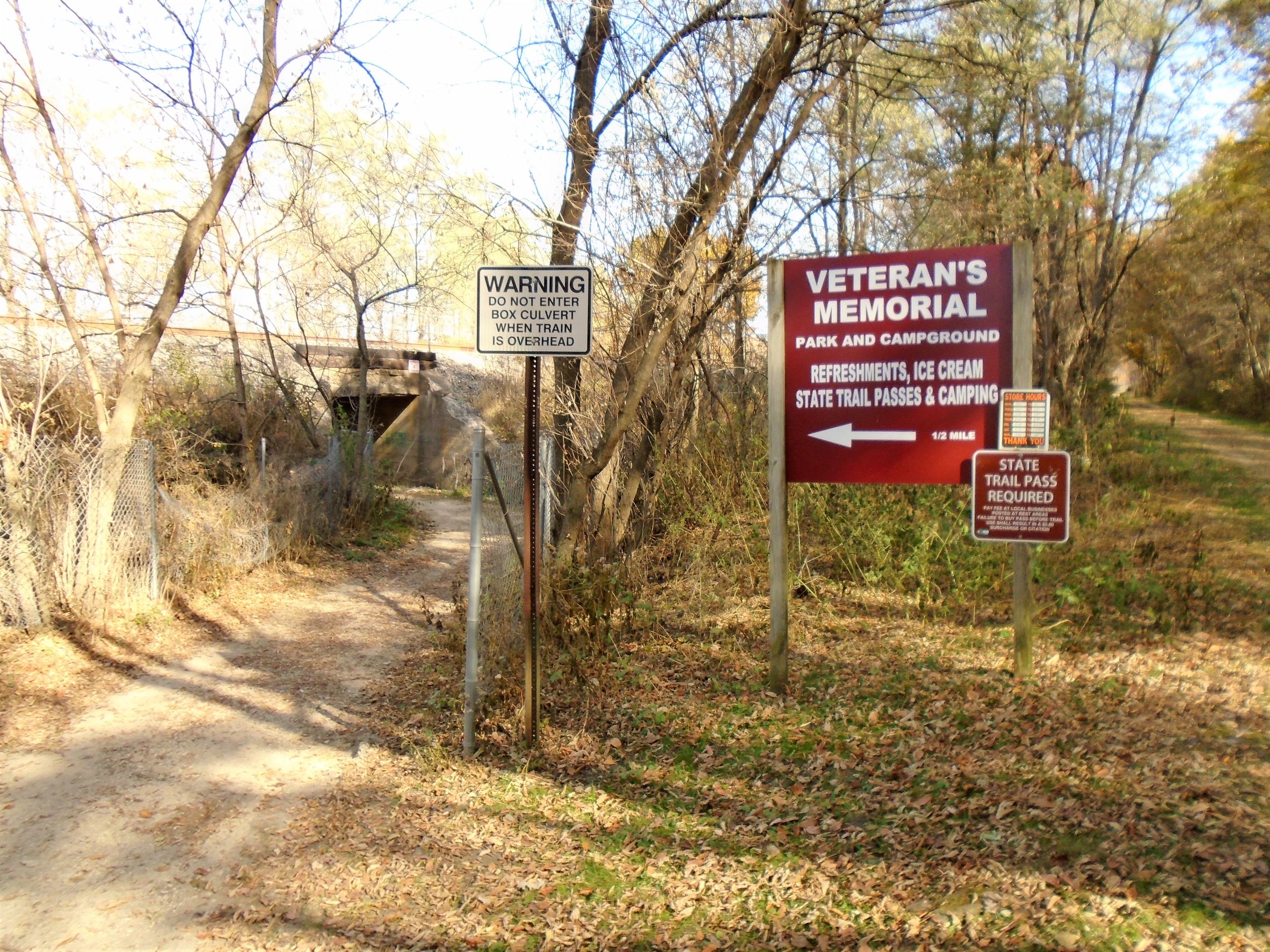
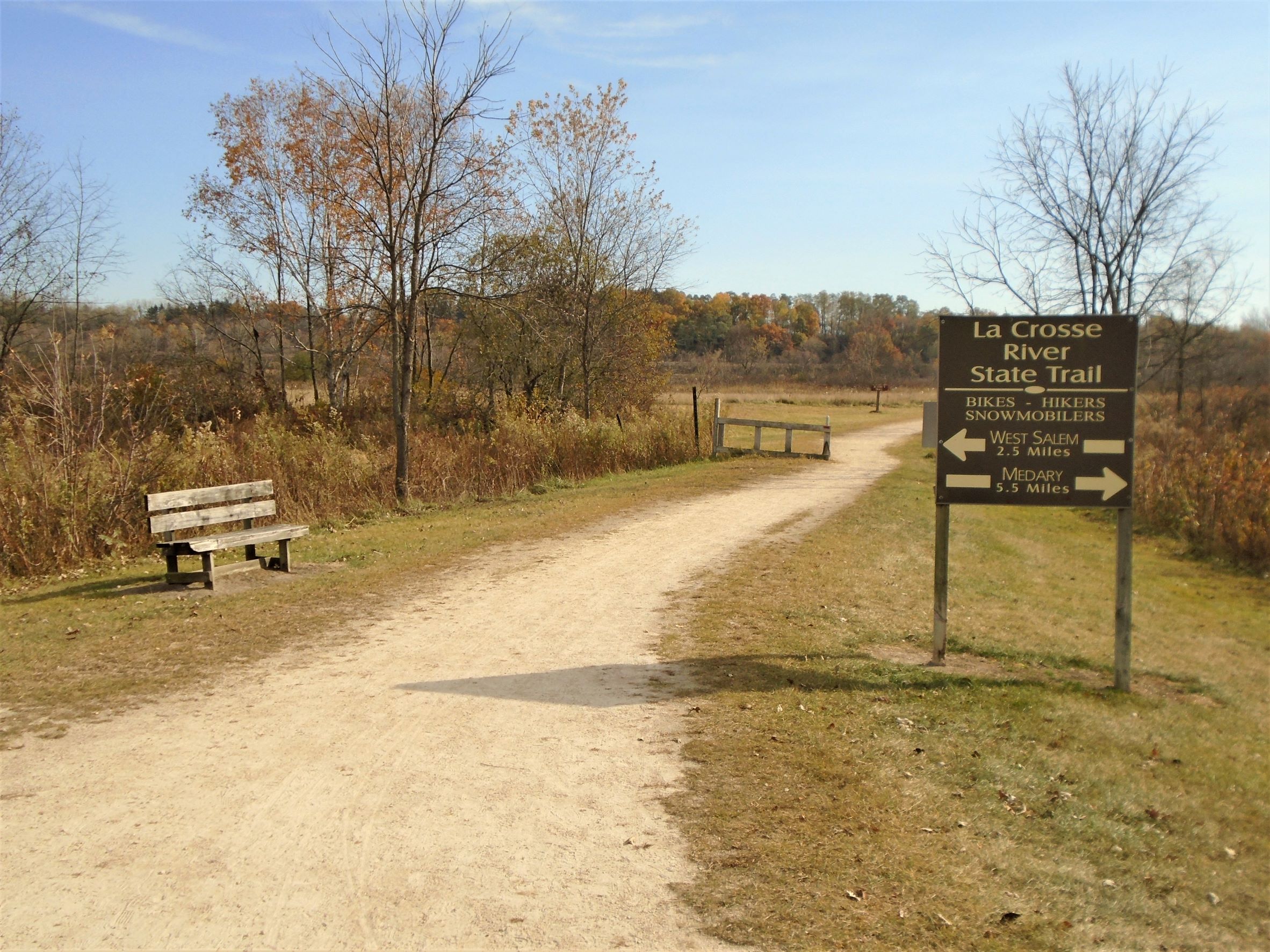
Just over a mile west, the La Crosse River State Trail passes under Josted Coulee Road. Another mile further, a spur trail on the right (north) leads under the railroad tracks and goes a half mile to Veterans Memorial County Campground. A sign warns trail-goers not to use the tunnel while a train is passing overhead. This county park works well as a trailhead. By car, it is accessed by going northeast on Wisconsin State Highway 16 at exit five from Interstate Highway 90. Drive 3.8 miles to the park’s entrance.
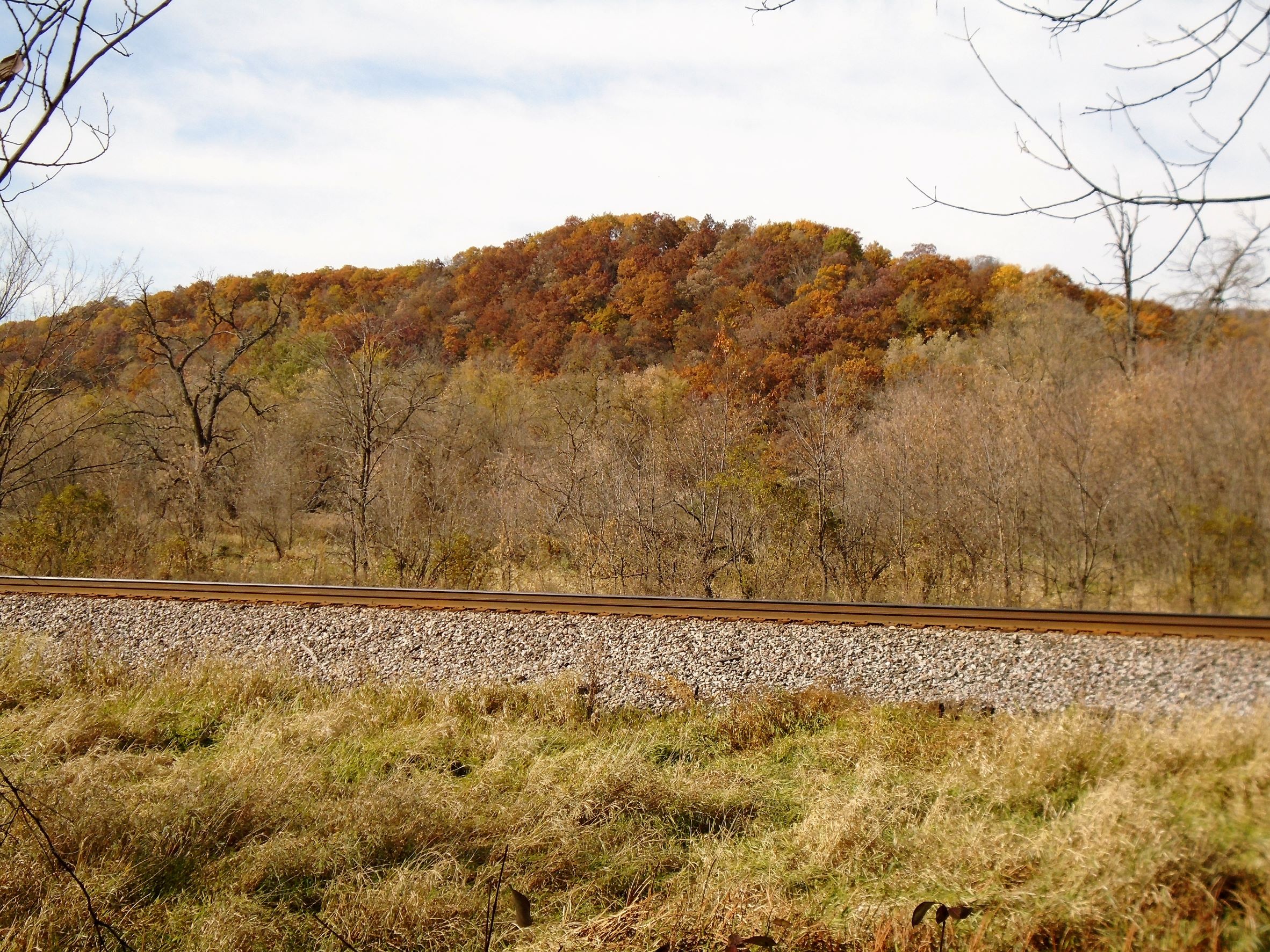
Continuing southwest on the La Crosse River Trail, the path passes on high banks through lowlands. In a few spots the side of the trail has eroded, and these places are marked with orange cones. While not noticeable from the trail, the river runs next to the railroad tracks. In the distance to the west, tower the tree-filled hills of the valley.

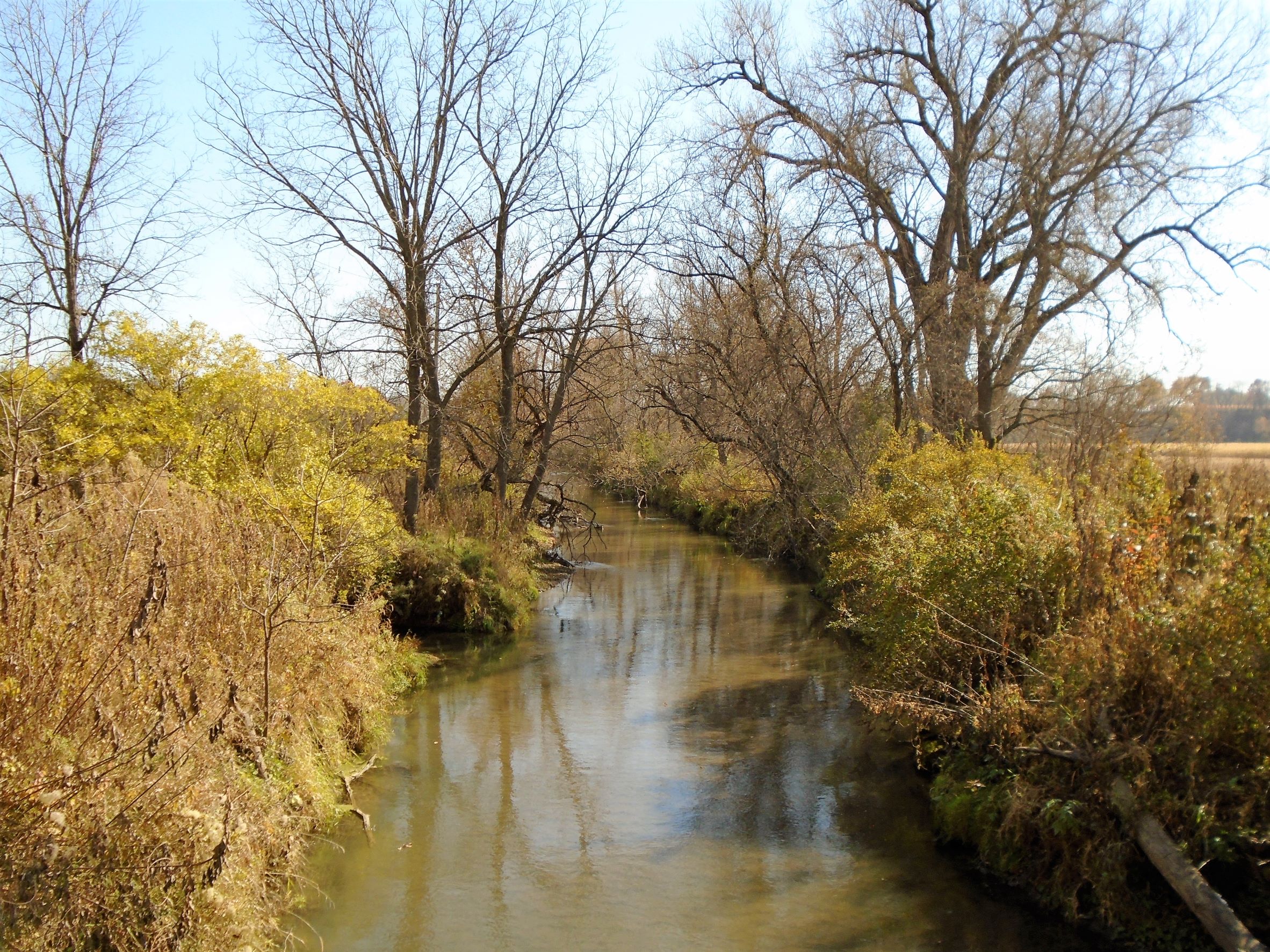
It is 3.3 miles from West Salem to where the trail passes under Interstate Highway 90. Heavy traffic moves above on the overpass. After crossing Bostwick Creek, the landscape opens up to a vast and beautiful marsh. Far to the south, the bluffs of the valley rise. The railroad tracks continue alongside the trail to the north.
For the last 3.5 miles, the trail traverses this picturesque wetlands of the La Crosse River. There is little shade, but expansive views. This attractive area is part of the La Crosse River Conservancy, and wildlife is common. Beaver and musket lodges may be seen near ponds and streams, trumpet swans and Canadian geese rest during migrations, and eagles soar ahead. Songbirds frequently dart across the trail.
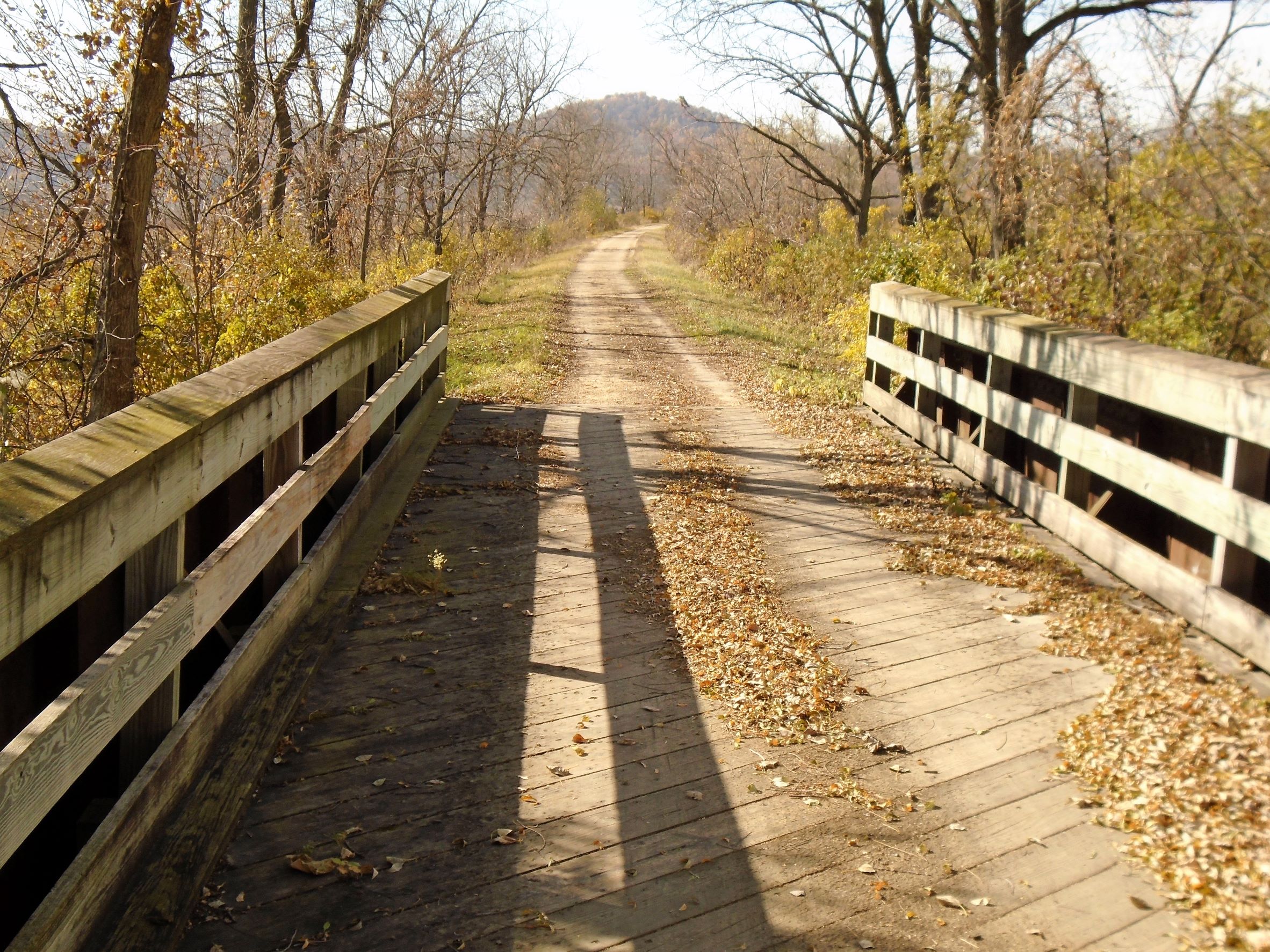
Departing the wetlands, the trail travels again through a corridor of trees and bushes, past a golf course and toward the trailhead. After passing a gate on the trail, it crosses under a bridge that takes the Great River State Trail over the railroad tracks. It’s just a short climb uphill to the trailhead, which is well-equipped with a large parking lot, restrooms, picnic tables, park benches, drinking fountain, bike rack, and information kiosks.
This trailhead may be reached by car from Interstate Highway 90. Take exit five and go south on Wisconsin State Highway 16. Drive 1.7 miles to County Highway B. Turn left (east) and go 0.3 mile to the trailhead entrance on the left (north).
La Crosse has plenty of businesses for visiting trail-goers. In downtown La Crosse, The Pearl Ice Cream Parlor & Confectionery treats patrons to an authentic 1930’s-style ice cream parlor experience. Closer to the trail in Onalaska, Crooked Pint Ale House is just 1.5 miles away. This Minnesota-based chain is known for their “Juicy Lucy” hamburgers and features a variety of beers. Also, a short distance from the trailhead is the Black Forest Bistro, a cafe featuring delicious German cuisine made from scratch.
Map of trailheads and addresses along this section of the trail.
La Crosse and Onalaska emerged as population centers during the late 19th century lumber boom. Logs were rafted down the Black River to area sawmills. La Crosse was also known for its brewing industry. G. Heileman Brewing Company operated from 1858 to 1996, producing the lager Old Style. The word Onalaska is supposedly found in a poem by Scottish poet Thomas Campbell, The Pleasures of Hope, referring to an Aleutian island and fishing village.
The last seven miles of the La Crosse River State Trail are by far the most scenic. Highlights of the trail are passing by Kinney Coulee and traversing the wetlands of the La Crosse River for 2.5 miles. West Salem is a quaint village that offers a lot to visiting trail-goers, and a side trip to visit Veterans Memorial Park and Campground is worth the diversion.
Trail ridden and documented in October, 2022.