Portage Levee and Canal Trails
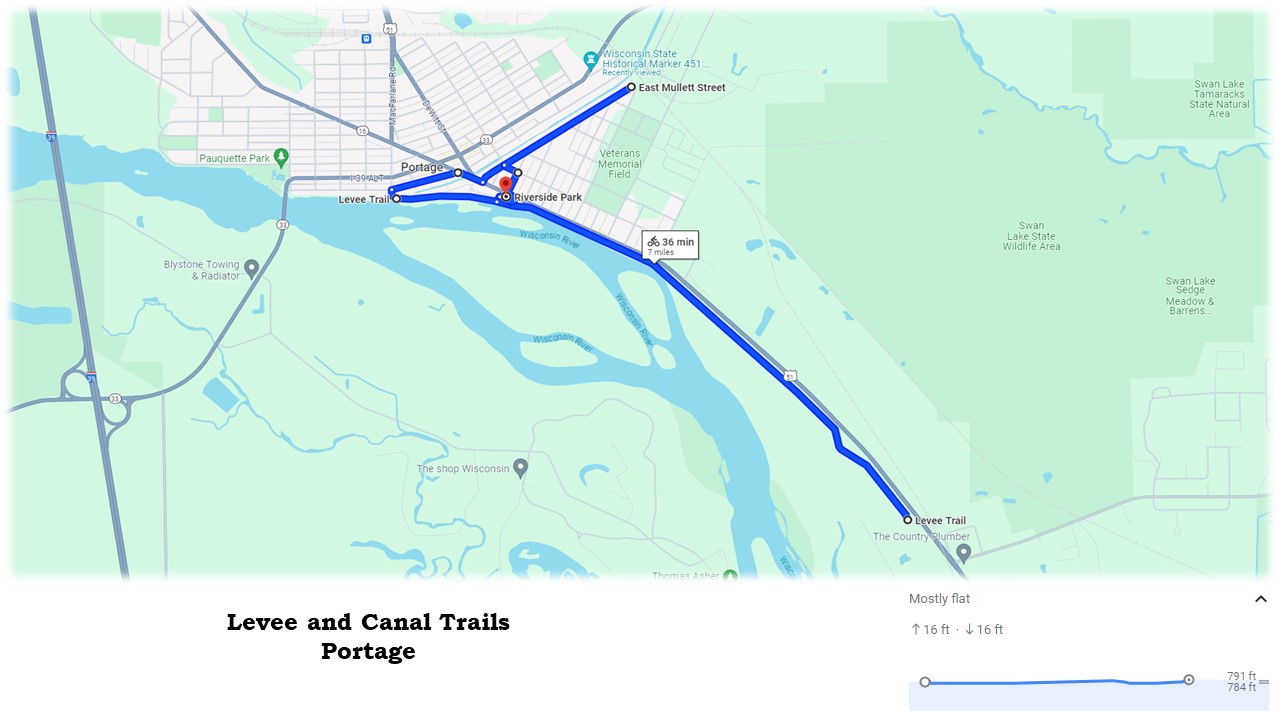
The Levee and Canal Trails in Portage offer bicyclists distinct views of the local environment. The Levee Trail provides a vivid look at the Wisconsin River, while the Canal Trail presents a historical glimpse into the area’s past. Neither path is long. A circular trip involving both trails runs seven miles. The route delivers stunning views and meaningful history.
Both trails are maintained by Portage, and have no trail fees. The surface of the Levee and Canal trails is paved asphalt, in very good condition. Both trails have park benches and interpretive markers, with the Canal Trail featuring more informative signs on local history.
Portage has an full history. It is the seat of government for Columbia County, and sits in a historically significant place. The city was named for a one-mile portage connecting the Fox and Wisconsin Rivers. For centuries, Native Americans used this waterway to travel between the Great Lakes and Mississippi River. The route was first recognized by European explorers in 1673, when Father Jacques Marquette and Louis Joliet journeyed to the Mississippi River.
Native Americans, and European and American fur traders, soldiers, and settlers used the lowlands between the Fox and Wisconsin Rivers as a portage. The Menominee tribe named it Kahkāmohnakaneh, meaning “the short cut.” The Ho-Chunk nation called it wawa-ája. The word “portage” is a French derivative meaning “to carry.” It was used to label places where canoes of furs and trade goods had to be carried overland between bodies of water.
In the late 1700s, commerce developed at the portage when fur traders built posts there. Soon Portage was populated by a mixed race called Métis. In 1828, the U.S. government recognized the importance of the area and built Fort Winnebago near the Fox River. In the mid-1800s, a canal was built between the two rivers to facilitate trade and transportation. The coming of the railroad led to growth and prosperity, and Portage incorporated in 1854.
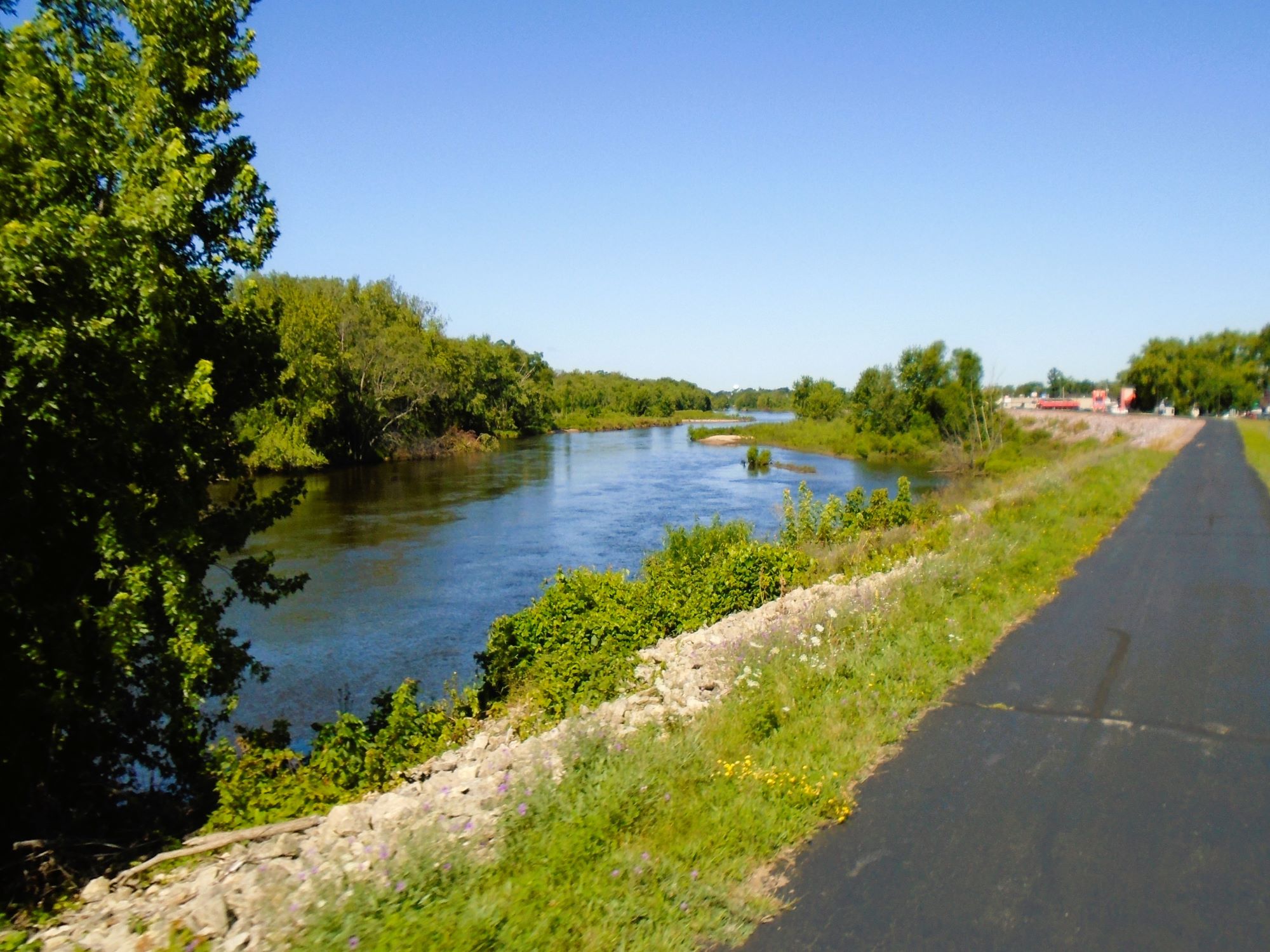
Much of this history is presented on the Levee and Canal Trails. The Levee Trail’s name reveals its purpose. The trail runs along the top of a tall earthen levee that protects the city from occasional floodwaters of the Wisconsin River. The Canal Trail runs adjacent to the old Fox-Wisconsin Canal, which once carried steamboats between the two rivers.
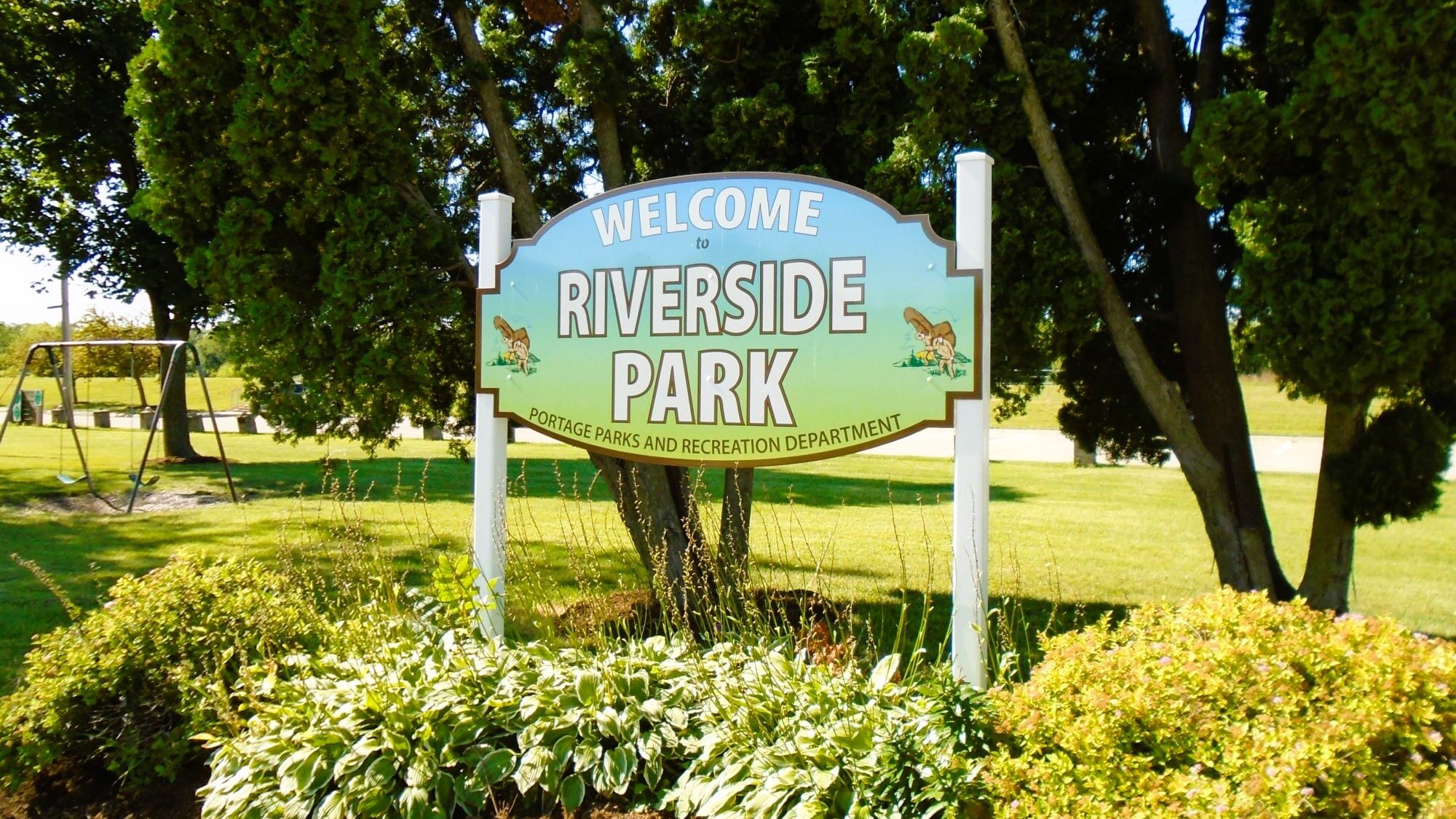
Portage’s Riverside Park is a perfect place to begin a ride on these two trails. It is located along the Levee Trail, accessed by car from Wisconsin Street (U.S. Highway 51). The park has a parking lot, small playground, portable toilet, and covered picnic shelter.
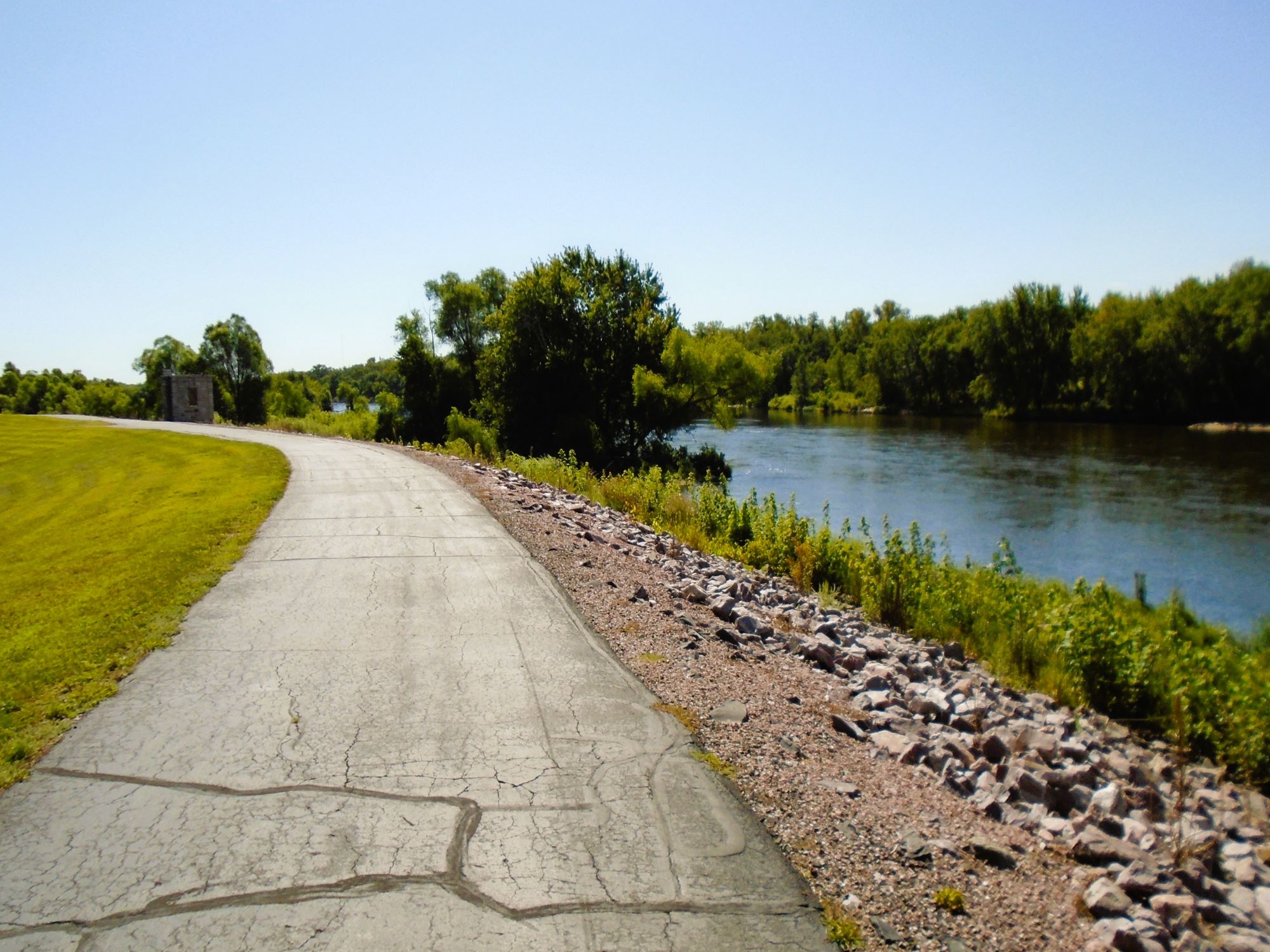
A ramp leads up to the Levee Trail, set on a 15 to 20 foot high dike. At the top is a canoe sculpture. The trail travels north and south atop the levee, and another path leads down to the Wisconsin River. This and similar paths provide canoe and kayak access to the river.
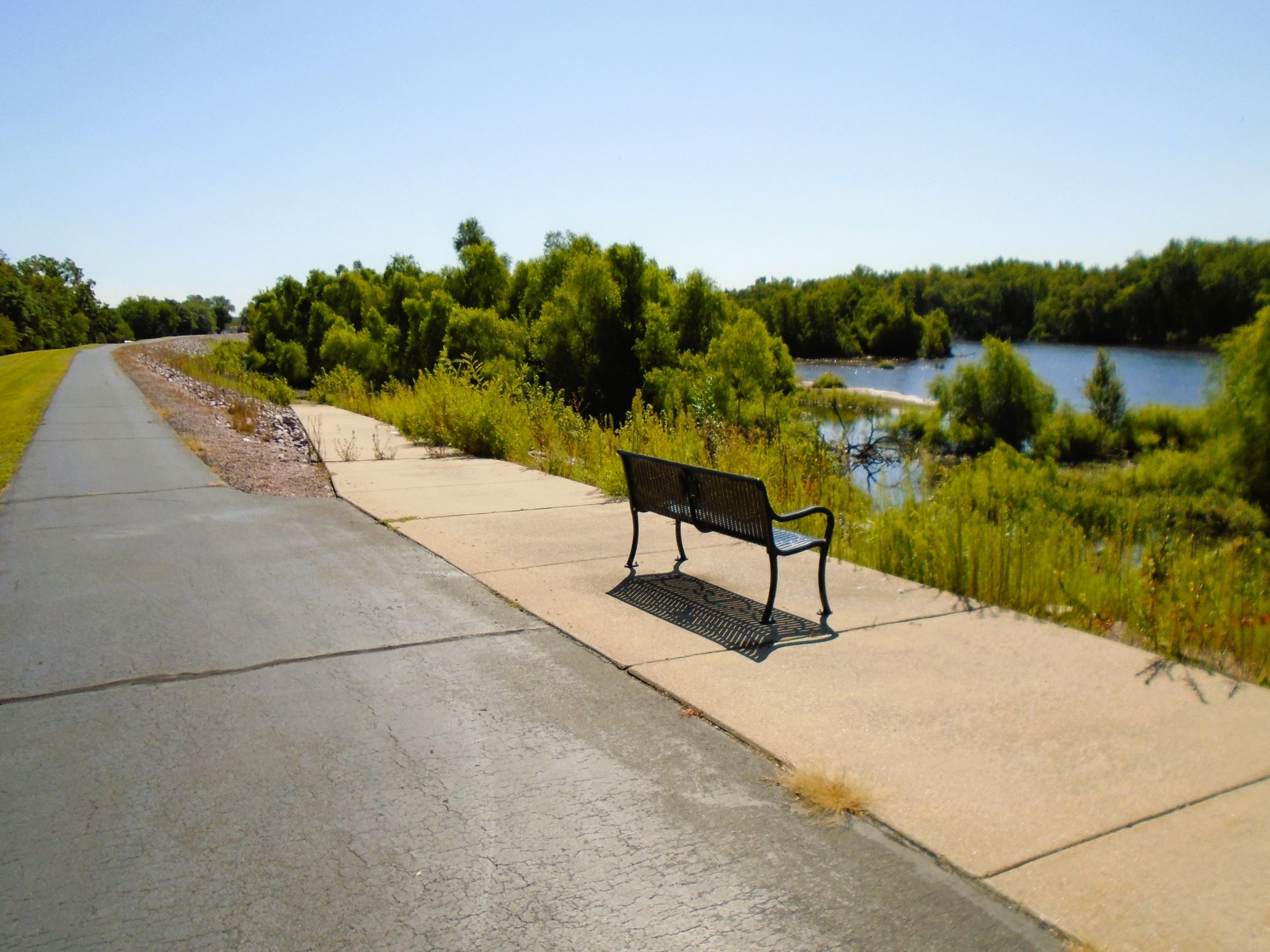
On this trail, the recommended route is to first travel south, then return north. At various places, ramps lead down from the Levee Trail to a lower level along Wisconsin Street. This busy road carries U.S. Highway 51 and travels adjacent to the trail on its east side.
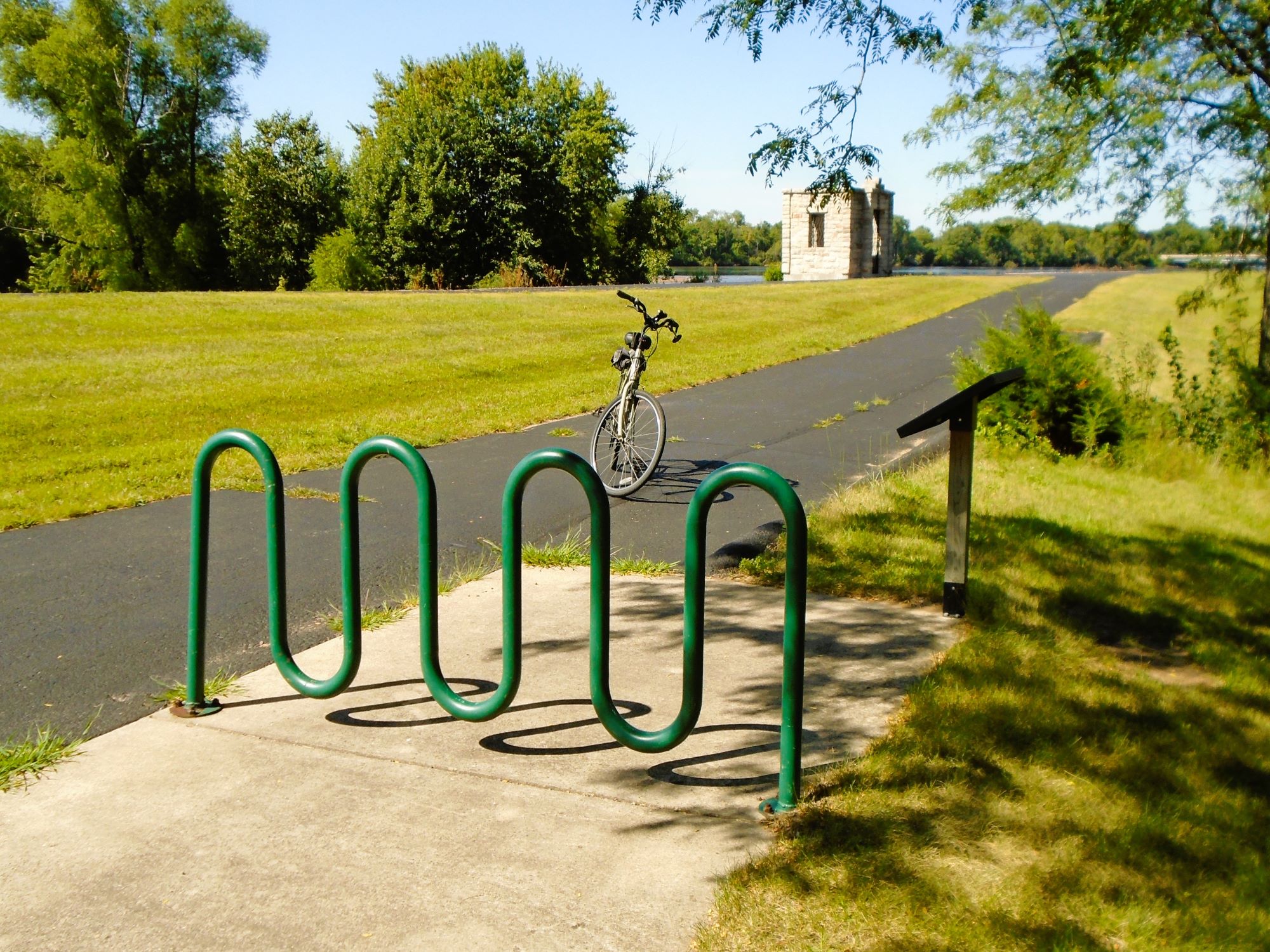
After a half mile, the Levee Trail arrives at a historical stone monument. It marks the end of the one-mile portage from the Fox River, located to the east, to the western end of the portage at the Wisconsin River. The perpendicular road ending at Wisconsin Street is called Wauona Trail. This road was given the name as the historic portage route. It follows closely along the passageway from the Fox to the Wisconsin Rivers. The marker observes the place where Father Jacques Marquette and Lous Joliette entered the Wisconsin River in 1673.
The Levee Trail continues south on the dike for a half mile. The last part is quieter, as the path moves away from U.S. Highway 51. The complete breadth of the Wisconsin River isn’t visible, but picturesque views to the west reveal sloughs, marshes, and forests. It’s a perfect place to look for bald eagles, which often perch on tree branches or soar high above.
The Levee Trail ends abruptly 2.2 miles south of Riverside Park. Trail-goers then return north to Riverside Park, but continue on past the park for another half mile to the trail’s end at MacFarland Road. An excellent view of the Wisconsin River is seen at the end of the trail.
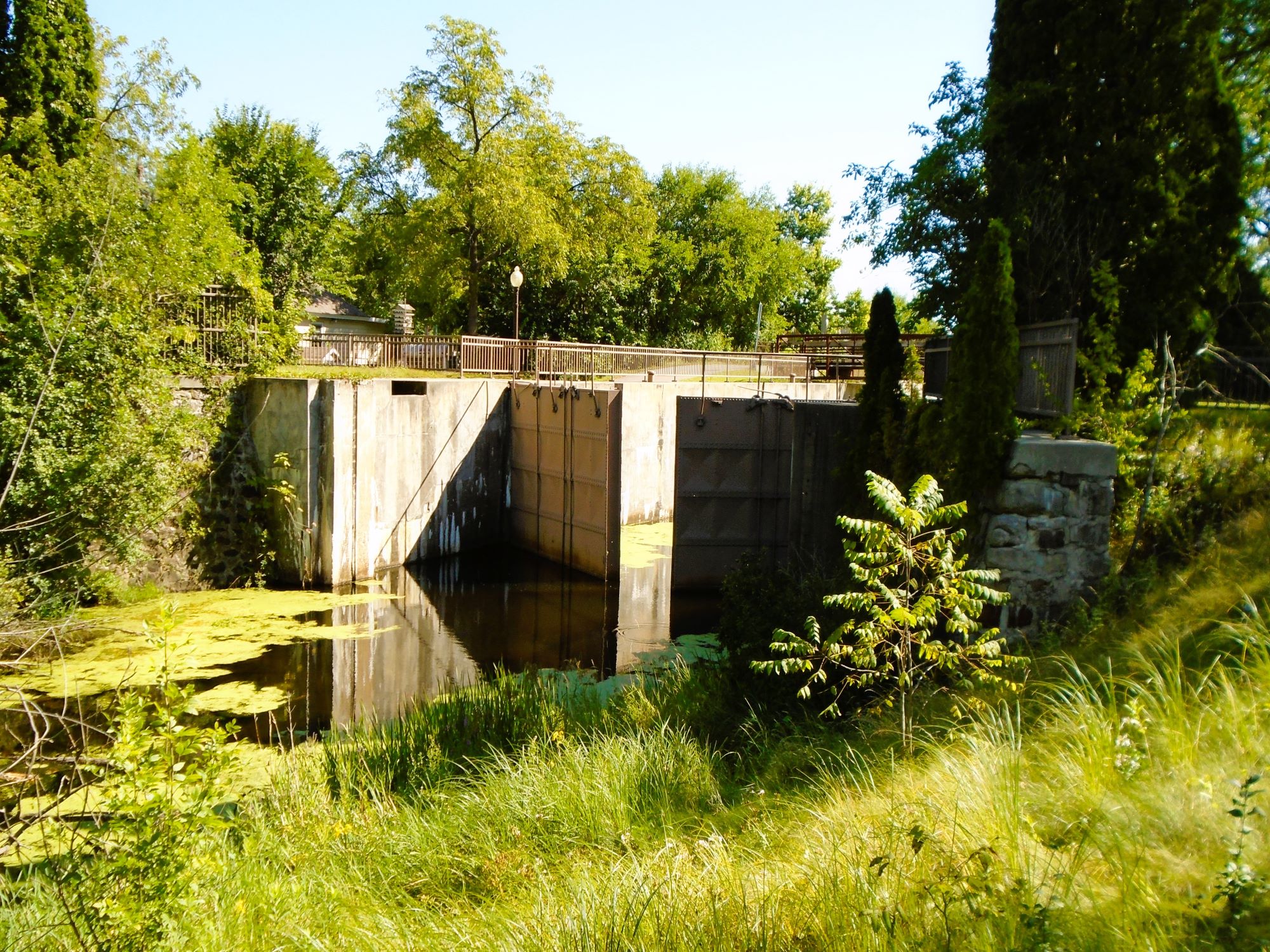
The route turns back south on the Levee Trail for 500 feet. The Canal Trail leads off to the left (east) across a bridge over an old canal lock. Two interpretive markers are found nearby. One marker relates Portage’s involvement in the sport of curling. The other describes the history of the canal and lock system. It’s certainly worth stopping on the bridge over the lock, to observe the old structure through which countless boats once travelled.
For the next 400 yards, the Canal Trail travels alongside the old canal on its north side. The path then traverses the busy intersection of Wisconsin and DeWitt Streets. The use of crosswalks and lighted walk signs increase safety at the intersection. Now on the east side of the road, the trail continues along the south side of the canal. It travels east, next to Columbia County government buildings and crosses Adams Street.
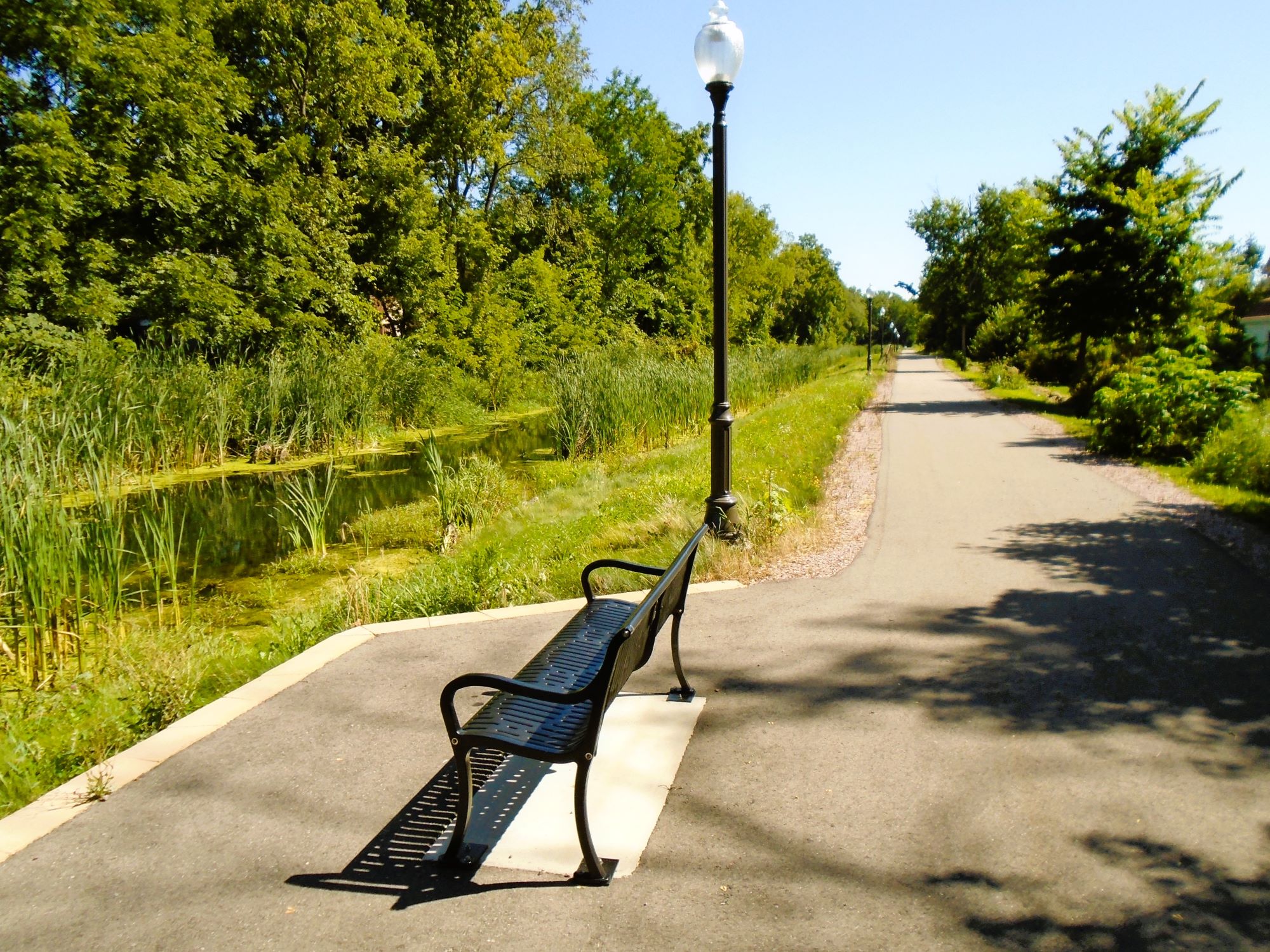
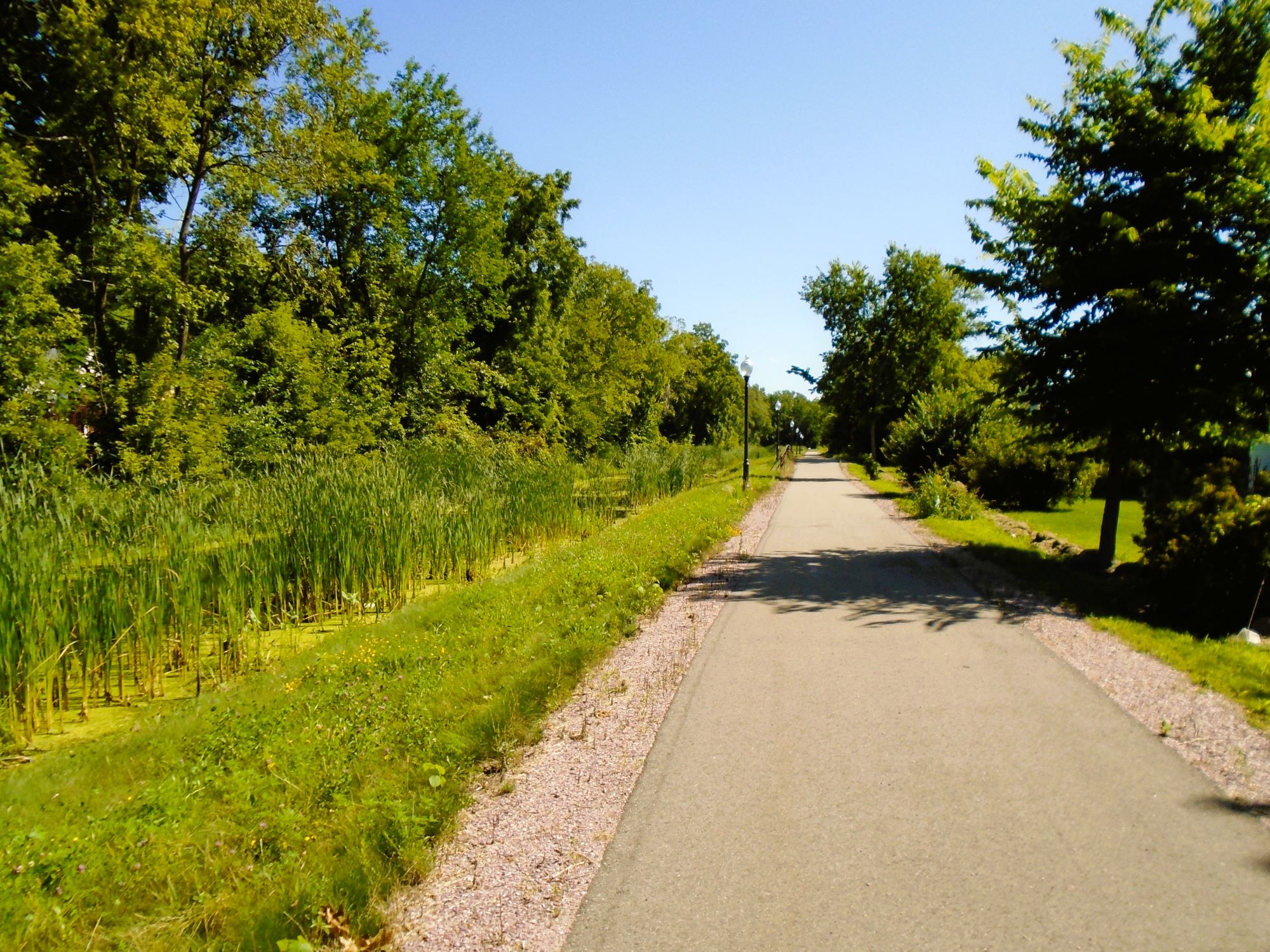
The next 0.75 mile has park benches and interpretive markers. The first marker covers Marquette and Joliet’s 1673 expedition. The next tells the story of Epstein Brewery and Sweetwater Bottling Company. A third one shares the history of the local Heinz Pickle Plant.
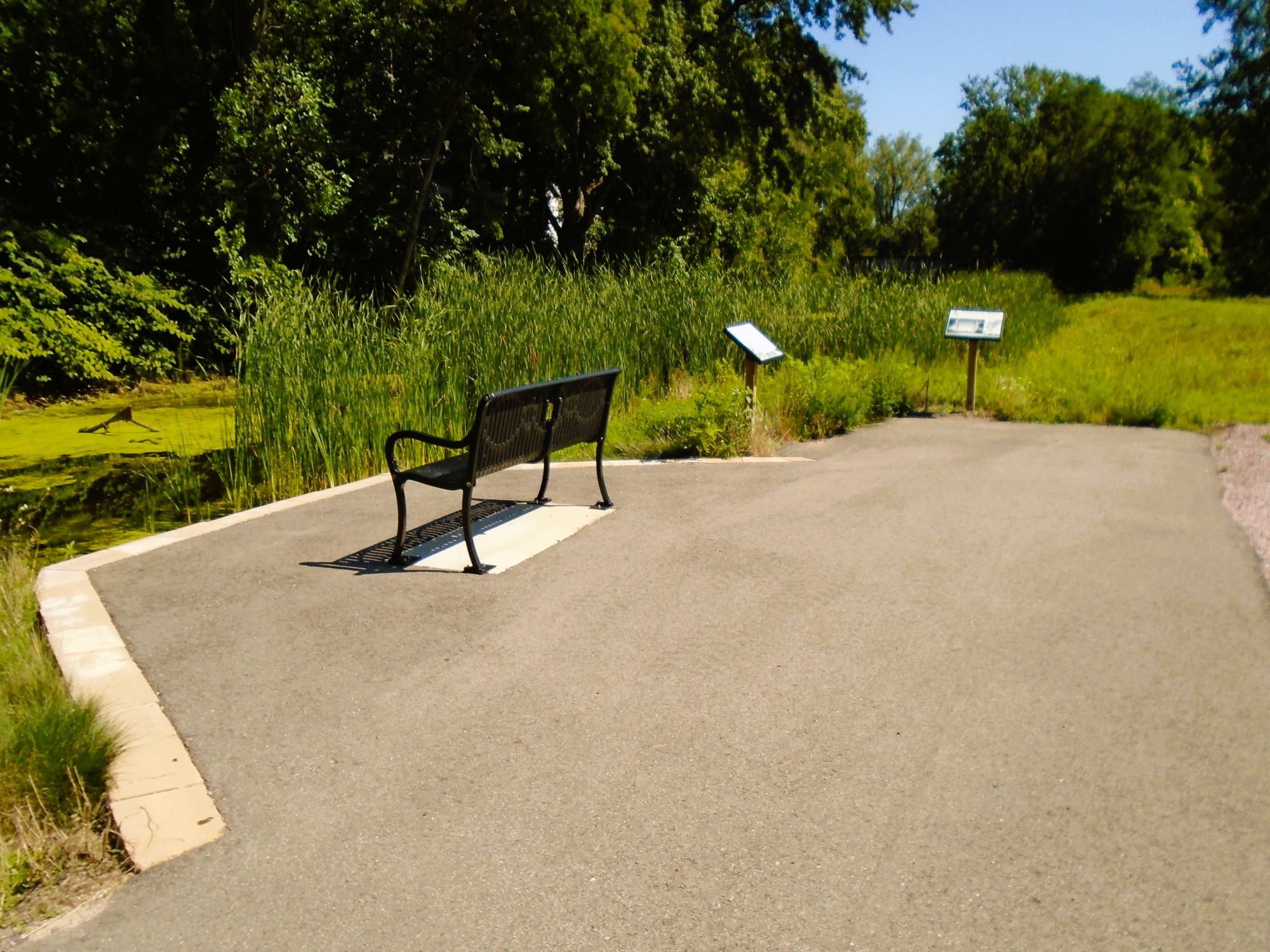
The end of the trail has a park bench, scenic views of the old canal, and two more markers. One describes the 1827 surrender of Ho-Chunk chief Red Bird to U.S. Army troops at that location. The other marker explains the history of a large lift bridge that once crossed the canal nearby. This is a good place to read and reflect on history.
The Canal Trail ends at the junction of Superior and Mullett Streets. To return to Riverside Park, trail-goers may backtrack along the same route. Another option is to take city streets back to the park. To do this, head west on Mullet Street for a half mile, then angle left on Paquette Street. On Paquette Street, it is 350 yards to the intersection of Wisconsin Street. Riverside Park is on the west side of the road; use caution to cross this busy street.
Portage has several restaurants and fast food establishments to serve visitors. Trail-goers have the luxury of diverting from the Levee Trail to enjoy a cool treat from either Dairy Queen or A&W. Both are very close to the trail, just across the street. Tamarack Pizza is the closest restaurant, next to Riverside Park and adjacent to the Levee Trail parking area. Known for burgers, hearty sandwiches and pizza, this long-standing tavern has an old-school vibe. Of note- bring cash, as no checks or credit cards are accepted.
Map of trailheads and addresses along this section of the trail.
Portage’s Levee and Canal Trails offer a scenic tour of the city and provide a historical background. Visitors wanting to explore more of Portage’s history may want to tour two museums: the Indian Agency House and Fort Winnebago Surgeons Quarters. The Indian Agency House recognizes the Ho-Chunk people and their interactions with the U.S. government Indian Agent at this site. The Surgeons Quarters preserves an early 1800s fur trader post converted into an army surgeon’s quarters. A ride on the two trails, combined with tours of these small historic sites, makes a splendid visit to Portage.
Trails last ridden and documented in August, 2024.