Military Ridge State Trail: Riley to Fitchburg
The Military Ridge State Trail travels 10.5 miles from Riley, through Verona, to Fitchburg. From Riley to Verona, the trail journeys through the Upper Sugar River Watershed, a large drainage area in Dane County. Northeast of Verona, the path skirts U.S. Highways 18-151 and advances through Ice Age Trail Junction Natural Resource Area and Quarry Ridge Recreational Area. The trail ends near Cottonwood Drive in Fitchburg, but the route continues to the Velo UnderRound, a unique junction of five different paths.
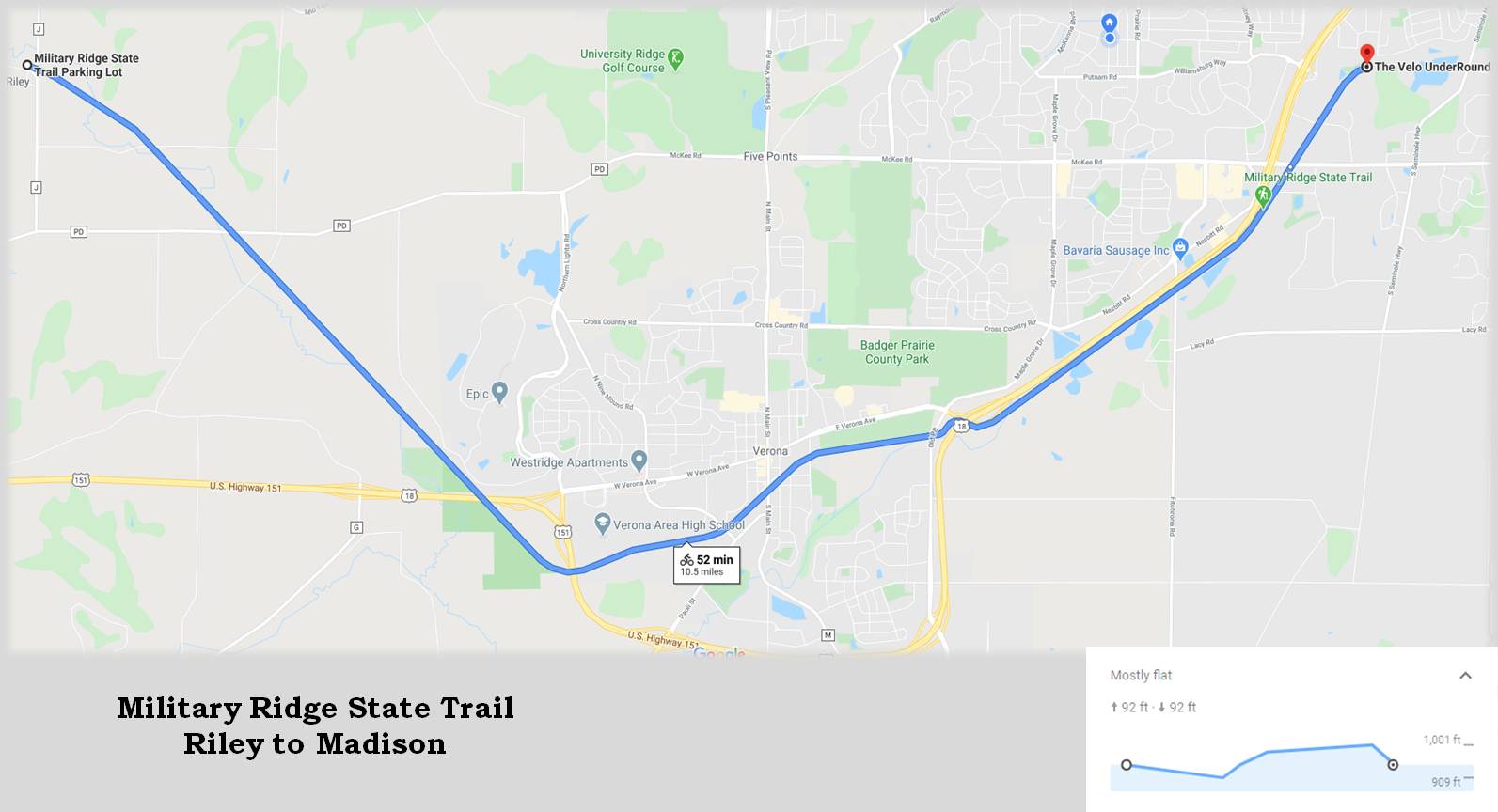
This section of the Military Ridge State Trail makes a “V” shape when looking at it on a map. The first 4.5 miles travel southeast. The last six miles head northeast. The crushed limestone surface of the trail is in good condition. From Verona to Fitchburg, the trail’s surface is paved with asphalt, in very good condition. The bridges from Riley to Verona are aging and in need of repair, something the DNR is examining. The path’s elevation drops about 100 feet from Riley to Verona, and increases about the same height as it continues to Fitchburg. Amenities are located along the route and at several trailhead locations.
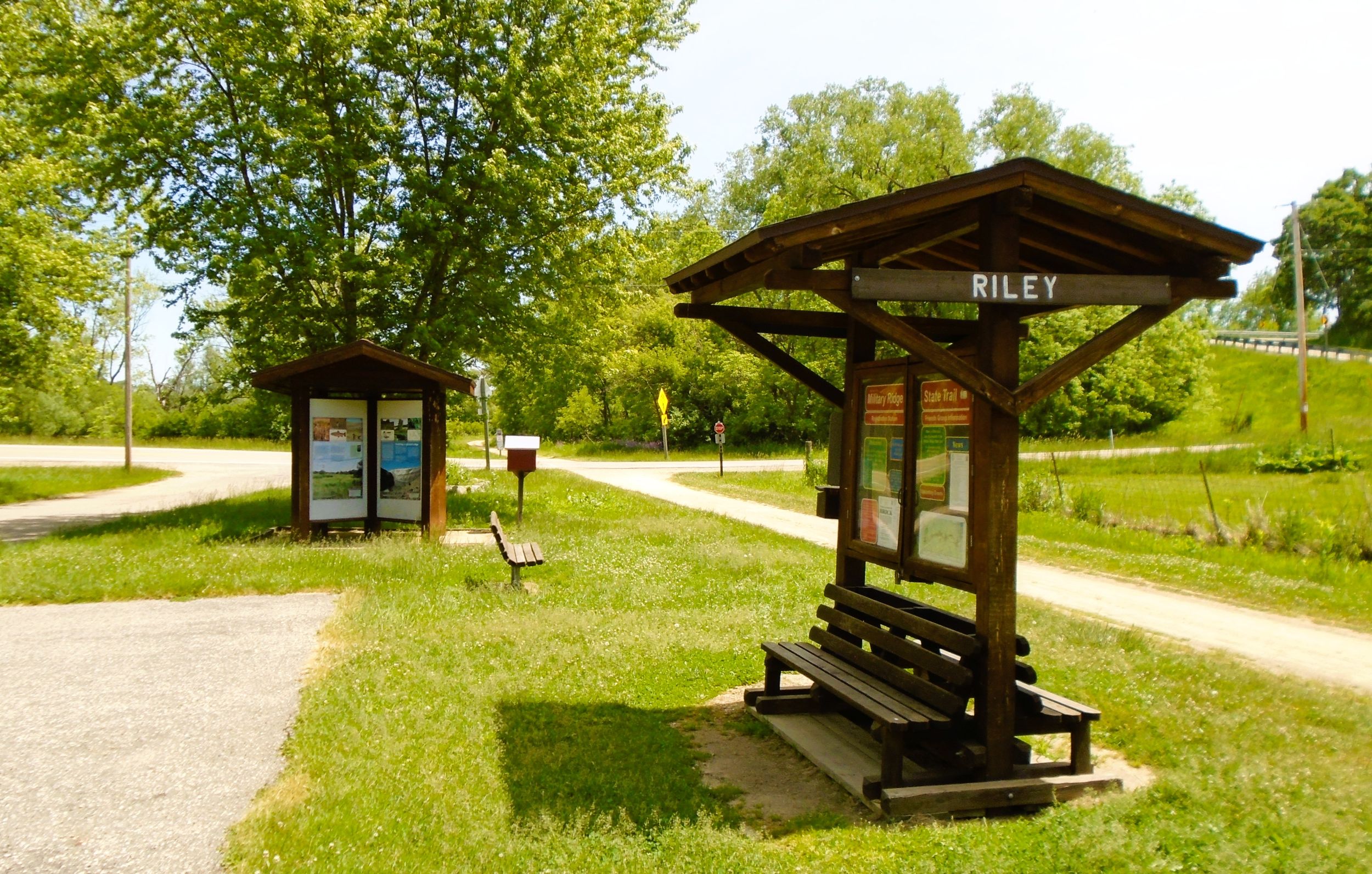
The trailhead in Riley has a parking lot, bike racks, a free little library stand, park benches, picnic table, information kiosk, portable toilet, and a large interpretive display. Each panel of the display highlights Riley’s interesting human and natural history. Some placards convey the story of the community’s historical development and role of the Chicago and North Western Railway there. Other signs focus on ecology and local efforts to preserve the land and water of the Upper Sugar River Watershed, along with its flora and fauna.
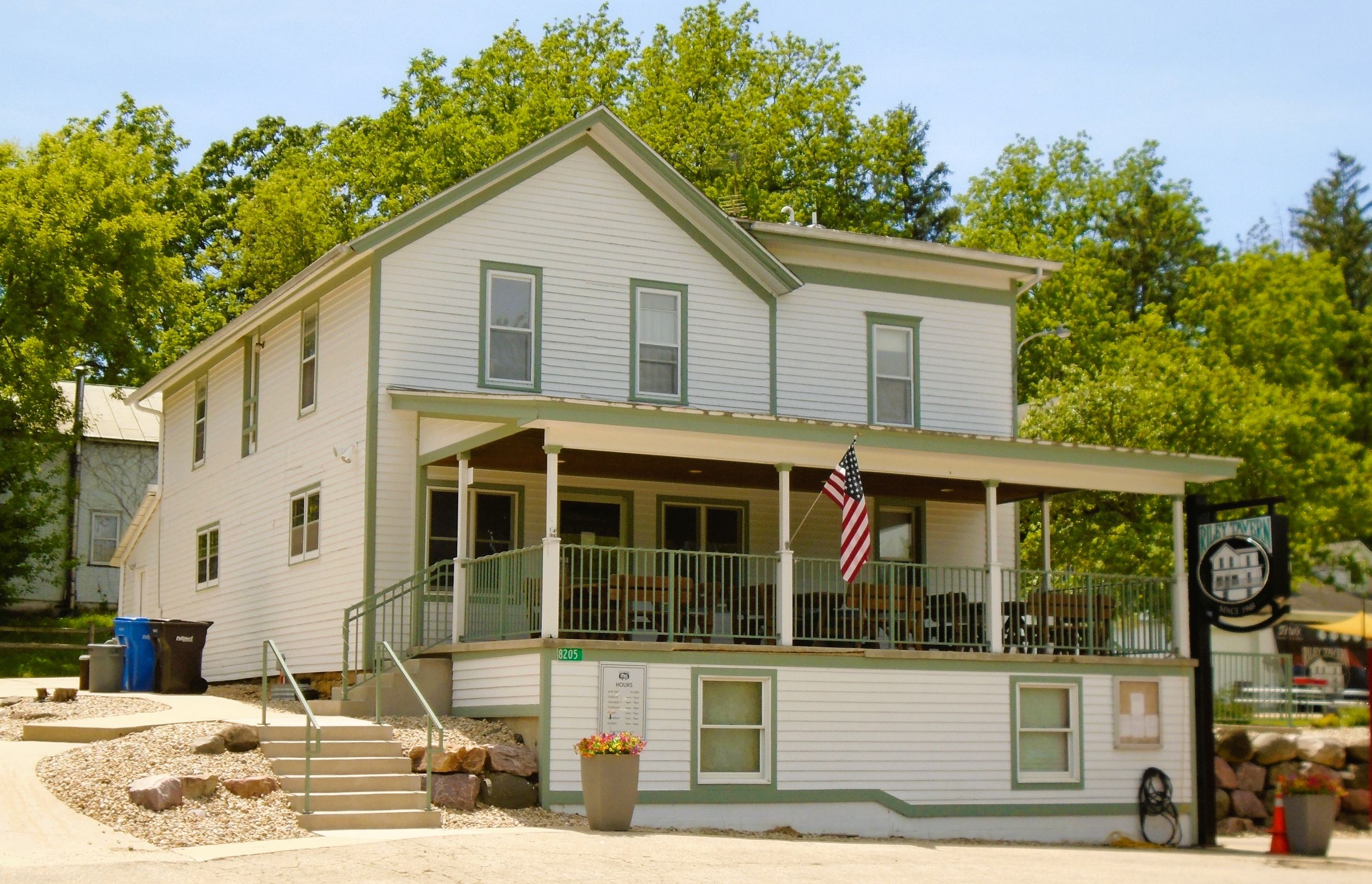
Riley was founded in 1881 when tracks for the Chicago and North Western Railway were laid through the area. Originally named Sugar River Station, the town emerged on land belonging to William Riley. It had a population of 100 citizens at the start of the 20th century, and was home to a creamery, stables, a depot, stockyards, church, and a large hall. Still standing today is Riley Tavern, built by John E. Brown as a general store and post office in 1884, with living quarters on the upper floor. It opened as a tavern in 1948. Today, it is a popular hangout on weekends, and worth a stop for good food and cold drinks.
Returning to the Military Ridge State Trail, the Riley trailhead is accessed by car from U.S. Highways 18-151. Dry Ridge Road leads from the U.S. highway to County Highway J at mile marker 73 between Verona and Mount Horeb. Road signs indicate the route north to the county highway. Drive 0.2 mile on Dry Ridge Road to the stop sign and turn left (north) on County Highway J. It is 2.6 miles further north to Riley. For a short distance, County Highway J travels east on County Highway PD, before turning north again.
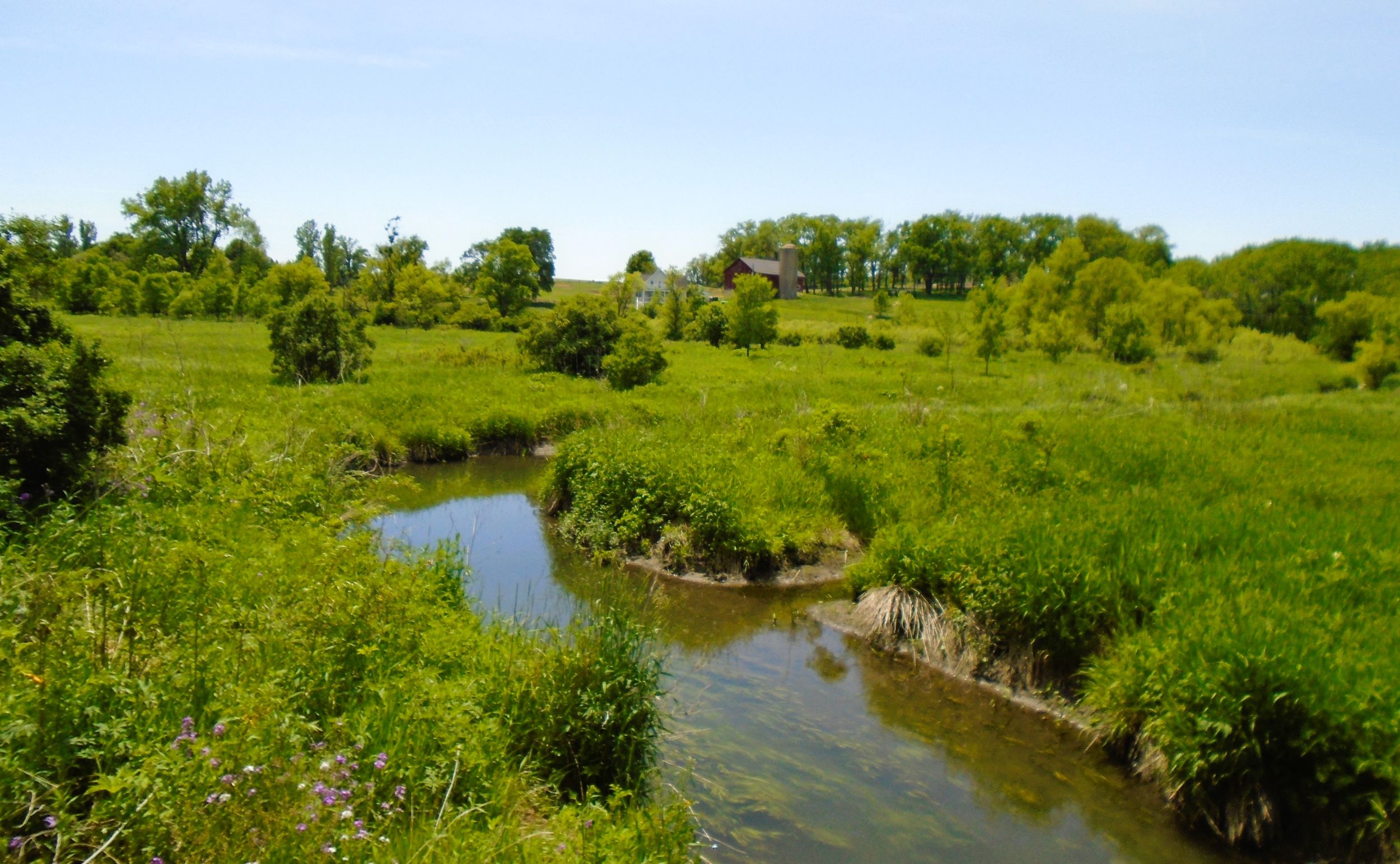
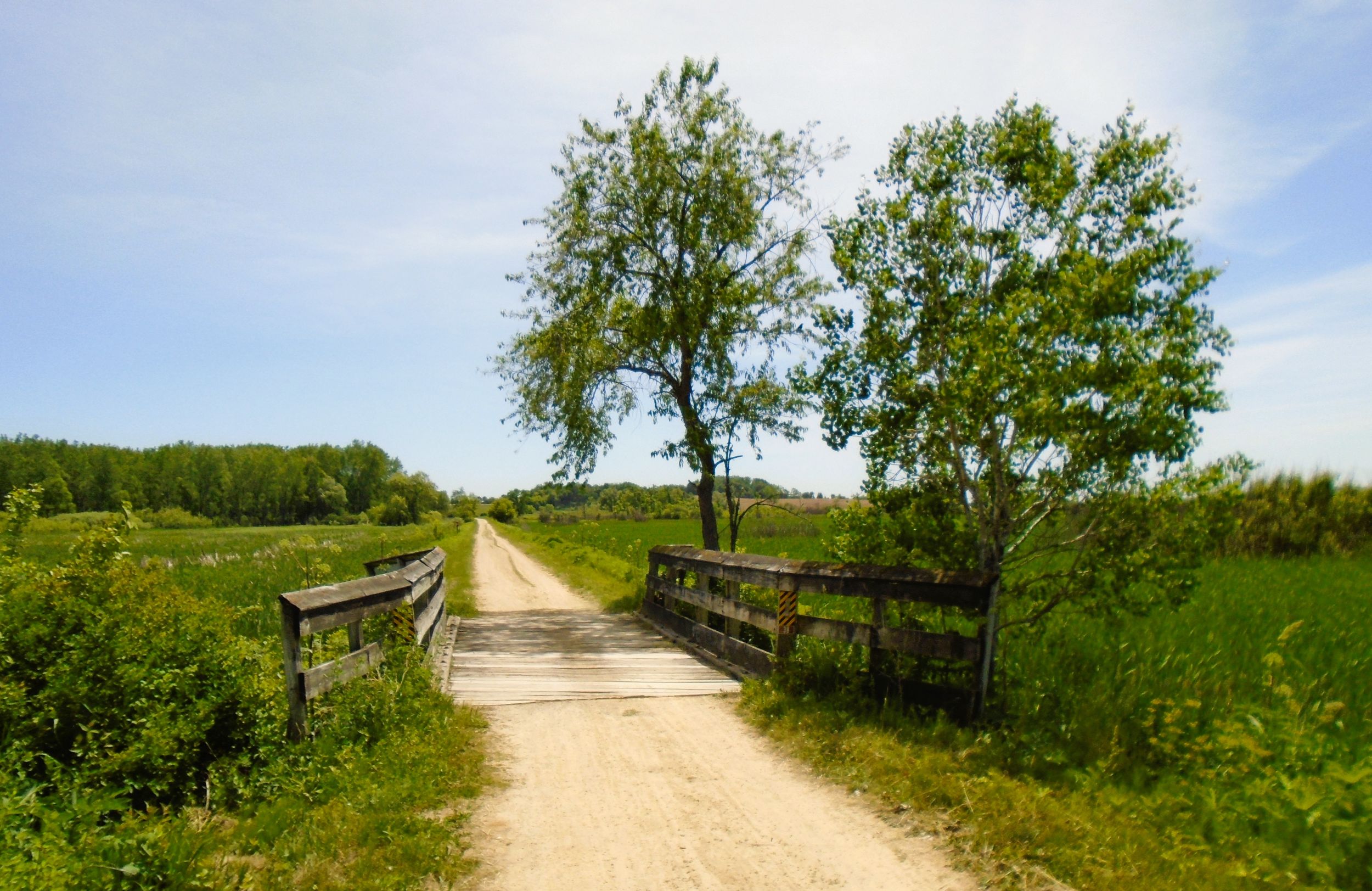
From Riley, the Military Ridge State Trail heads southwest toward Verona after crossing County Highway J. For the next 4.5 miles, the path travels through the Upper Sugar River Watershed. The terrain here is low and flat, with vast open marshes and meadows of tall grasses and cattails. Groups of willow trees, cottonwoods, and oak savannas offer shade along the straight, sunny route. Red-wing blackbirds, swallows, and common wrens flit back and forth across the landscape during summer months.
Wild flowers grow along the trail throughout spring and summer months. Some are native and others invasive. By mid-June, Dame’s Rocket (Hesperis matronalis) begins to fade. This plant with purple and white flowers is highly invasive, fragrant, and found throughout Wisconsin. Blue Flag Iris (Iris versicolor) is native and grows in wet meadows. Trail-goers may spot the small white flowers of Canada Anemone (Anemone canadensis) growing nearby. Prairie Rose (Rosa) blooms in June, and is seen from the trail in open areas.
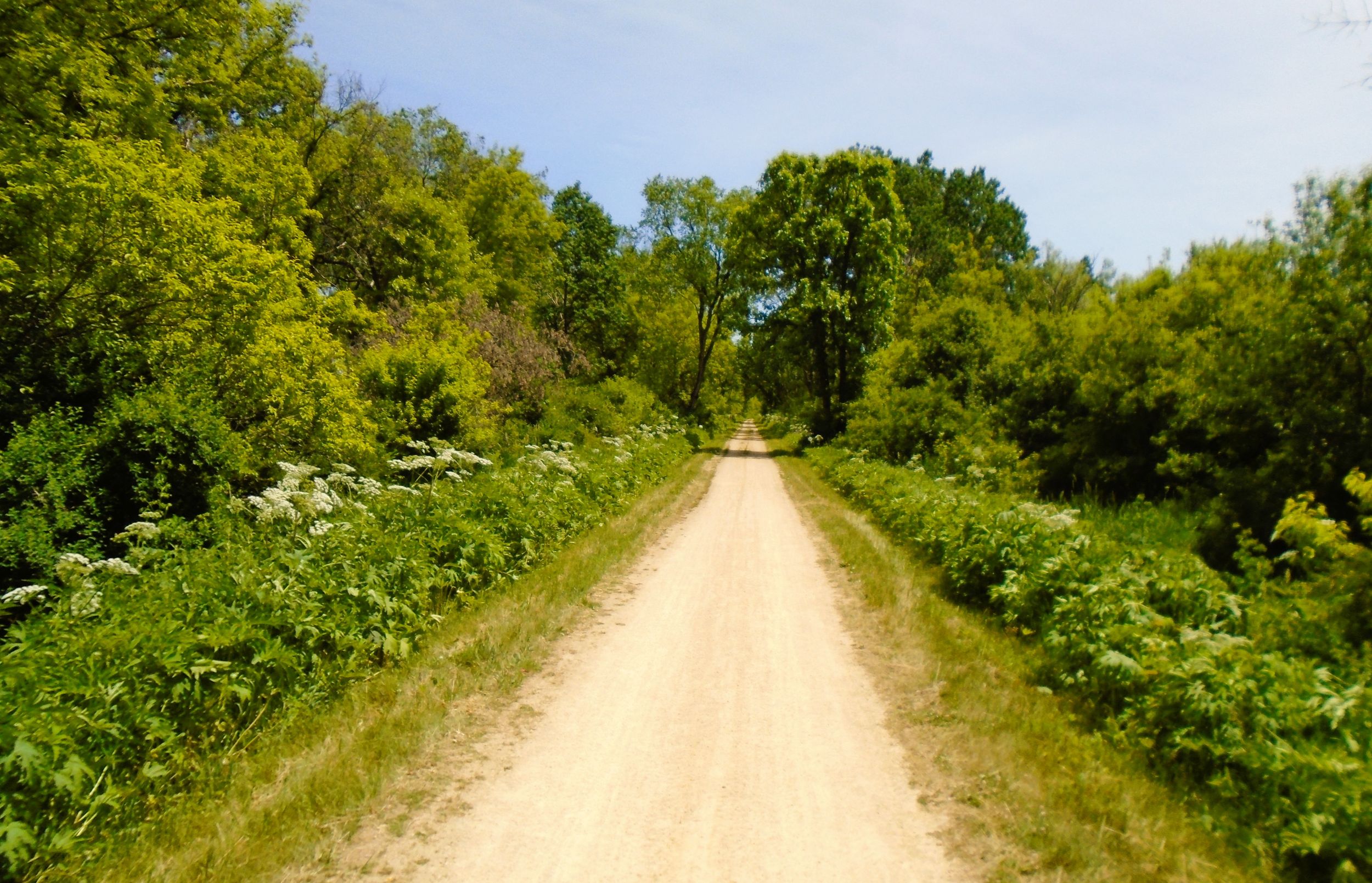
One commonly noticed plant with umbrella-shaped white flower clusters is frequently mistaken for another. Along the trail grows American Cow Parsnip (Heracleum maximum). This is a native plant and part of the carrot family. It has been used by North Americans throughout the years in a variety of ways. Similiar looking but taller than cow parsnip is the invasive Giant Hogweed (Heracleum mantegazzianum). This plant emits a sap that may cause burns or blisters to human skin, and should be avoided.
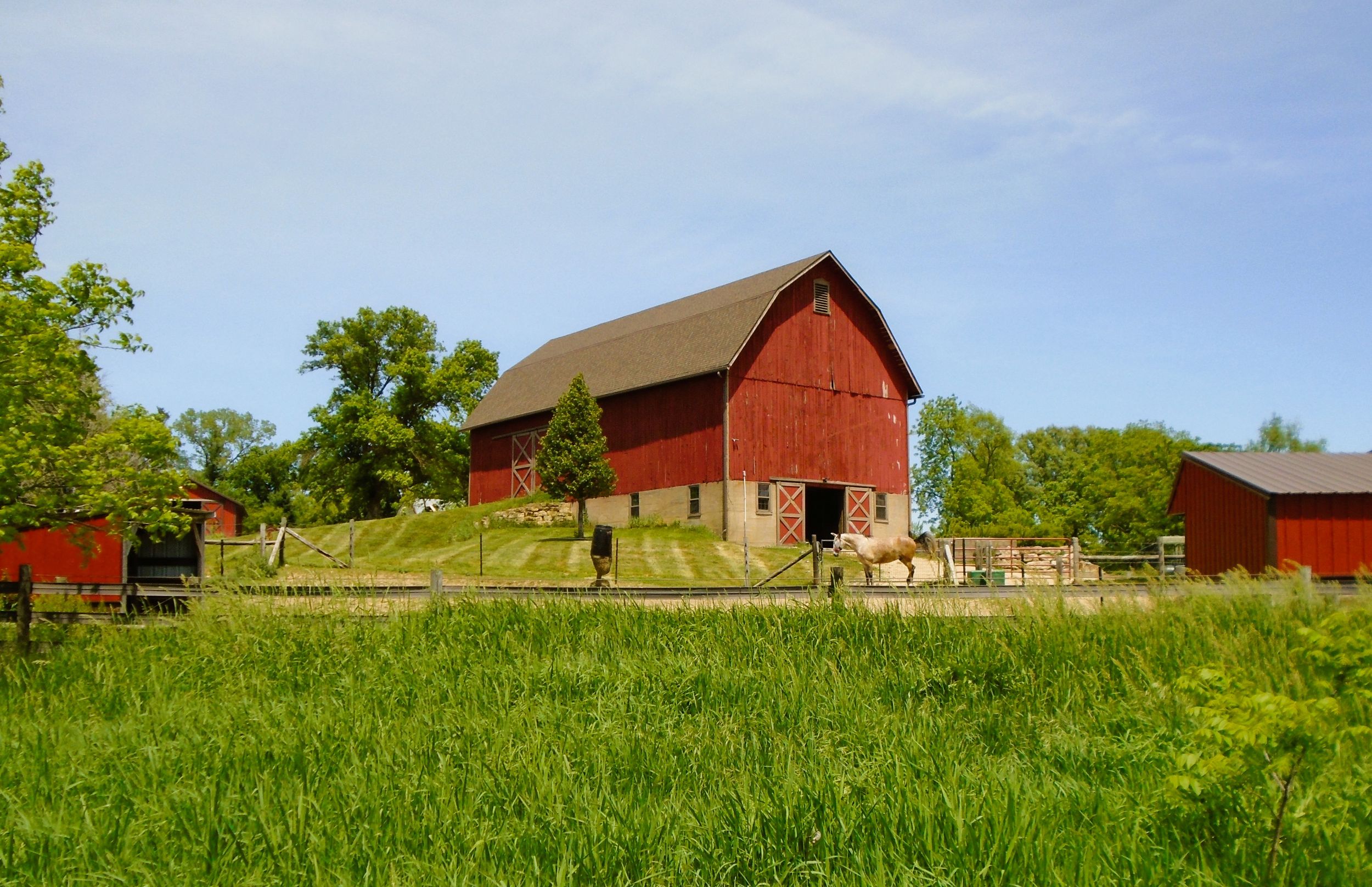
The Sugar River crosses the Military Ridge State Trail three times in the 1.6 miles from Riley to County Highway PD. The narrow river meanders through the open wetlands, never far from the trail. The bike path crosses Paulson Road before reaching the county highway. At County Highway PD, self-employed flashing lights assist trail-goers across the road. The trail next crosses a tributary of the Sugar River and intersects White Crossing Road. Red barns and grazing horses of Indigo Trails Farm & Coaching are visible to the left (northeast).
The Military Ridge State Trail continues southeast through open lowlands. The Sugar River flows south on the right (southwest) side of the trail. Far off in the distance to the left (northeast) are several large buildings atop the rising ridge. This is the massive campus of Epic Systems, which boasts some of the most uniquely styled buildings in the country. The medical software company employs 14,000 people and has its home in Verona.
After passing the elaborate buildings, the path meets a spur trail to the left (northeast). It goes up the ridge to Epic Systems and a local neighborhood. The Military Ridge State Trail continues through a tunnel under U.S. Highways 18-151. It is nearly two miles from White Crossing Road to the tunnel. On the tunnel’s south side, trail-goers notice a small creek and a high water marker. In times of heavy rain, this stream sometimes floods the tunnel.
Advancing 0.7 mile to the next tunnel under U.S. Highways 18-151, the trail passes though the Sugar River Wetlands State Natural Area. This section of the the trail is exposed to a diverse wetland complex of sedge meadows, peat-like fens, and tall prairie grasses. Sugar River Wetlands is owned by the DNR and was designated a State Natural Area in 1996.
After passing through the second tunnel under the U.S. Highways, the trail turns to the northeast and begins an ascent in elevation. It is nearly a half mile to a third tunnel, this one running under Wildcat Way. The path journeys through a corridor of trees past Verona Area High School and its athletic fields. It is another half mile through shaded forest to Nine Mound Road. Right before this intersection is a small rest area with a bike rack, park bench, and free little library stand. It is 0.3 mile further to Verona’s Hometown Junction Park.
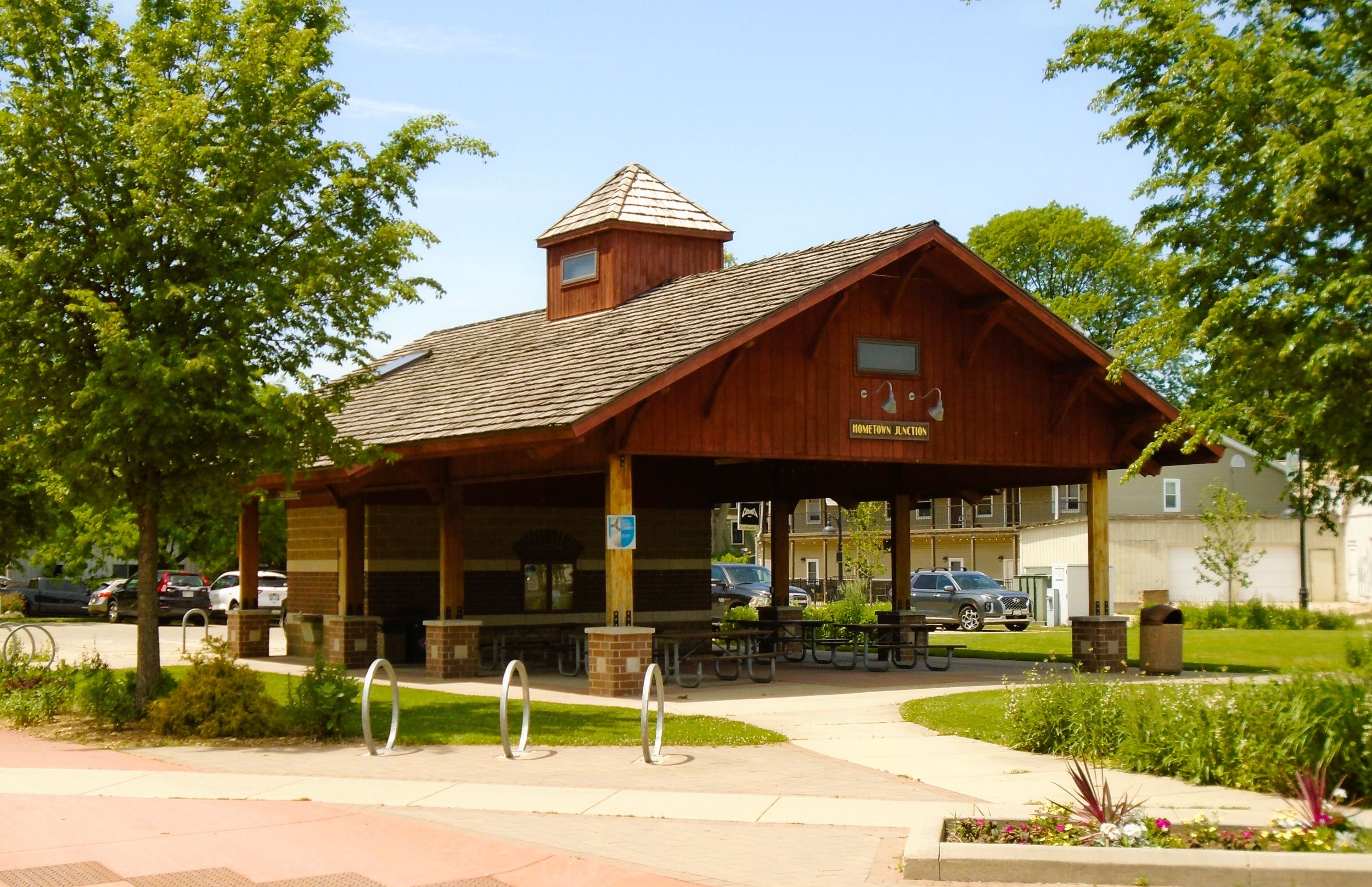
Hometown Junction Park on County Highway M (Main Street) serves as a great trailhead. It offers a covered shelter with picnic tables, flush toilets, drinking water, bike racks, and two bicycle service stations. Another trailhead is 1.2 miles further down the trail at the Verona Park and Ride on the southwest corner of Verona Road and Old County Road PB. A parking lot, information kiosk, park benches, picnic tables, and historical marker are found there.
To access either traihead in Verona by car from U.S. Highway 18-151, use exit 79 (Old County Road PB/County Highway M). To reach the Hometown Junction Park on Main Street, turn south on Old County Road PB, and then right (west) onto County Highway M. It is two miles to the trailhead. To access the Verona Park and Ride trailhead, turn north on Old County Road PB and travel one mile. The entrance is on the left (west) side of the road.
Verona started as a rural community. It was first inhabited by the Ho Chunk Nation. Prehistoric tribes there left behind burial mounds, like “Nine Mounds.” After Ho-Chunk land was ceded to the U.S. Government, white settlers arrived in 1837. Verona was named after Verona, New York. It incorporated as a village in 1921 and as a city in 1978. Verona was home to the Dane County Insane Asylum from 1882 to 1973. Previously, the county poor farm operated there. Verona was the site of a leper colony between 1890 and 1910.
Verona’s moniker is “Hometown USA.” Today, it is a prosperous and growing city. The intersection of Main Street and Verona Avenue is in its downtown area and very close to the trail. Main Street is home to several dining establishments. Not far from Hometown Junction Park is Hop Haus Brewing Company, Avanti Italian Restaurant, Alice Good Specialty Coffee, and The Sow’s Ear. They offer delicious refreshments to trail-goers craving a beverage or meal. There are other restaurants throughout in the city, making Verona an ideal pit stop.
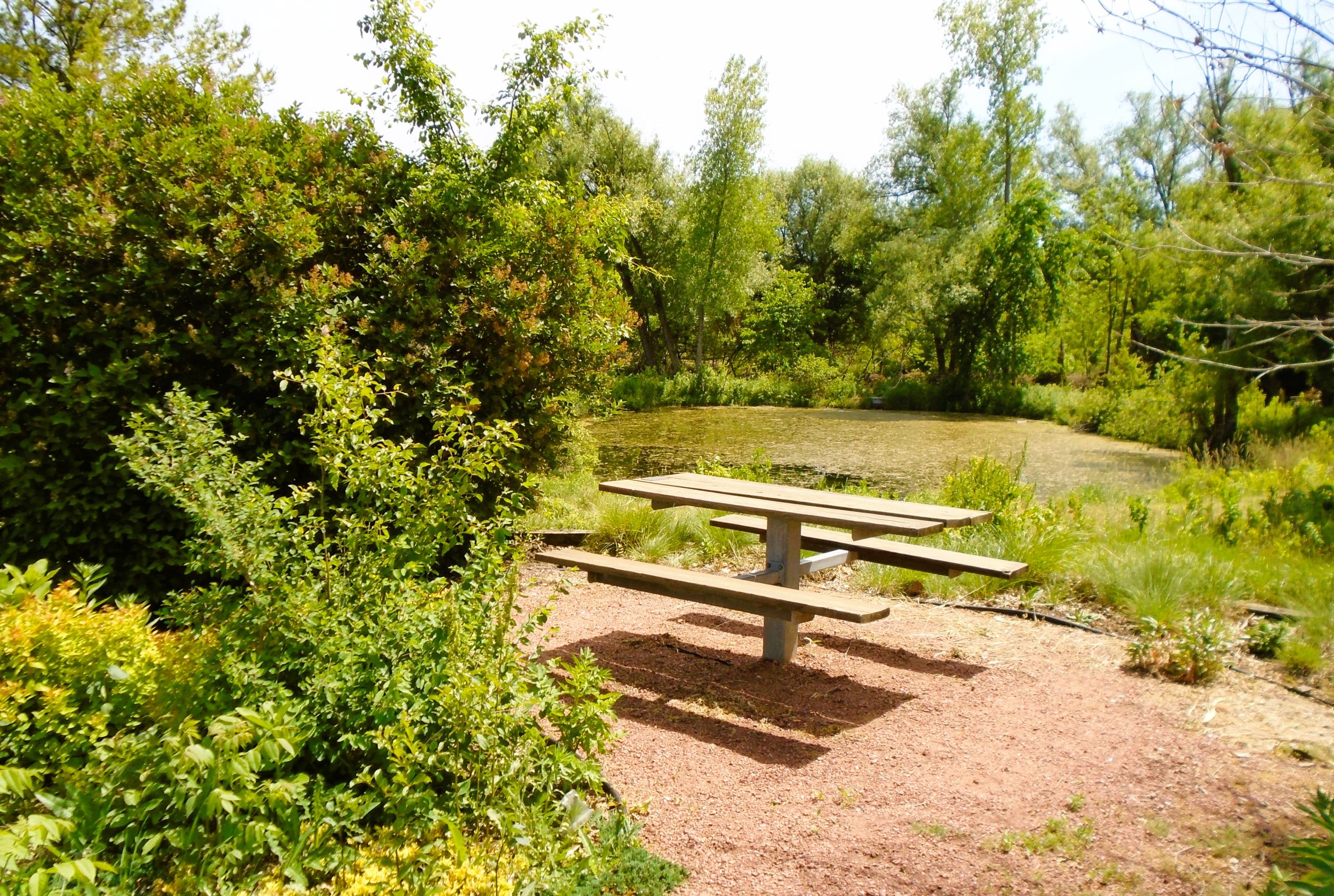
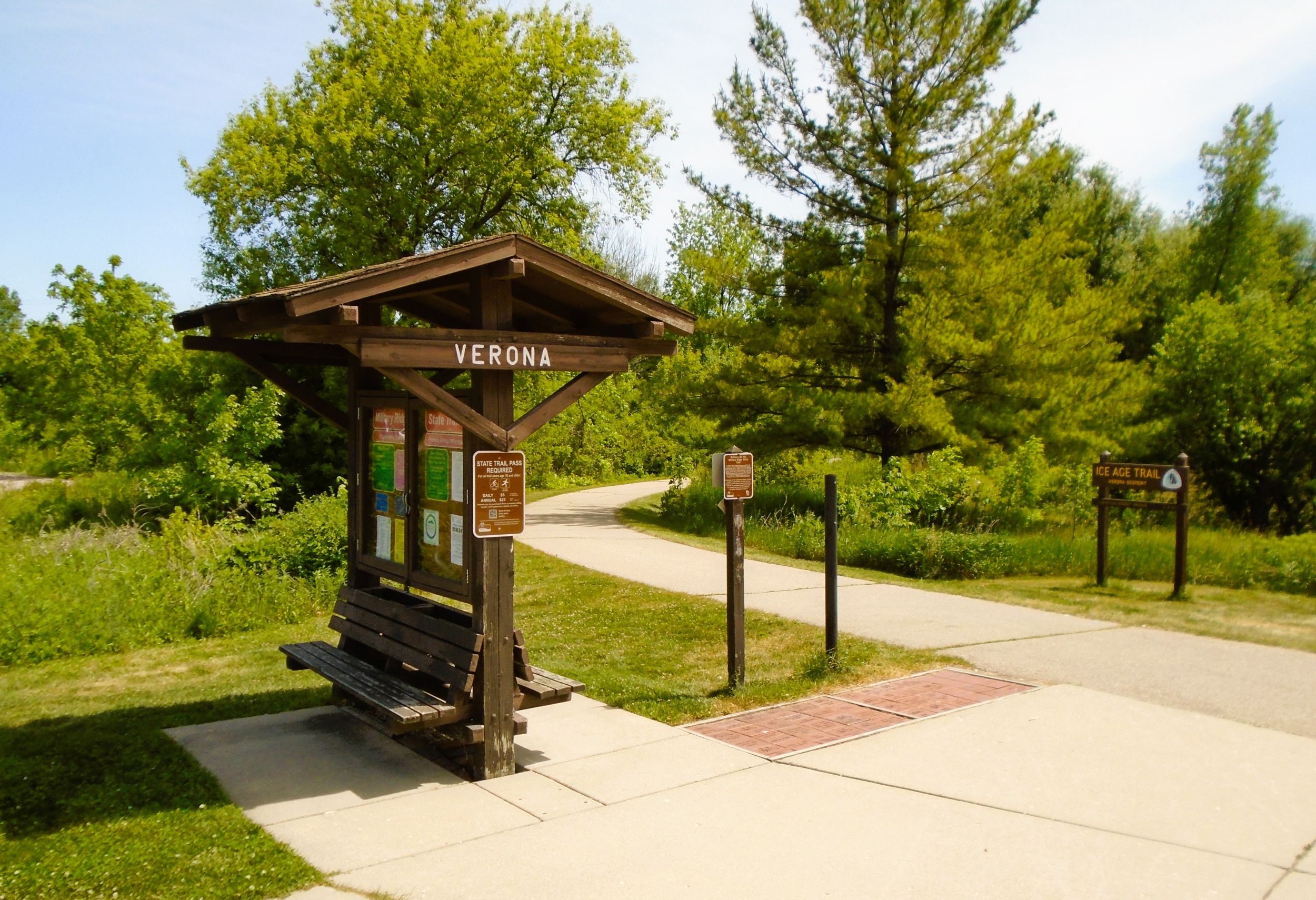
Back on the Military Ridge State Trail, the route goes northeast from Hometown Junction Park through Verona. Flashing crosswalk signs take trail-goers safely across Main Street. The path proceeds 1.2 miles before meeting the spur trail going left (north) to the Verona Park and Ride trailhead. Along the way, it crosses two streets and traverses Hometown USA Community Park. Restrooms are located off the trail in the park. The Ice Age National Scenic Trail crosses the Military Ridge State Trail in this section, heading right (south).
From the intersection with the Ice Age National Scenic Trail, it is 350 yards further to the spur trail going left (north) to the Verona Park and Ride. It serves as trailhead for the Ice Age National Scenic Trail, Dane County’s Ice Age Junction Trail, and Military Ridge State Trail. Another path goes right (south), across Badger Mill Creek to Badger Prairie Community Garden. At this place, the surface of the Military Ridge State Trail changes to paved asphalt.
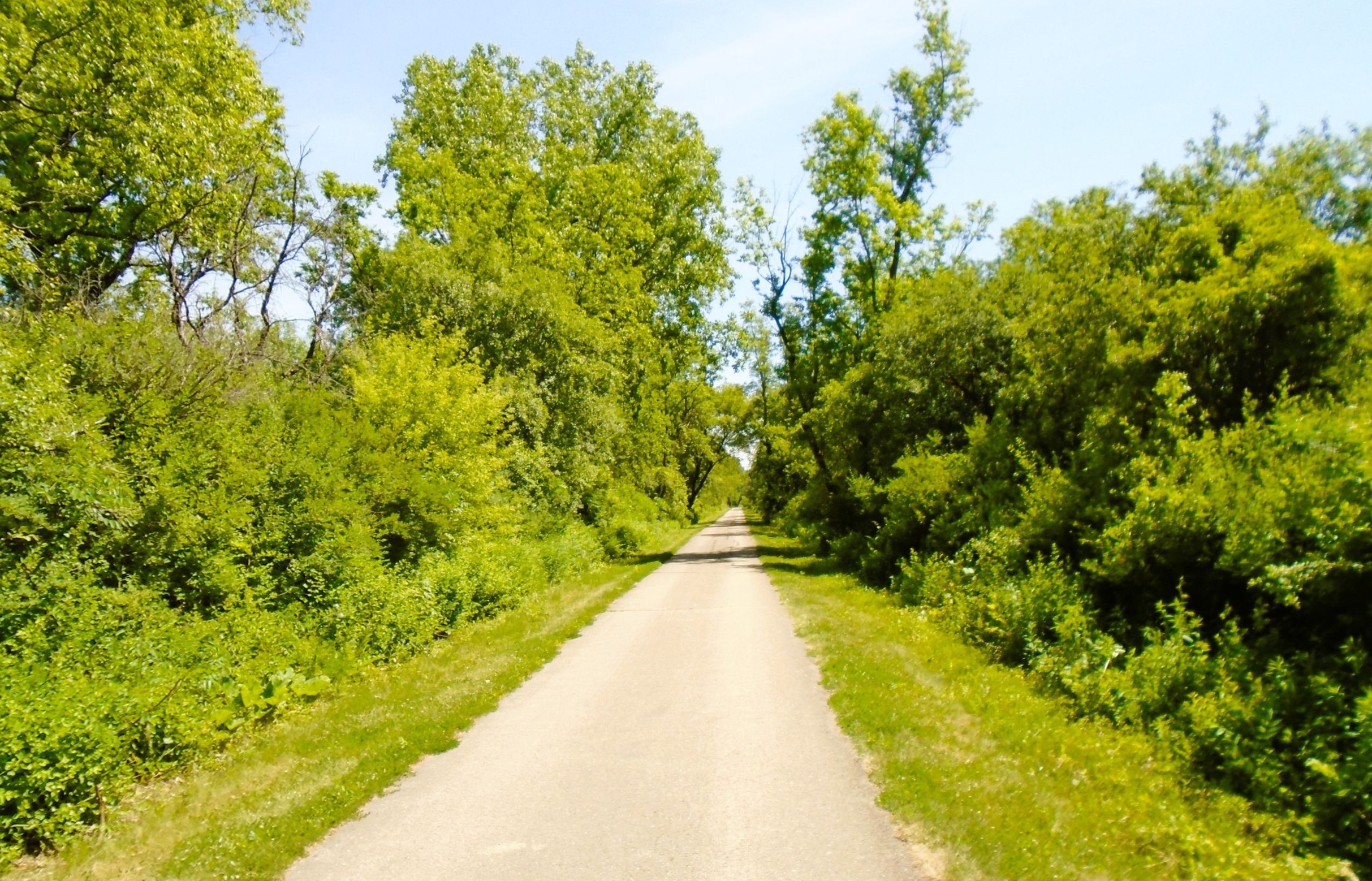
At the intersection with Old County Road PB, self-employed flashing lights provide a safe crossing. Next, the trail passes under U.S. Highways 18-151 adjacent to an entrance ramp. Continuing northeast, it enters the Ice Age Trail Junction Natural Resource Area. The large Dane County preserve surrounds Badger Mill Creek and was created to restore the fragile environment there. Military Ridge State Trail journeys 1.5 miles through this natural area.
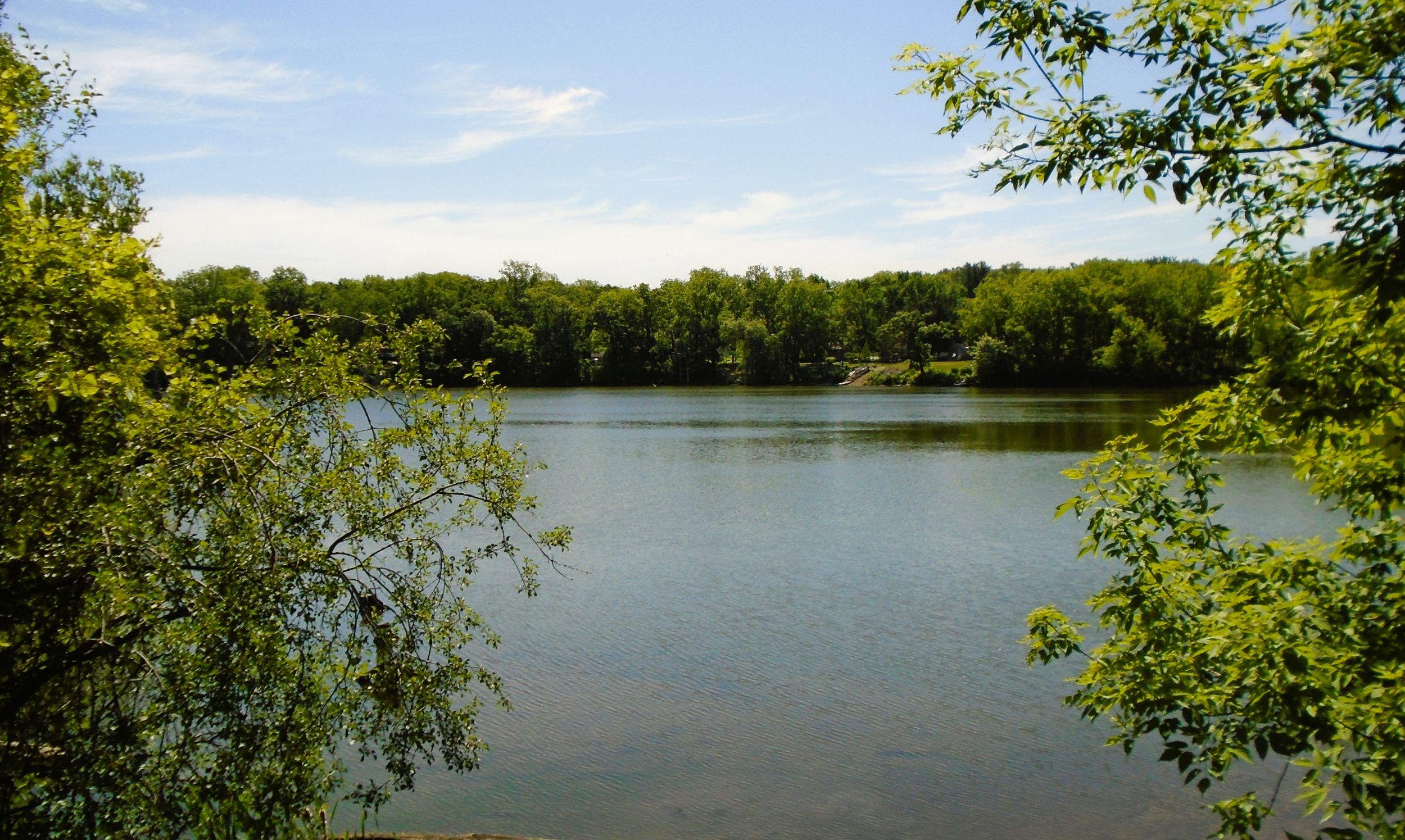
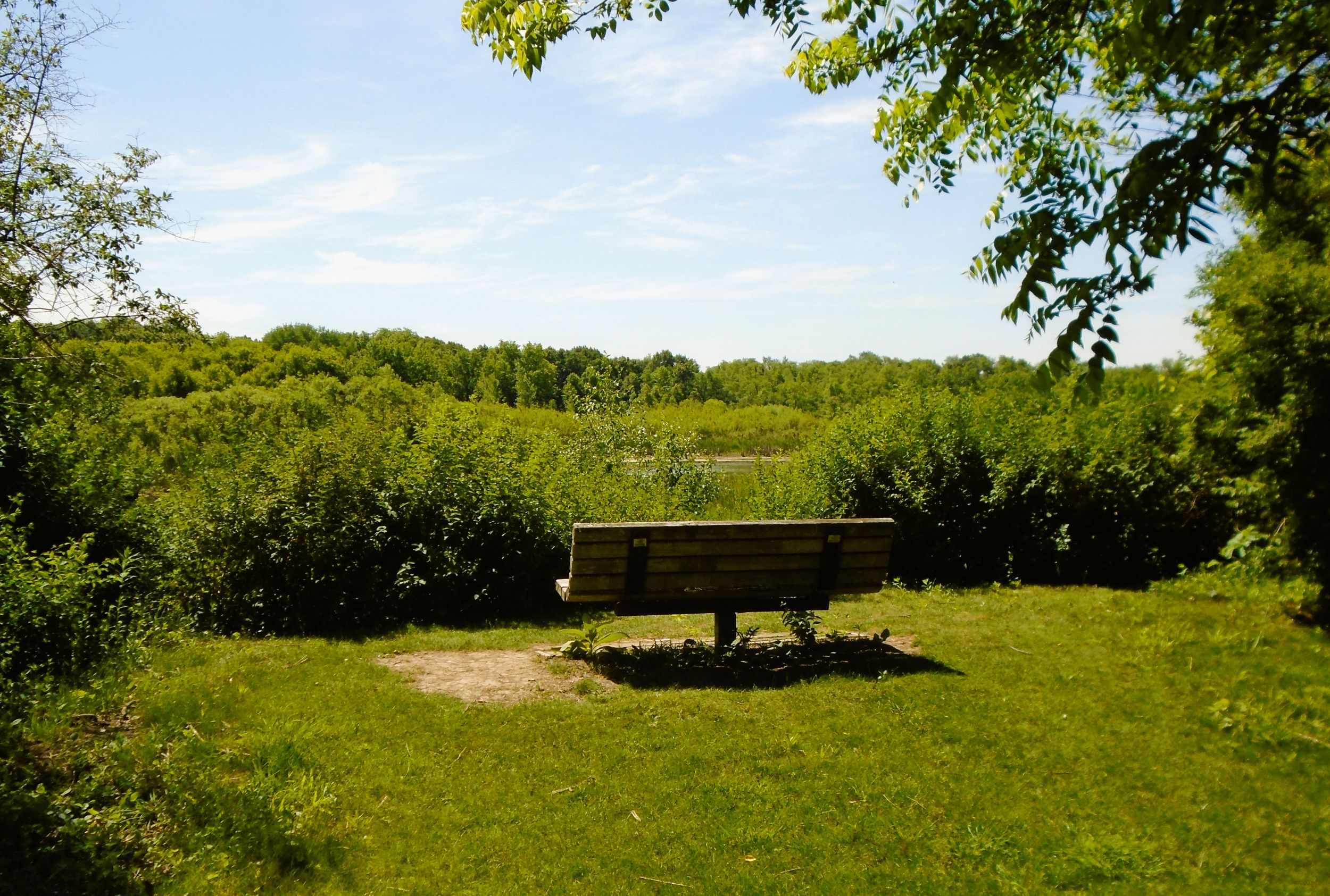
To the left (northwest) of the trail runs busy U.S. Highways 18-151 with its four lanes. The roar of traffic is heard throughout the next 1.5 miles. Despite the noise, the scenery is outstanding. Hardwood trees and bushes cover the natural area and offer a picturesque ride. The trail passes over Badger Mill Creek and past Goose Lake. Waterfowl are frequently seen in the reserve’s creek, ponds, and lake. Park benches along the way offer stunning views.
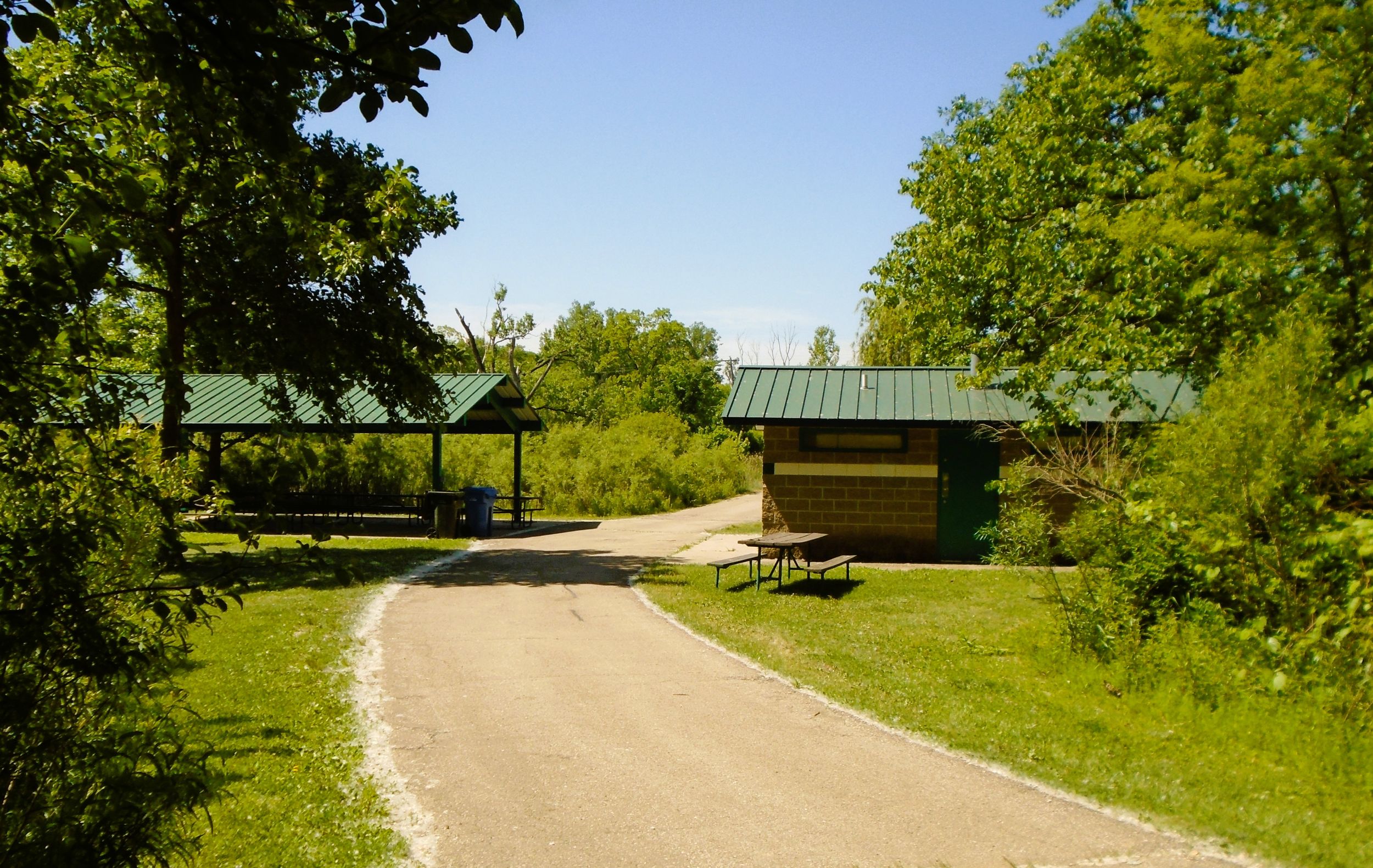
The Ice Age Trail Junction Natural Resource Area ends at Fitchrona Road. The trail crosses the road over a bridge and enters into the city of Fitchburg. The natural landscape remains the same because the trail next passes through Quarry Ridge Recreational Area. A spur trail to the right (southwest) leads to the recreational area’s parking lot. A picnic pavilion and restrooms are located there. It serves as a potential trailhead. The recreational area is home to several miles of mountain biking and hiking trails.
To access Quarry Ridge Recreational Area by car from U.S. Highways 18-151, take the County Highway PD/McKee Road exit and go west. Drive up the hill 0.4 mile and turn left (south) on Fitchrona Road. It is 0.6 mile back down the hill to a roundabout. Take the second exit to go straight through the roundabout, continuing south on Fitchrona Road. The parking area is 0.2 mile from the roundabout, and on the left (east) side of the road.
The city of Fitchburg began as a township named Greenfield in 1837. Its name was changed to Fitchburg in 1853 to avoid confusion with the Milwaukee suburb of the same name. Fitchburg was a rich agricultural community, but urban sprawl from Madison eventually changed the composition of the township. After years of long boundary disputes with Madison, Fitchburg incorporated as a city in 1983. Numerous businesses in Fitchburg, including restaurants and hotels, are located close to the Military Ridge State Trail.
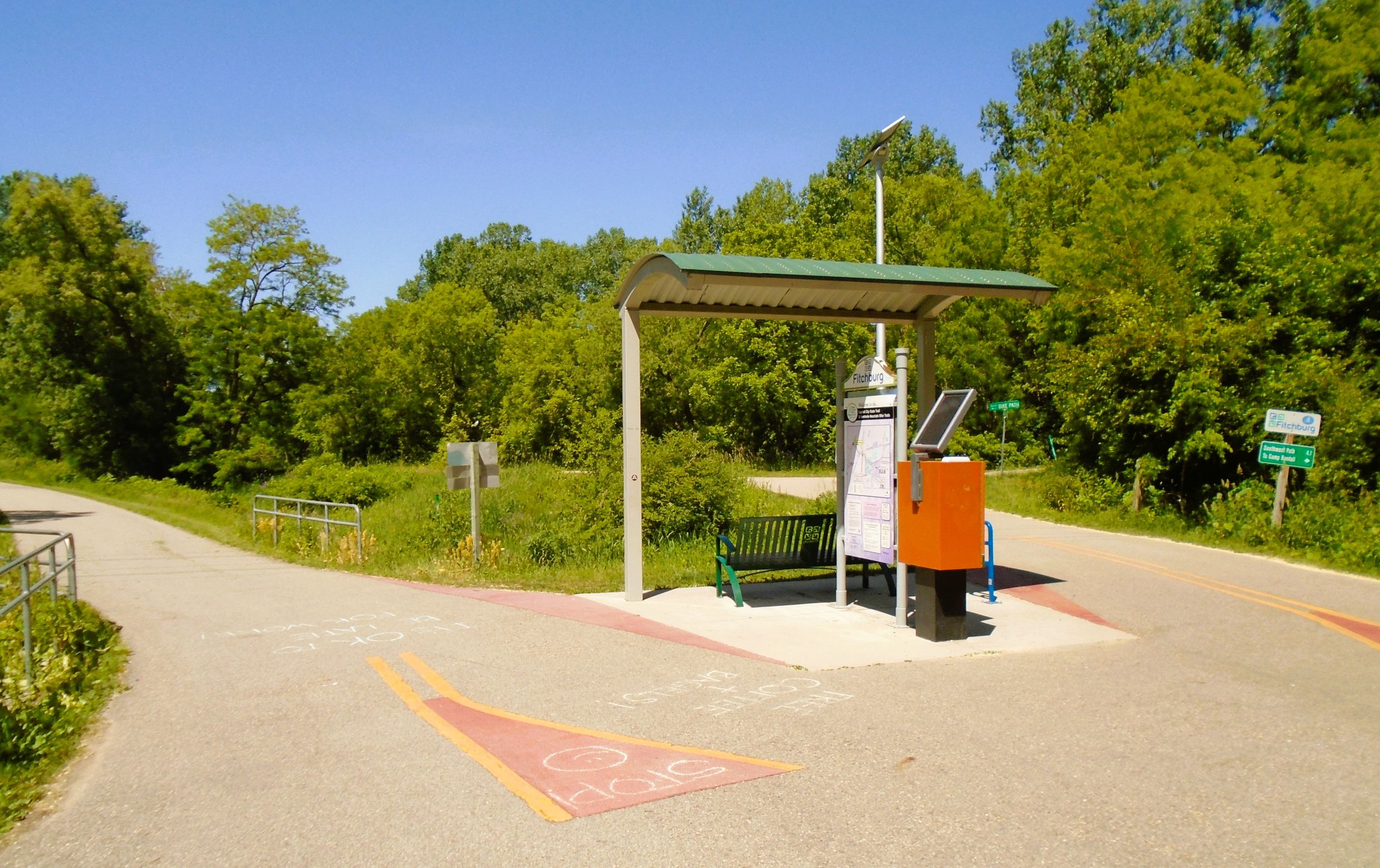
It is 0.8 mile from the trailhead at Quarry Ridge Recreational Area to the official end of the Military Ridge State Trail near Cottonwood Drive. A trail sign marks its end and welcomes trail-goers to the Cannonball Path. There is no parking lot at this location. The paved trail does end there, but continues north past an information kiosk and bicycle self-service station, before bridging County Highway PD (McKee Road).
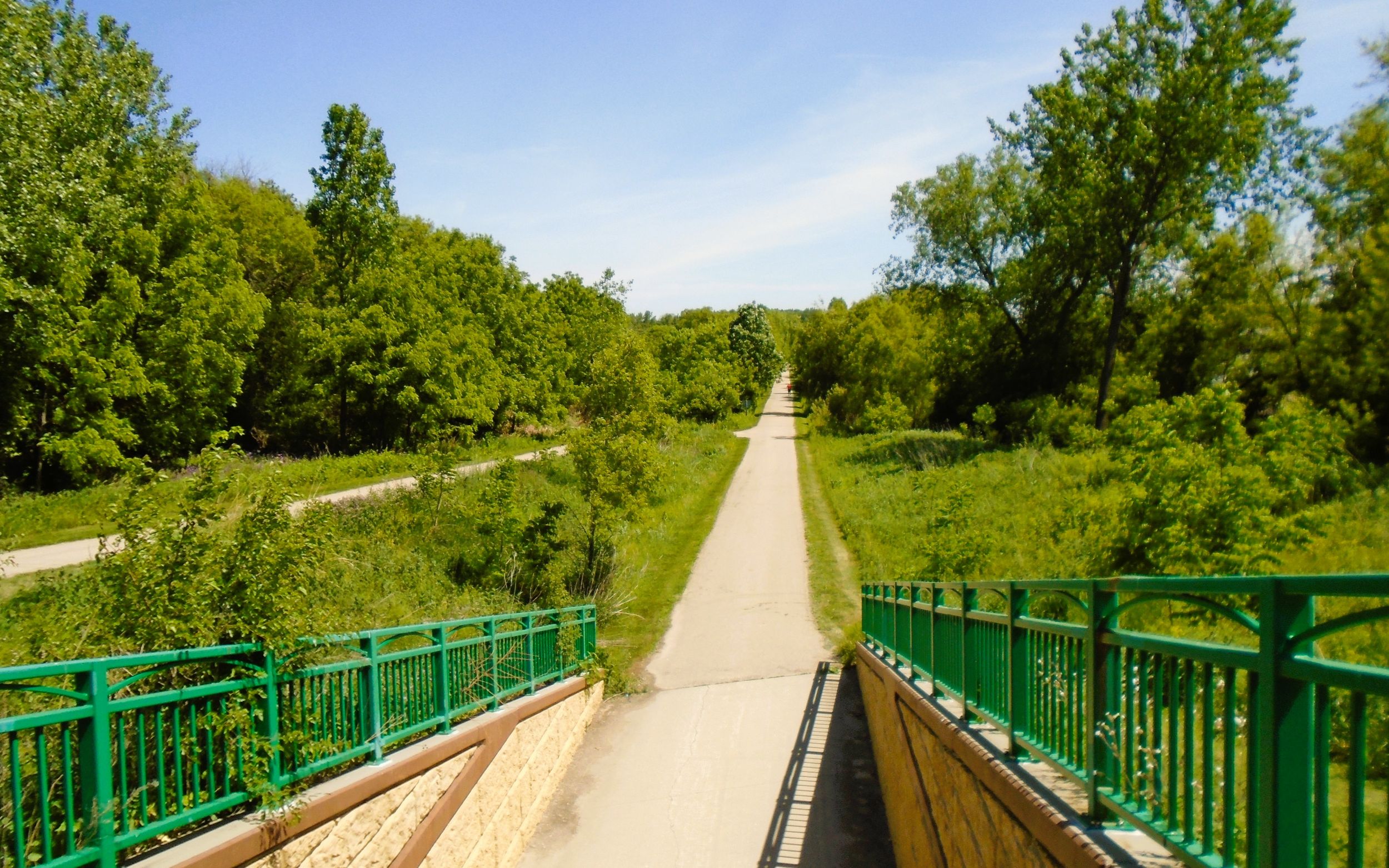
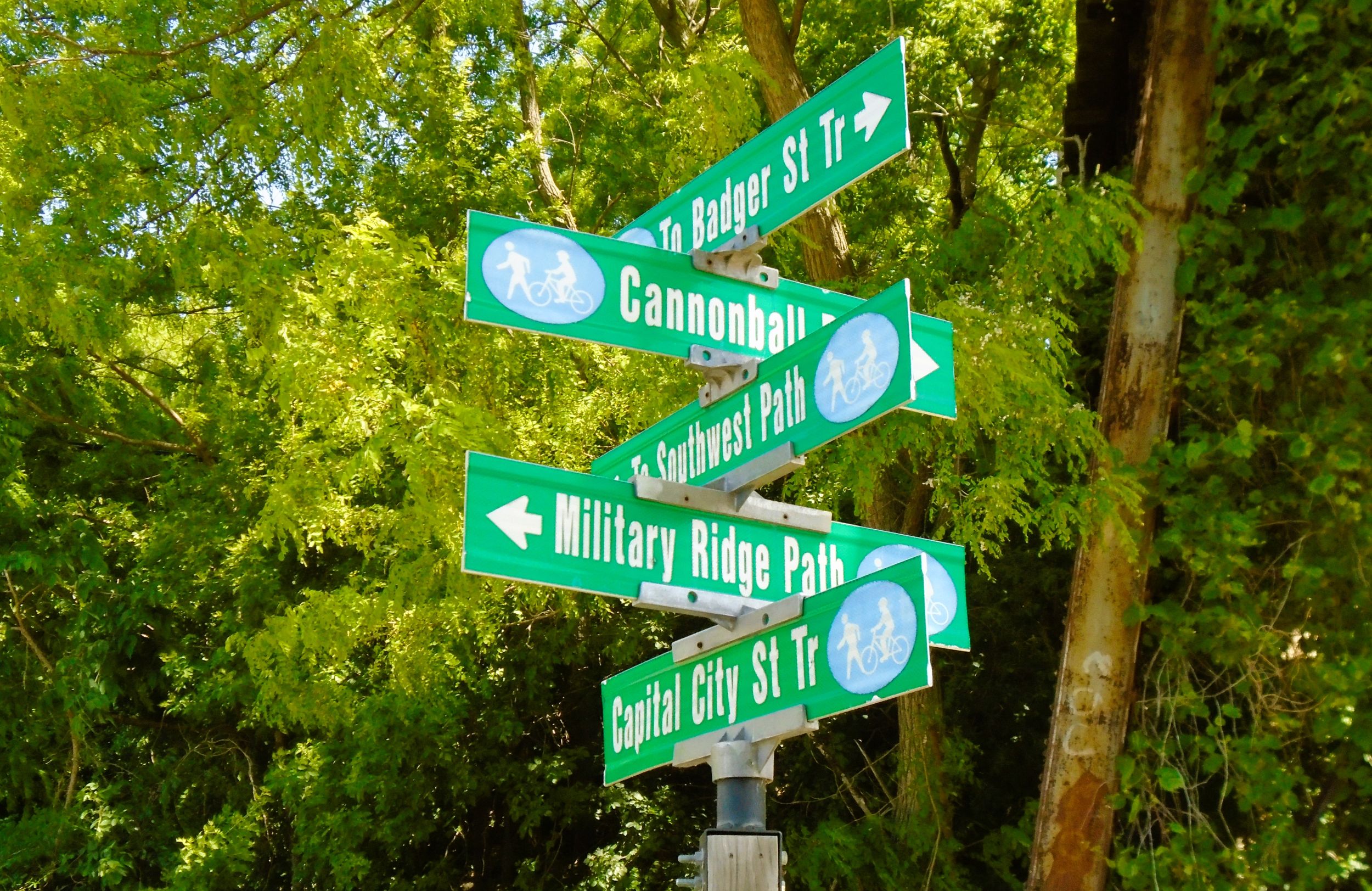
The paved path continues through Fitchburg for 0.7 mile. Some trail signs, maps, and brochures refer to this section as the Military Ridge State Trail. Others call it the Cannonball Path or Capital City State Trail. Despite the name, the route continues, descending in elevation 50 feet thoughout the 0.7-mile distance. The trail passes under Sprocket Drive and intersects Discover Path before arriving at the Velo UnderRound. At this junction, five different trails converge and a bicyclist’s options are wide open. The four options are Southwest Commuter and Cannonall Paths, Badger State Trail, and Capital City State Trail.
Map of trailheads and addresses along this section of the trail.
Also known as Dunn’s Marsh Roundabout, the Velo UnderRound has no parking lot. Other amenities there include park benches, bike racks, and a self-service pay station. The nearest trailhead parking is a half mile away on the Capital City State Trail. Follow that trail southeast from the Velo UnderRound to spur trail on the right (south). It leads up a steep hill to the Dawley Conservancy Bike Hub. This trailhead is on Seminole Road.
To access the bike hub by car, go east on County Highway PD (McKee Road) from U.S. Highways 18-151. Drive 0.9 mile to Seminole Highway and turn left (north). Go 0.4 mile to the trailhead. Restrooms, park benches, interpretive markers, a bike rake, and a bicycle self-service station are found there. The trailhead offers a beautiful view of Dunn’s Marsh.
The section of the Military Ridge State Trail from Riley to Fitchburg offers attractive vistas and a comfortable ride. Positioned nearly halfway along the route, Verona offers several trailhead locations and businesses that cater to trail-goers. The route does see a fair amount of traffic, especially on pleasant weekend days. The section from Verona to Fitchburg is generally busier. Nonetheless, the ride is enjoyable and relaxing.
Trail last ridden and documented in June, 2026.