Interurban Trail
The Interurban Trail is a popular and well-used path in east central Wisconsin. It connects quaint and historic towns as it travels through scenic rural landscapes. The trail journeys 35 miles through Ozaukee and Sheboygan Counties. Ozaukee County claims most of the route with 30 miles. The remaining five miles runs through Sheboygan County.
Starting at County Line Road on the Ozaukee-Milwaukee County border, Interurban Trail heads north. To the south, the path is called Brown Deer Trail. It becomes Oak Leaf Trail after one mile, and goes through Glendale, Shorewood, Whitefish Bay, and Milwaukee.
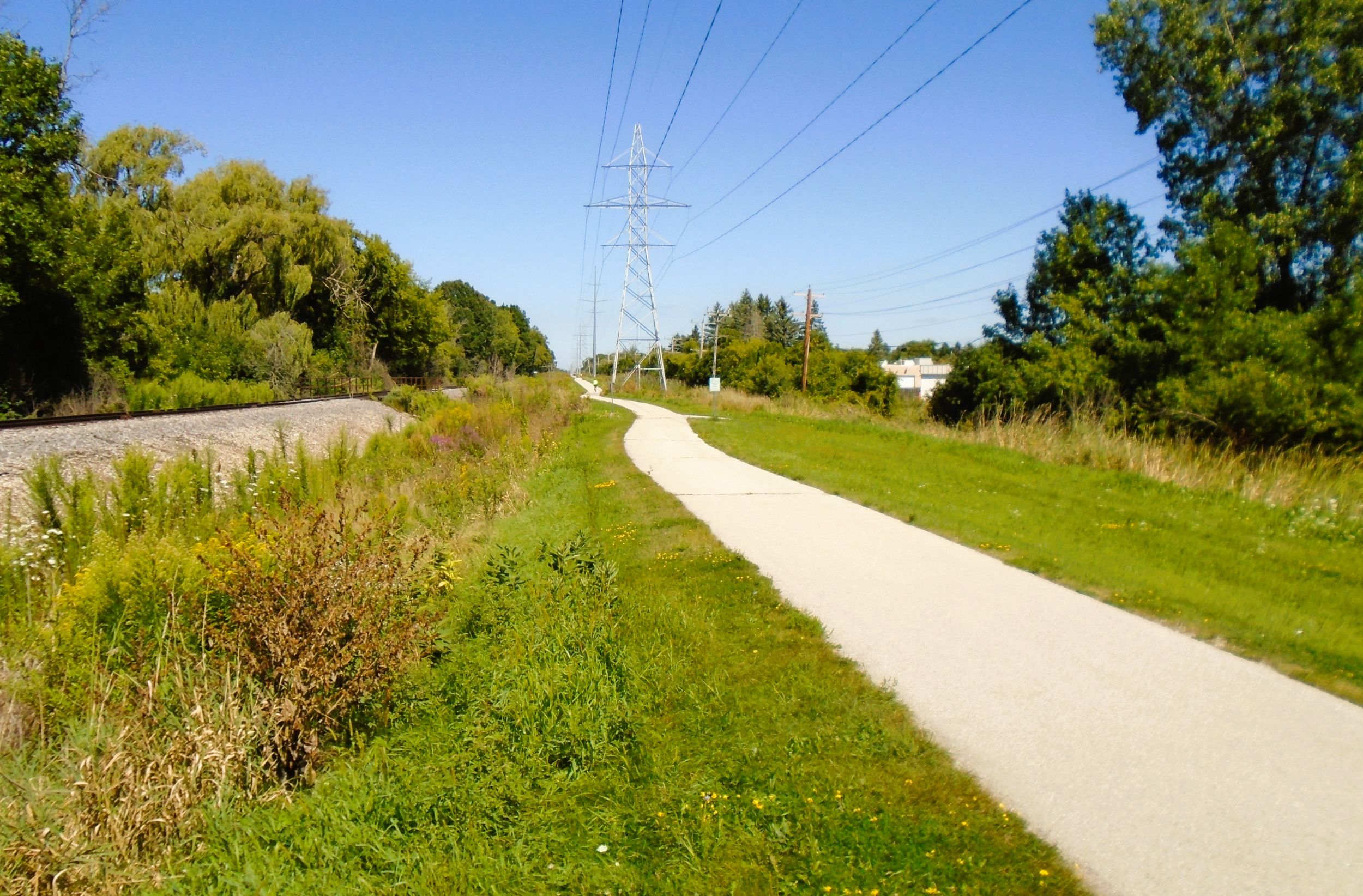
Traveling north from the county line, the Interurban Trail moves through Mequon, Thiensville, Cederburg, Grafton, Port Washington, and Belgium in Ozaukee County. In Sheboygan County, the trail journeys through Cedar Grove and ends in Oostburg. The Interurban Trail is well-used and sees high traffic volume on summer weekends.
From Oostburg, cyclists may continue north to Sheboygan on nine miles of roads. A bike route goes through Kohler-Andrae State Park, James Tellen Woodland Sculpture Garden, and Sheboygan Indian Mound Park before reaching downtown Sheboygan. City street bike routes also lead to Plank Road Trail, a 35-mile trail running from Sheboygan to Fond du Lac.
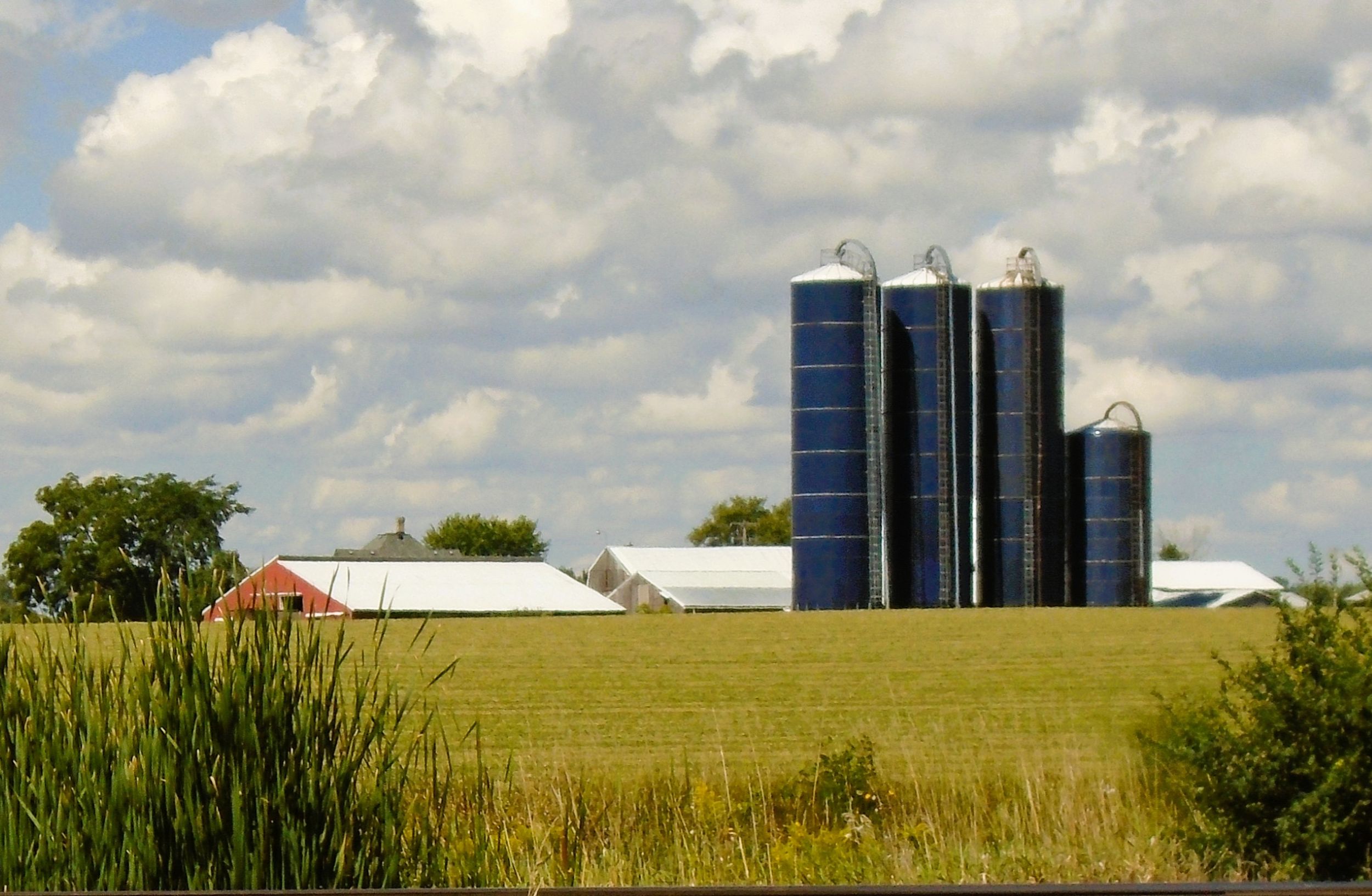
The Interurban Trail moves through forests, wetlands, and farmland. Deer, fox, and other animals may be seen. The trail passes Belgium and Cedar Grove Waterfowl Production Areas. The reserves are part of the Leopold Wetland Management District. The U.S. Fish and Wildlife Service manages this land to protect habitats for waterfowl and other animals.
The Interurban Trail has been designated as a Great Wisconsin Birding and Nature Trail. Bird watchers have seen raptors, waterfowl, shorebirds, warblers and other songbirds. Trail signs showing a kingfisher logo mark areas of high bird activity, supplemented by an online guide. Bird watchers may want to bring binoculars and field guides.
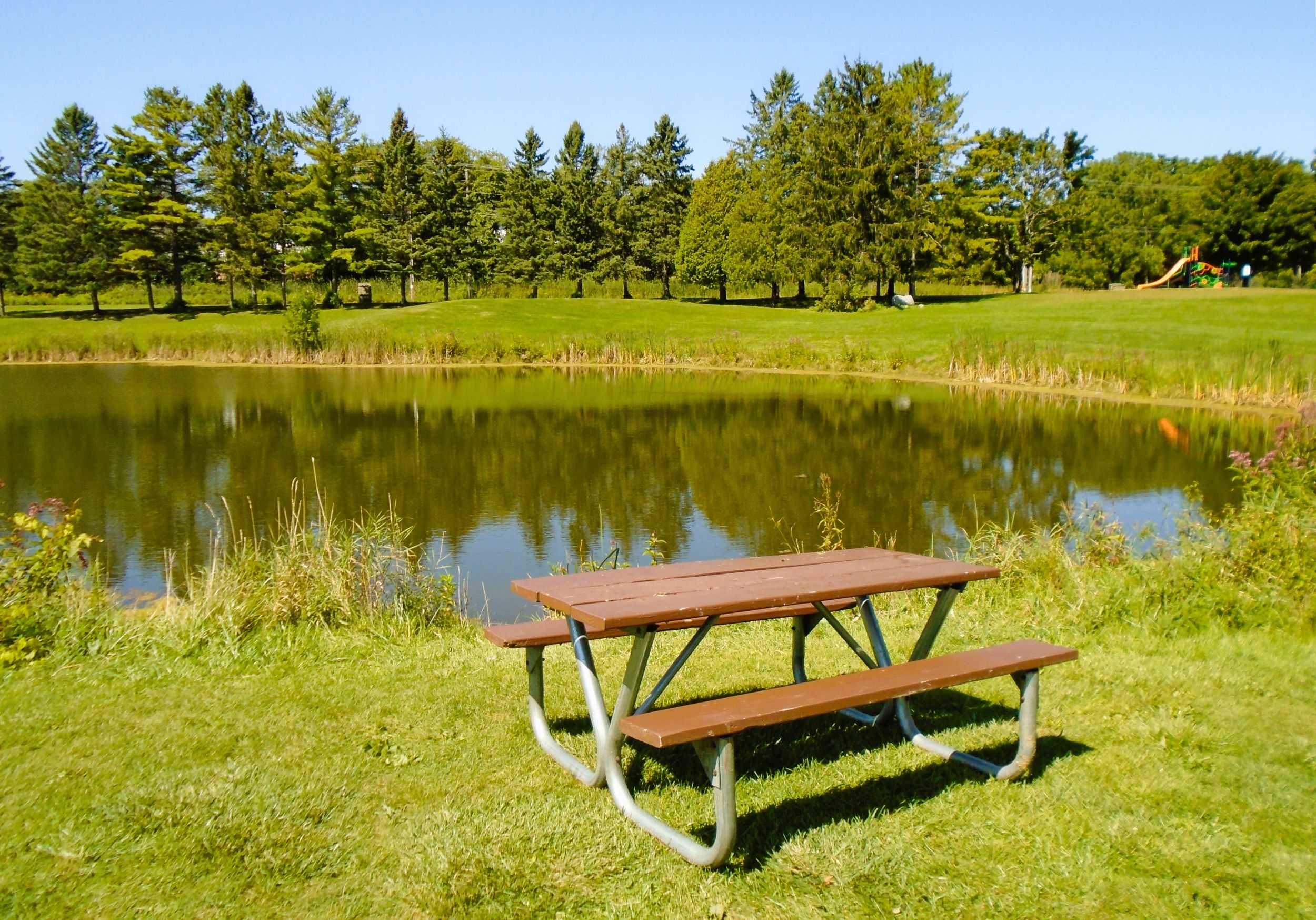
Several community parks are located along the Interurban Trail. They make convenient trailheads, have ample amenities, and offer pleasant places to rest. The trail includes additional trail-side rest stops, with benches and garbage cans along the route.
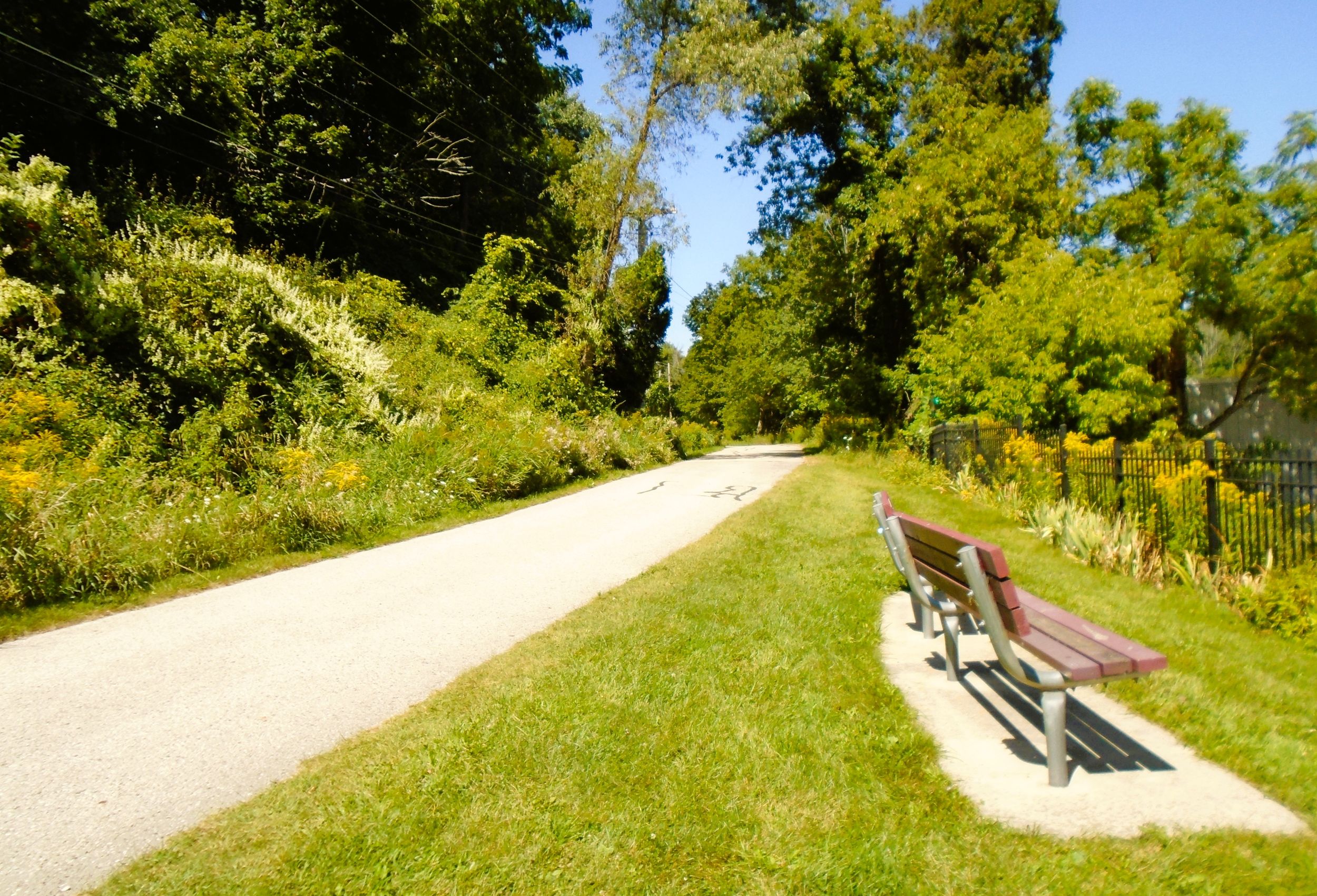
There is no fee to use the Interurban Trail. It is paved and in great condition. Bumps in the pavement are usually marked with spray paint. The trail travels on some streets and crosses a few railroad tracks. Cyclists should cross tracks slowly and perpendicularly.
For safety, Interurban Trail cyclists should wear helmets and bright clothing. Bicycle headlights/taillights are recommended. Proper trail etiquette includes yielding to pedestrians, biking on the right side of the trail, and announcing to pedestrians when passing from behind. When stopping on the trail, move bicycles off the pavement.
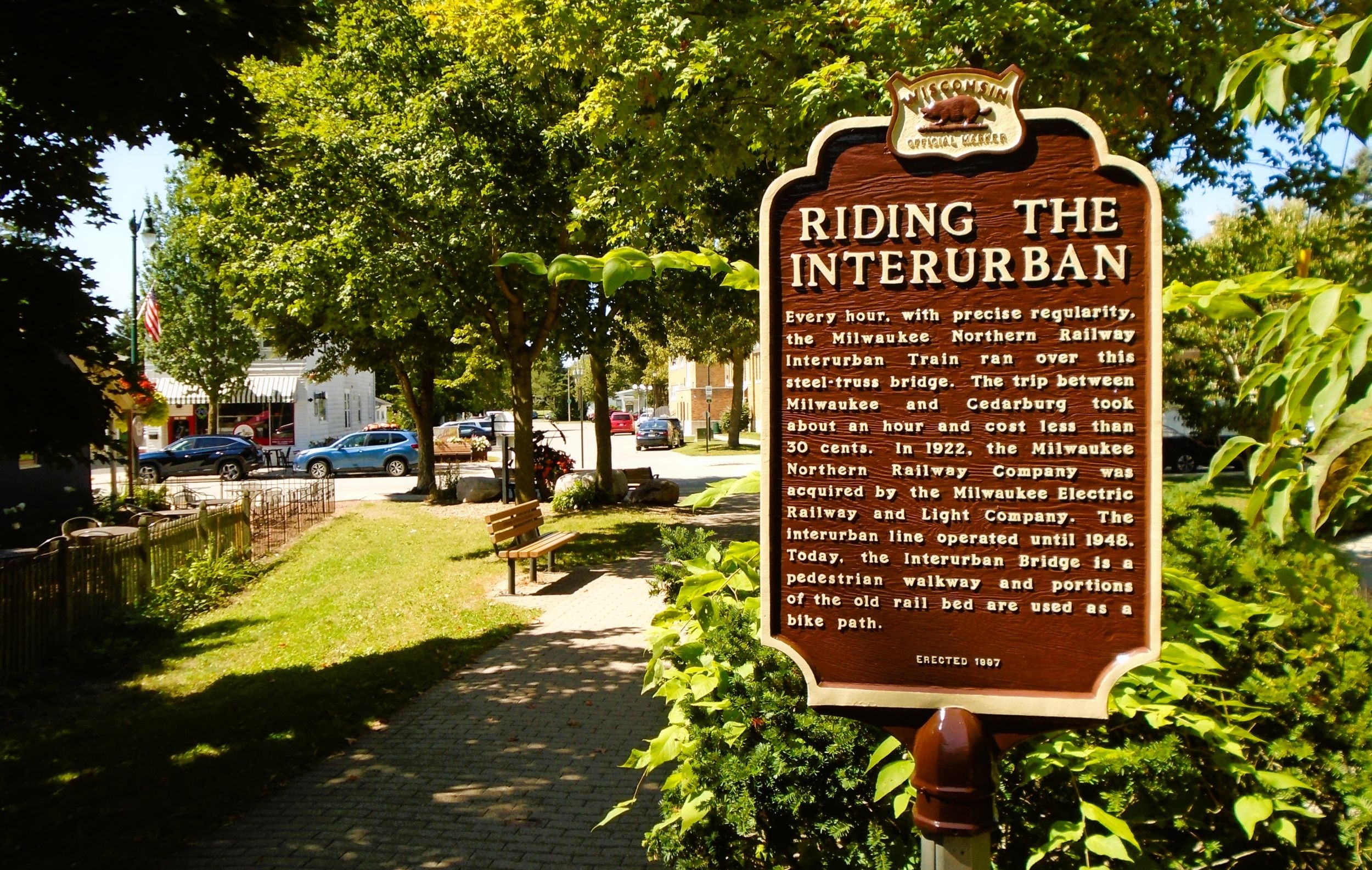
The Interurban Trail has an interesting history. Its route follows the corridor of the defunct Milwaukee-Sheboygan Interurban Railway line. Launched in 1908, the railway ran between cities with stops in Brown Deer, Thiensville, Cedarburg, Grafton, Port Washington, Belgium, Cedar Grove, and Oostburg. Milwaukee Electric Railway and Light Company ran the line from 1922 until it ended in 1948.
The Interurban Electric Railway gave rural residents access to Milwaukee. The railroad also enabled Milwaukeeans to explore the countryside and small towns. In the 1920s and 30s, African American blues singers took the line to Paramount Records in Grafton. This company published some of the nation’s early blues and jazz recordings.
Segments of the old railway were converted into bike paths as early as 1975. In 1998, Ozaukee County municipalities began leasing corridor sections from We Energies, the last owner of the line. Over time the path developed, and in 2002 the Ozaukee Interurban Trail officially opened. Much of the trail still travels next to We Energies power lines.
For many miles, the Interurban Trail parallels active railroad tracks. Originally this route belonged to the Milwaukee and Northern Railway. In 1893, it was absorbed by the Chicago, Milwaukee, St. Paul and Pacific Railroad, known as the “Milwaukee Road.” Today the rail line is used by Union Pacific Railroad.
The Interurban Trail takes cyclists through many environments. Quaint, vibrant villages and small cities are favorite tourist getaways. Natural beauty, historic architecture, and lively downtowns are an attractive setting for boutiques, art galleries, restaurants, and inns. Breweries, wineries, coffee shops, and other specialty stores are not far from the path. And each community has its own unique history.
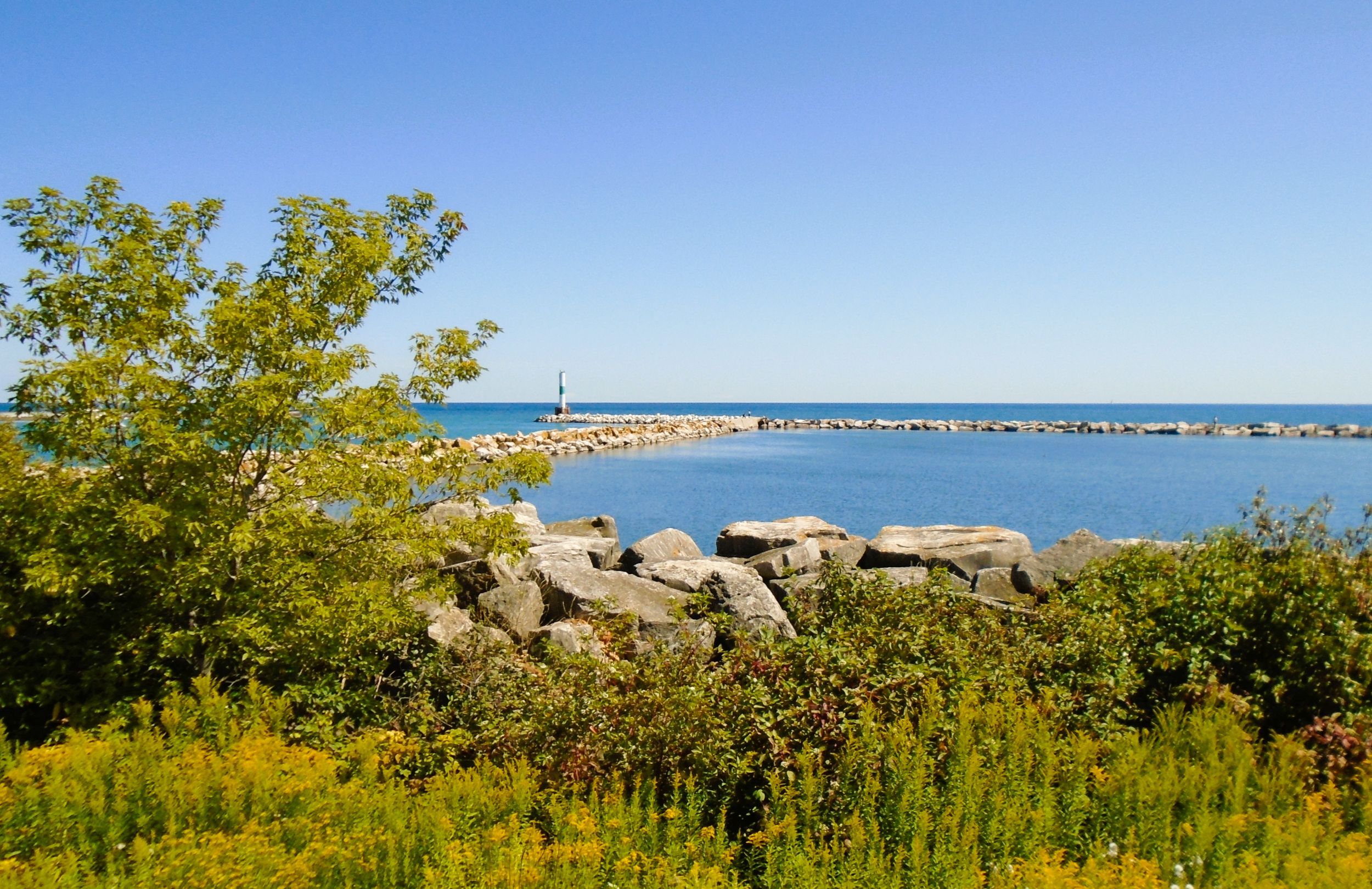
A bike excursion on the Interurban Trail includes scenic views of farm fields, woodlands, wetlands, and Port Washington’s Lake Michigan harbor. Cyclists coming from Milwaukee may access the Interurban Trail using Brown Deer and Oak Leaf Trails.
The Interurban Trail has economically benefited businesses in Ozaukee and Sheboygan Counties. A 2016 research report concluded that a third of respondents using the trail spent money at nearby restaurants and taverns. The survey also showed that 99% of respondents planned a return visit to the trail. Given the delights of the trail, it’s not surprising that the Interurban Trail sees over 300,000 trail-goers annually.
Route Descriptions