Interurban Trail: Cedarburg to Port Washington
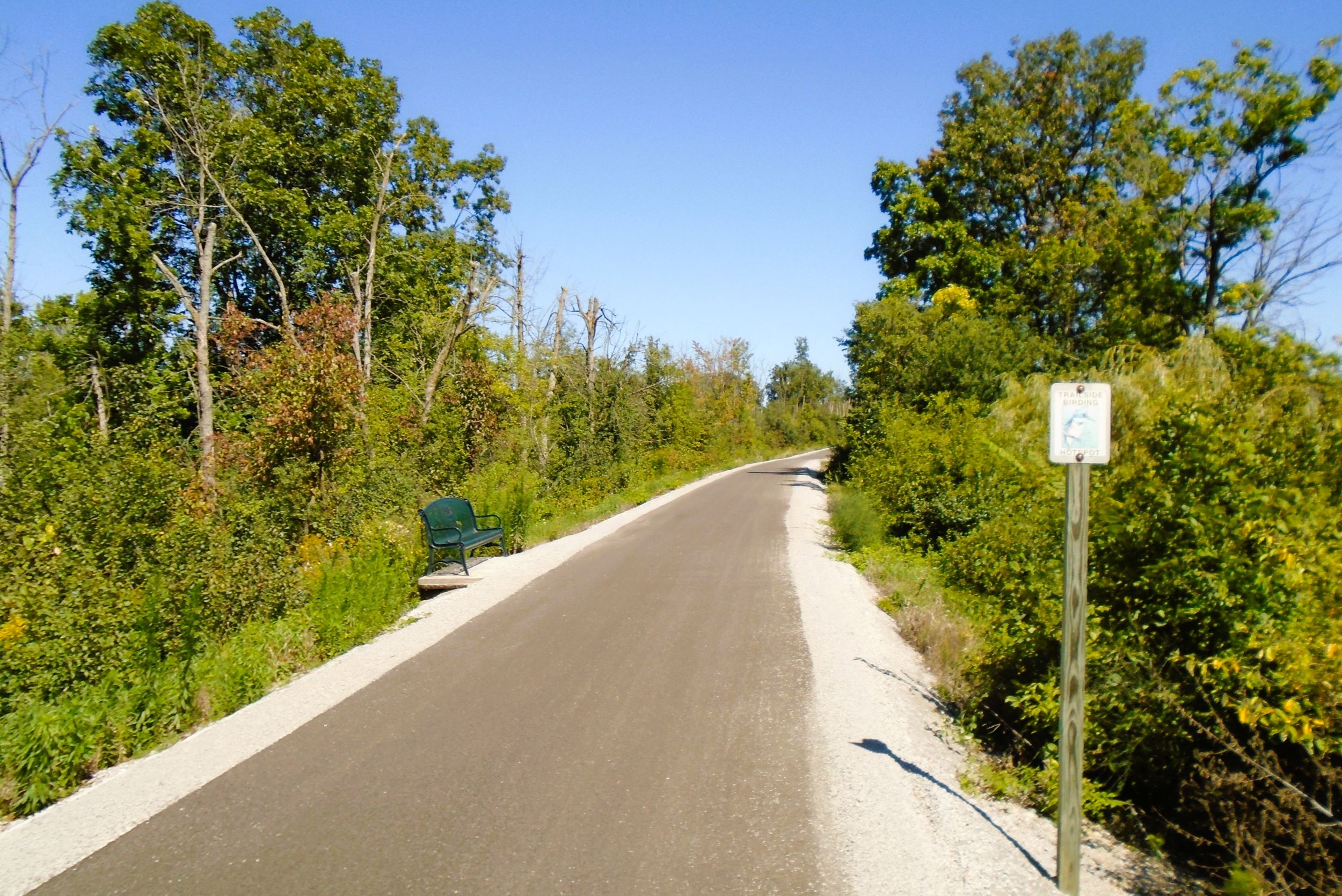
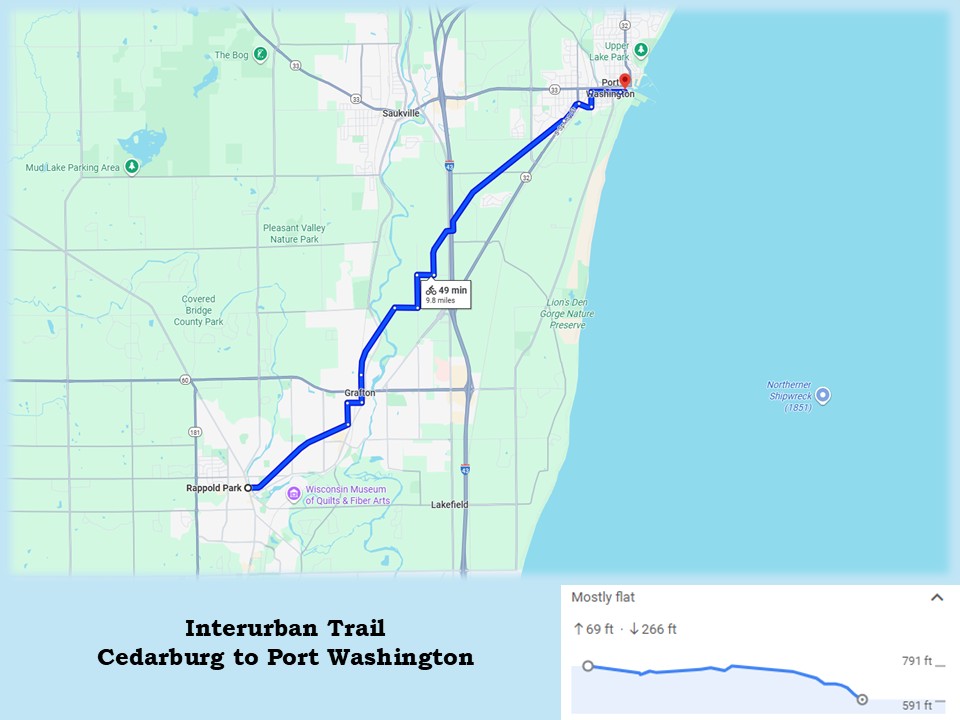
The Interurban Trail from Cedarburg to Port Washington is the longest of the four sections, covering almost ten miles. The landscape is suburban and rural, ending in an urban setting. The first four miles pass through Cedarburg and Grafton. After four miles of rural countryside, the trail treks through the city of Port Washington for its final 1.8 miles.
Elevation along the route decreases 200 feet, with a major descent of 100 feet in the last mile. This decline takes trail-goers into Port Washington on the edge of Lake Michigan. This last section of the Interurban Trail in Port Washington crosses railroad tracks, and follows roads some of the way. By Grafton, the trail bridges the Milwaukee River. Another bridge, 415-foot long, spans Interstate Highway 43.
The Cedarburg trailhead is at the community center on Washington Avenue. It has a bike rack, self-service bicycle repair station, and restrooms. By car from Interstate Highway 43, take exit 89. Go west on County Highway C for 2.5 miles. Turn right (north) on Green Bay Road, and go 0.3 mile. Then turn left (west) on Hamilton Road. After driving 0.9 mile, turn right (north) on Washington Street, and go 0.4 mile. The parking lot is on the left (west).
Cedarburg’s community center sits in its quaint downtown, a stopping-off point to visit attractions. Its old-world downtown attracts tourists including trail enthusiasts, antique connoisseurs, and history-lovers. Old houses, inns, museums, restaurants, and shops add to its appeal. Many of its buildings were constructed from cream city brick or limestone.
The Potawatomi tribe used to live in this area. A U.S. Government treaty in 1833 led to their removal. Earlier human activity is evident at Hilgen Spring Mound Site. Three conical burial mounds were built during the Woodland Period, and artifacts date to 480 BCE.
The first white settlers were Irish and German immigrants, in the mid-1840s. They settled on Cedar Creek, calling the place “New Dublin.” It later became “Hamilton” and then “Cedarburg.” Dams and mills led to growth and prosperity. The coming of the railroad in the 1870s also spurred development. Cedarburg was incorporated as a city in 1885.
Businesses in downtown Cedarburg cater to visitors. Trail-goers seeking caffeine may visit Fiddleheads Coffee, Java House, or Cedarburg Coffee Roastery. Just blocks off the trail, ice cream-lovers may pick from Creamy Pig, Cream and Crepe Café, or The Chocolate Factory.
Rebellion Brewing Company claims to offer beer for the people. Not far from the trail, it has a relaxing outdoor beer garden next to Cedar Creek. Cedarburg is also home to several wineries producing their own wine. These include Cedar Creek Winery, Chiseled Grape Winery, and Cold Country Wines. They are all very close to the trail.
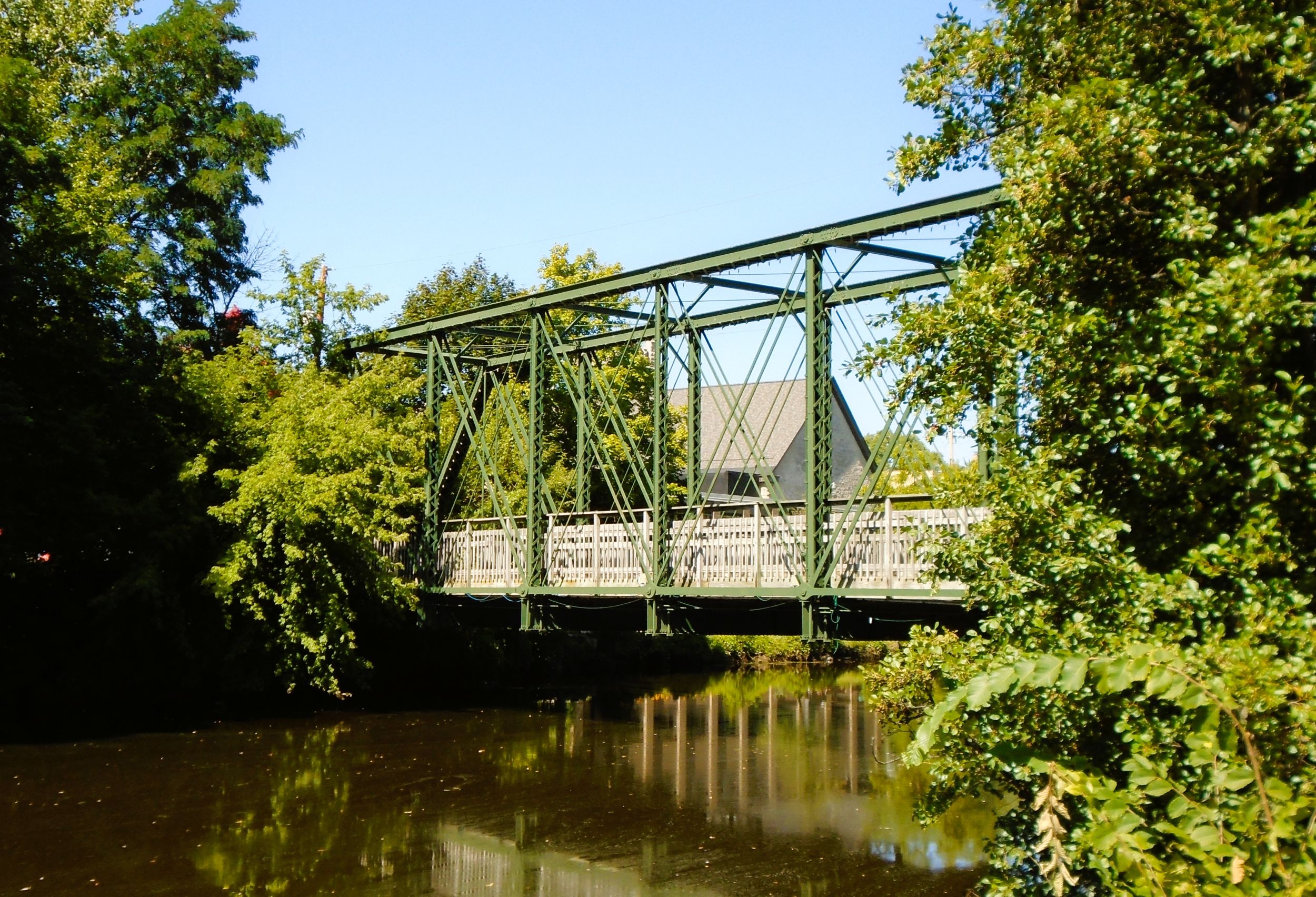
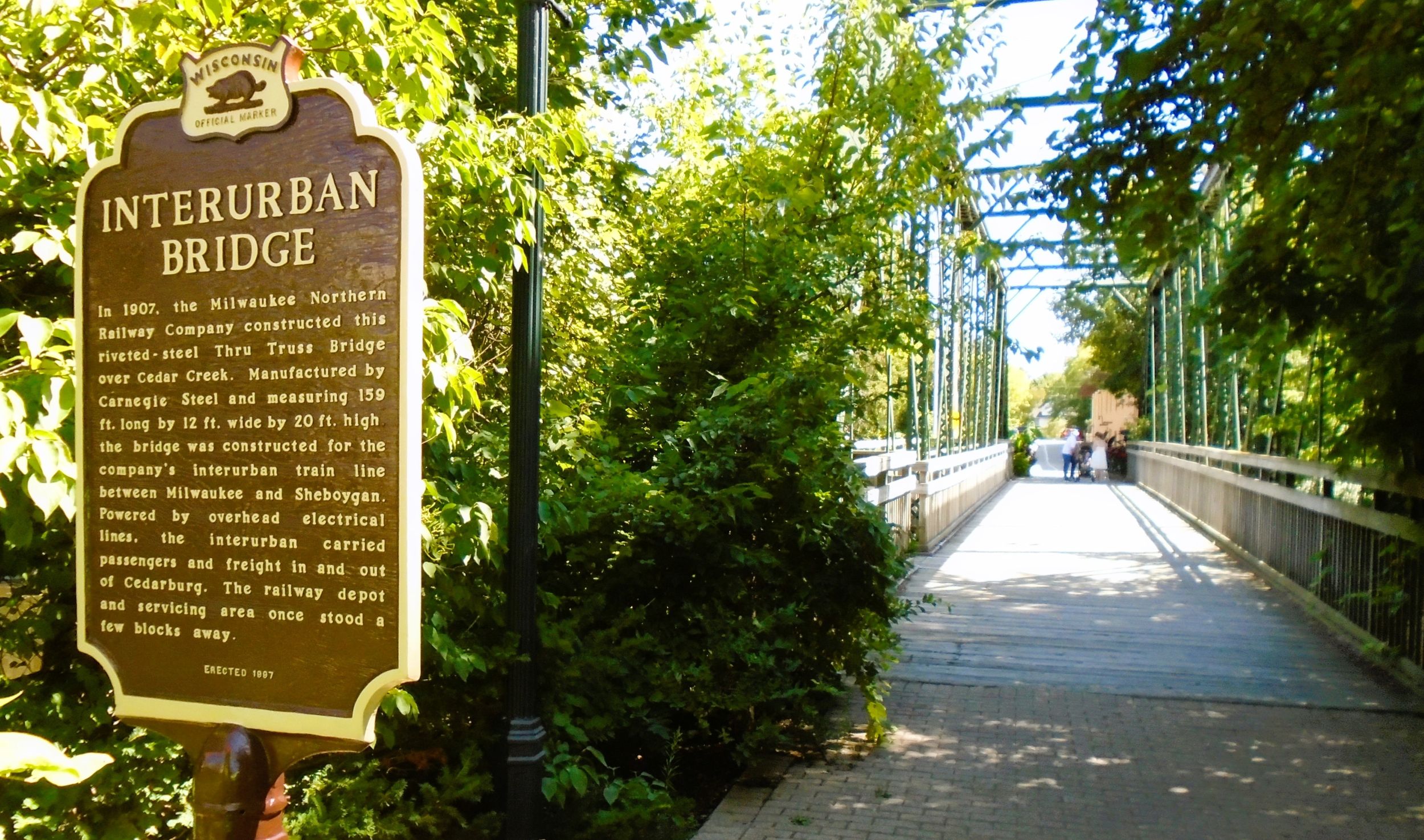
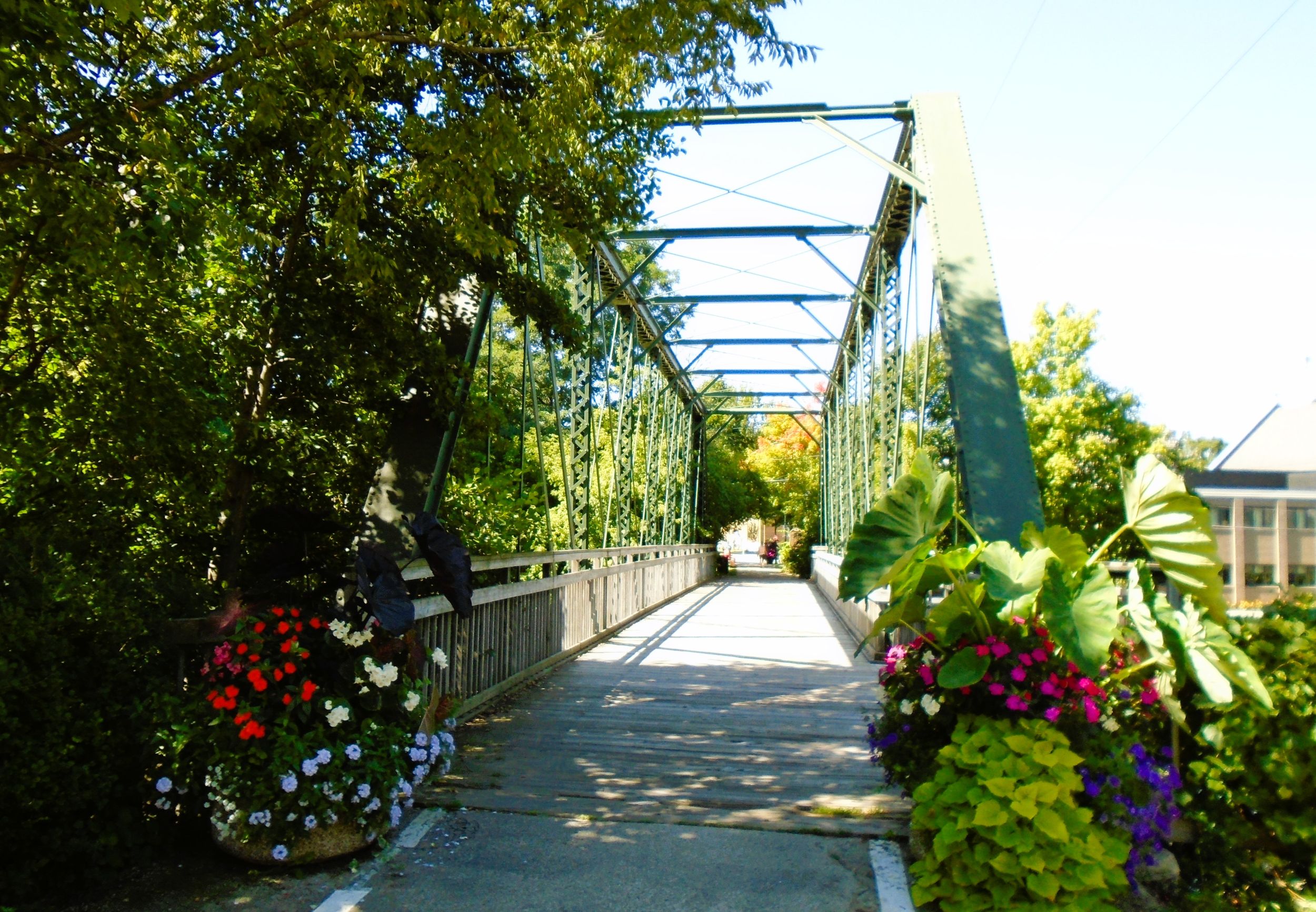
Returning to the Interurban Trail, the path departs the community center, and cuts east across Washington Avenue. Caution and slow speeds are advised, due to pedestrian and auto traffic. The trail enters Rappold Park, a scenic open space that is home to the Interurban Bridge. The trail crosses Cedar Creek on this 159-foot truss bridge, built in 1907.
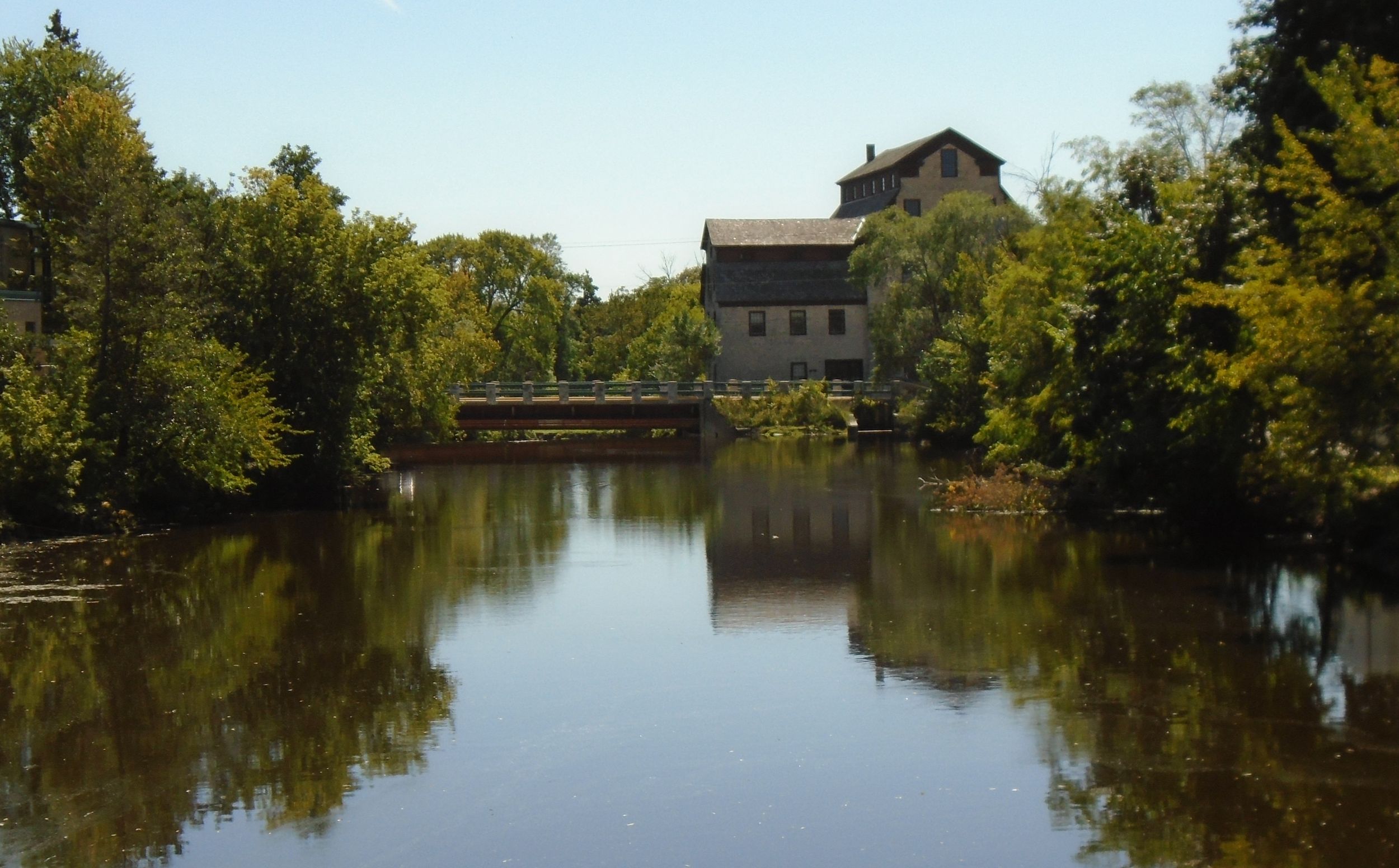
A historical marker by the bridge describes its use by railroads over the years. The view from the bridge is delightful, with a prospect of Cedarburg Mill and other historic buildings. The city’s background is conveyed by additional historical markers around the community.
On the east side of Cedar Creek, the Interurban Trail passes a fire station, crosses two streets, and curves to the northeast. It travels past Zur Ruhe Cemetery before moving through residential neighborhoods. At Keup Road, cyclists may divert to the right (south) and bike 350 yards to Hefner’s Frozen Custard and Jumbo Burgers. This small restaurant sells classic comfort foods like burgers, fries, and frozen custard.
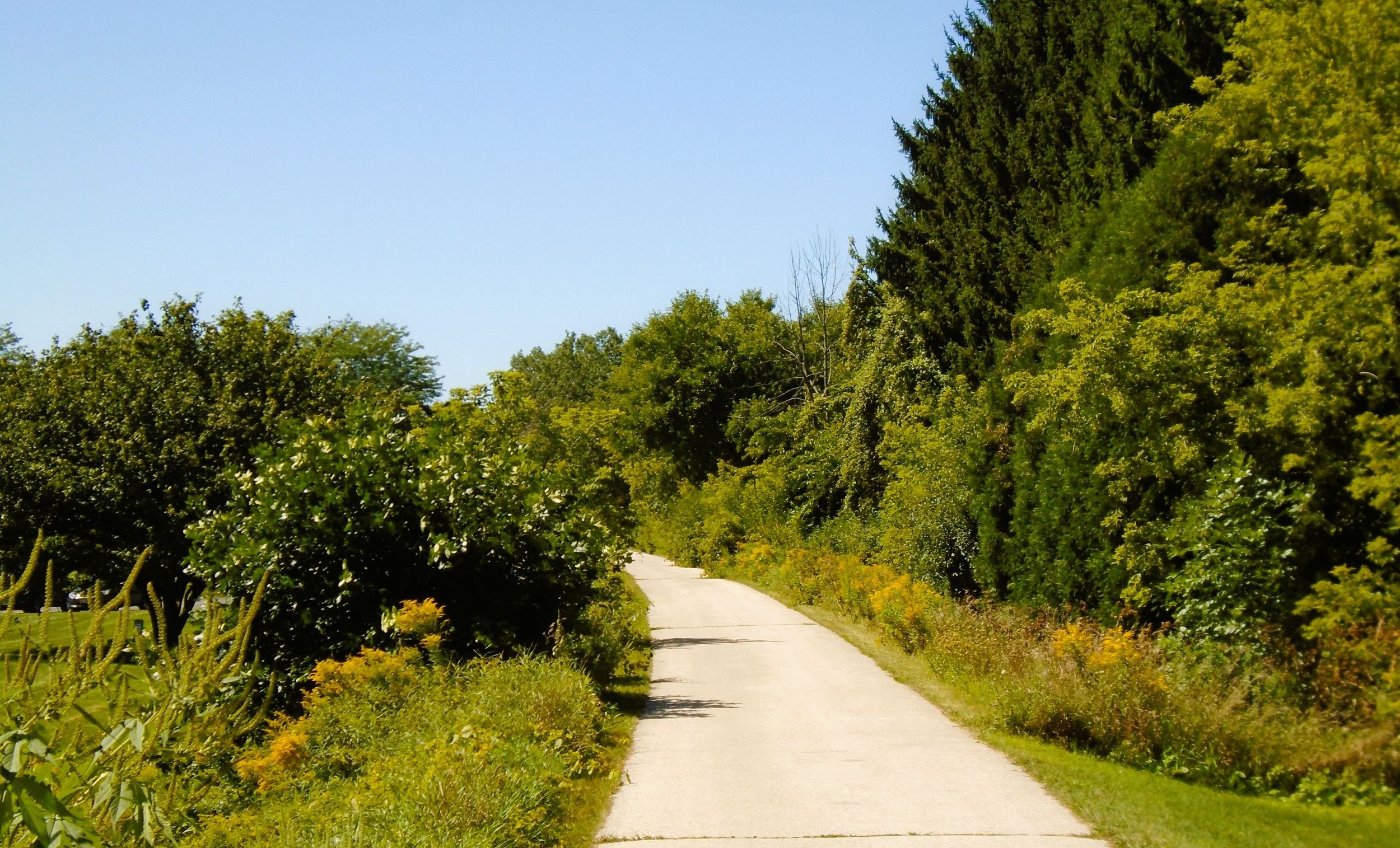
It’s 1.3 miles on the Interurban Trail from the community center to Bobolink Avenue in Grafton. The trail runs 0.7 mile to 7th Avenue, before following streets through Grafton for a mile. The route turns left (north), and follows 7th Avenue for 0.3 mile. It turns right (east) on Beech Street and heads 0.2 mile to 11th Avenue, crossing railroad tracks on the way.
The bike route turns left (north) on 11th Avenue. It proceeds north 0.4 mile to reach the start of a paved path across North Street. Along the way, it crosses busy Wisconsin State Highway 60 (Washington Street). Trail-goers should exercise caution crossing this busy street. ERIK’S Bike Board Ski Shop is located two blocks east of the trail on Washington Street.
Trail-goers may pause in Grafton at Beech Street and 11th Avenue to visit local businesses. Pete’s Pops sells flavored popsicles. Sahale Ale Works is a family-owned craft brewery with a lovely patio and taproom. Fiddleheads Coffee offers delicious beverages and breakfast items. BSG Coffee and Cocktails Lounge is nearby, providing another place to grab a coffee drink.
The land now known as Grafton was first home to members of the Menominee and Potawatomie nations. Property there was opened for sale after Native Americans were removed through treaty with the U.S. Government in the 1830s. In 1839, Timothy Wooden arrived and was soon joined by immigrants from Germany and Ireland.
In the early 1840s, the settlement was called “Hamburg” due to the immigrants from that German city. The Wisconsin territorial legislature created the town of Grafton in 1846. The village was incorporated in 1896. Its early businesses centered on milling and making lime.
In the early 1900s the Wisconsin Chair Company out of Port Washington operated a furniture factory in Grafton. Its subsidiary company, Paramount Records, made phonographs for Edison Records. In 1917, it started making its own recordings, focusing on African-American blues and jazz music. The studio stopped recording in 1932, and Paramount Records closed in 1935.
Grafton saw significant changes after World War II. Despite the closure of local mills and kilns, the village had rapid population growth as Grafton developed into an outlying suburb of metropolitan Milwaukee. What once was a small, rural mill town is now a rapidly growing, residential, and commercial suburban community.
Returning to the Interurban Trail, the paved path resumes off North Street. It runs 0.8 mile and crosses County Highway O (Green Bay Road). Meadowbrook Park is found at that intersection. A potential trailhead, this spacious park has a parking lot, picnic tables, and playground. The park’s address is 649 N. Green Bay Road.
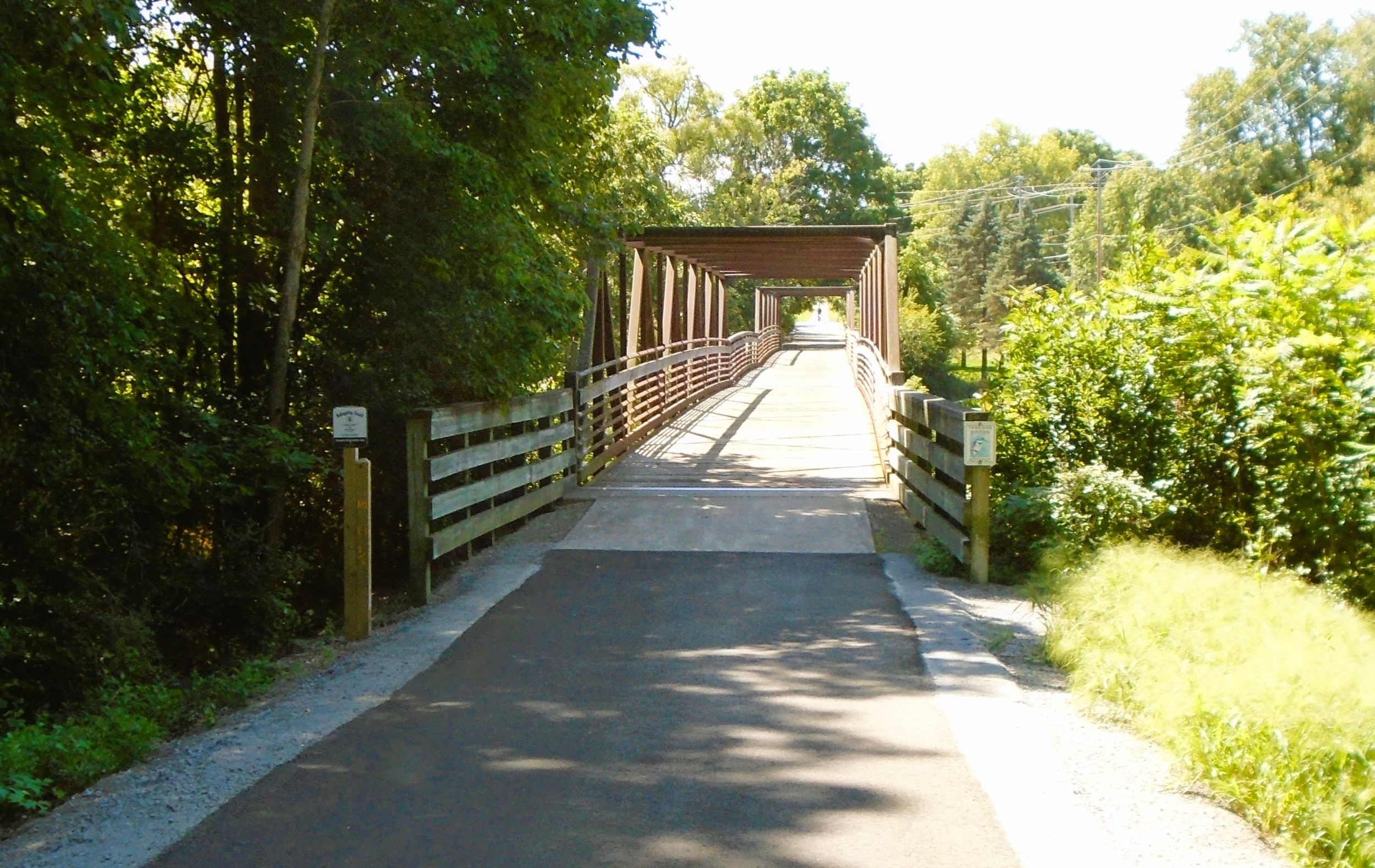
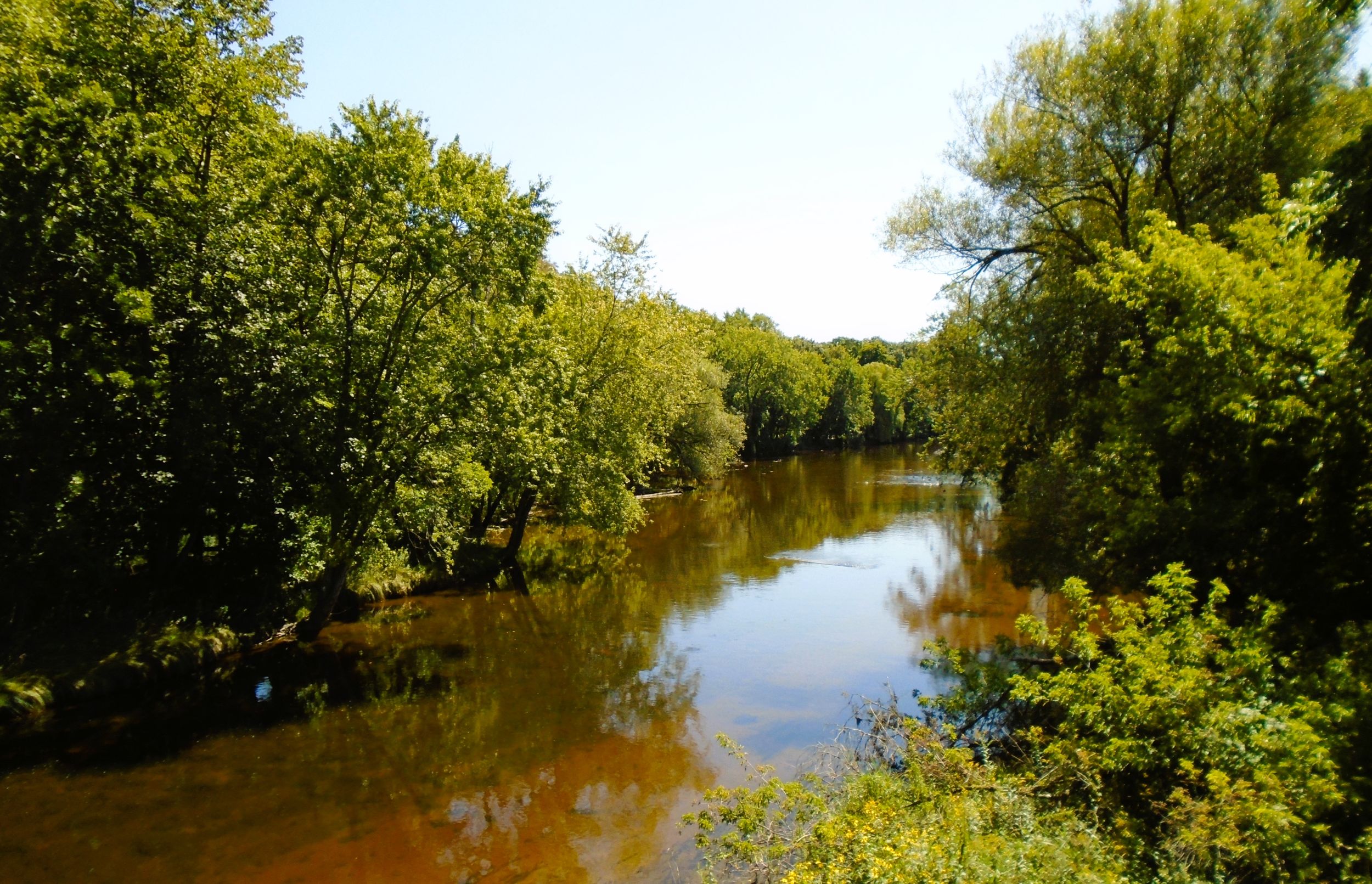
After crossing the road, the Interurban Trail leaves Grafton and bridges the Milwaukee River. Flowing over 100 miles, this scenic river begins in Fond du lac County and enters Lake Michigan at Milwaukee. It once saw Native American villages along its banks. After being a locus of industry in the 1800s, kayakers and canoeists now enjoy its tranquil setting.
The route’s elevation rises 35 feet over the next mile, as the trail leaves the Milwaukee River and journeys to Terminal Road. In this section the path passes Bratt Wood, a 17-acre hardwood forest nature preserve. The path also crosses Cedar Creek Road. The bike route then turns right (east), traveling uphill for 0.3 mile on Terminal Road.
A paved path resumes on the north side of Terminal Road. It travels past Fire Ridge Golf Club for 0.7 mile and arrives at Trail Bridge Park. This wayside park has a picnic table, park benches, portable toilet, and self-service bicycle repair station. It easily may serve as a trailhead location. The Interurban Trail next crosses over Interstate Highway 43 on an expanive 415-foot long bridge. The bridge opened in 2009 at a cost of $1.76 million.
From the bridge, the trail journeys downhill the next 2.5 miles to Wisconsin State Highway 32 (Spring Street). The landscape changes from farmland and forests to subdivisions, while the trail crosses 4 roads. A spur trail leads to Windrush Park, a possible trailhead. The Interurban Trail enters Port Washington in this segment.
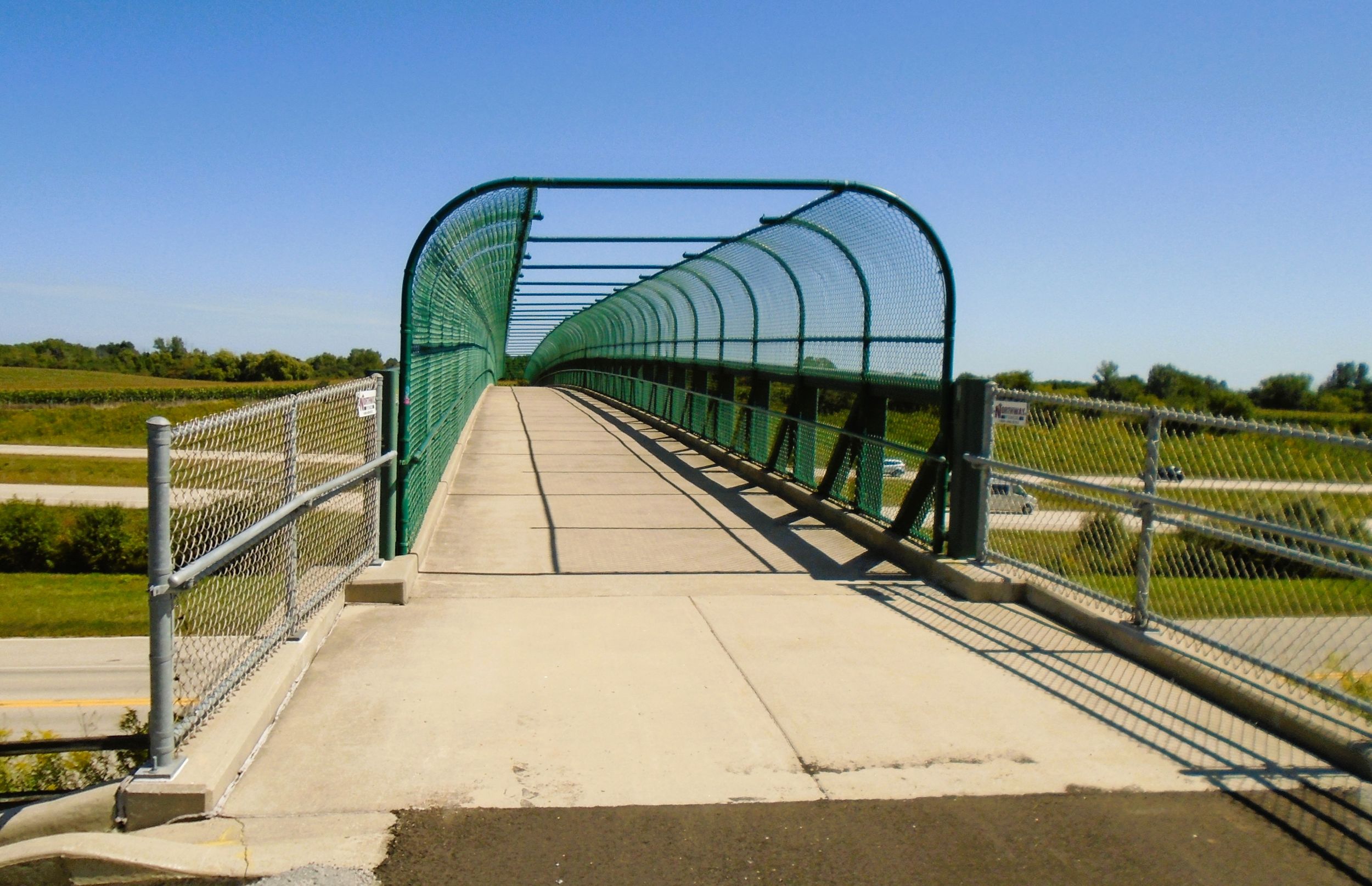
After crossing the state highway, the Interurban Trail goes north next to the road for 0.3 mile. Then the bike route turns right (east), and follows Oakland Avenue for 0.2 mile. It crosses railroad tracks, and turns left (north) onto Park Street. The route proceeds 0.2 mile to the start of a paved path to the right (east). The trail descends over 75 feet over a half mile next to a ravine, and arrives at Lions Club Comfort Station.
Located on Wisconsin and Milwaukee Streets, Lions Club Comfort Station serves as a trailhead. The address is 123 S. Wisconsin Street. The station was built in 2002 by the local Lions Club and has a parking lot, information kiosk, picnic table, bike rack, restrooms with flush toilets, and drinking water. It also has a fish cleaning station.
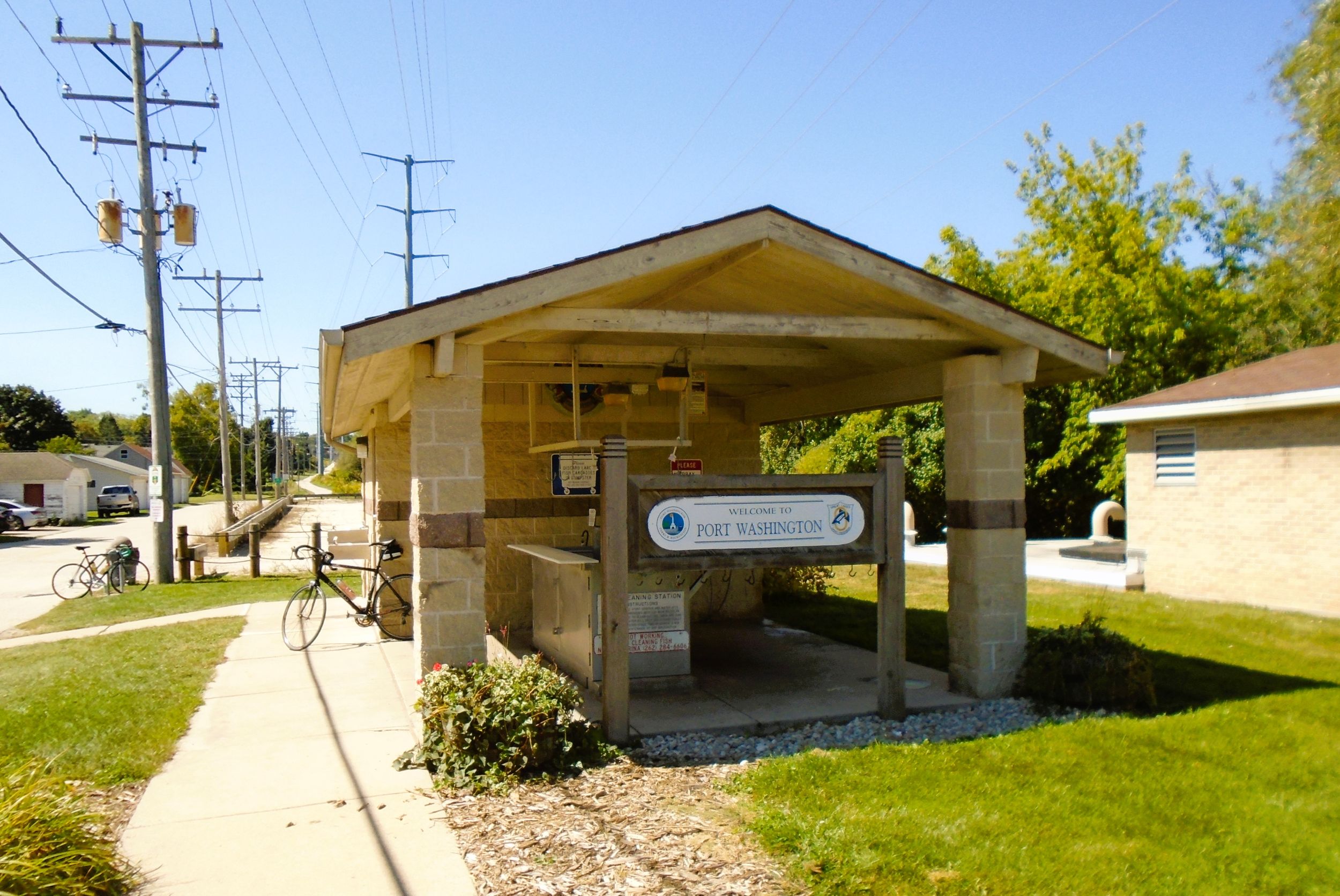
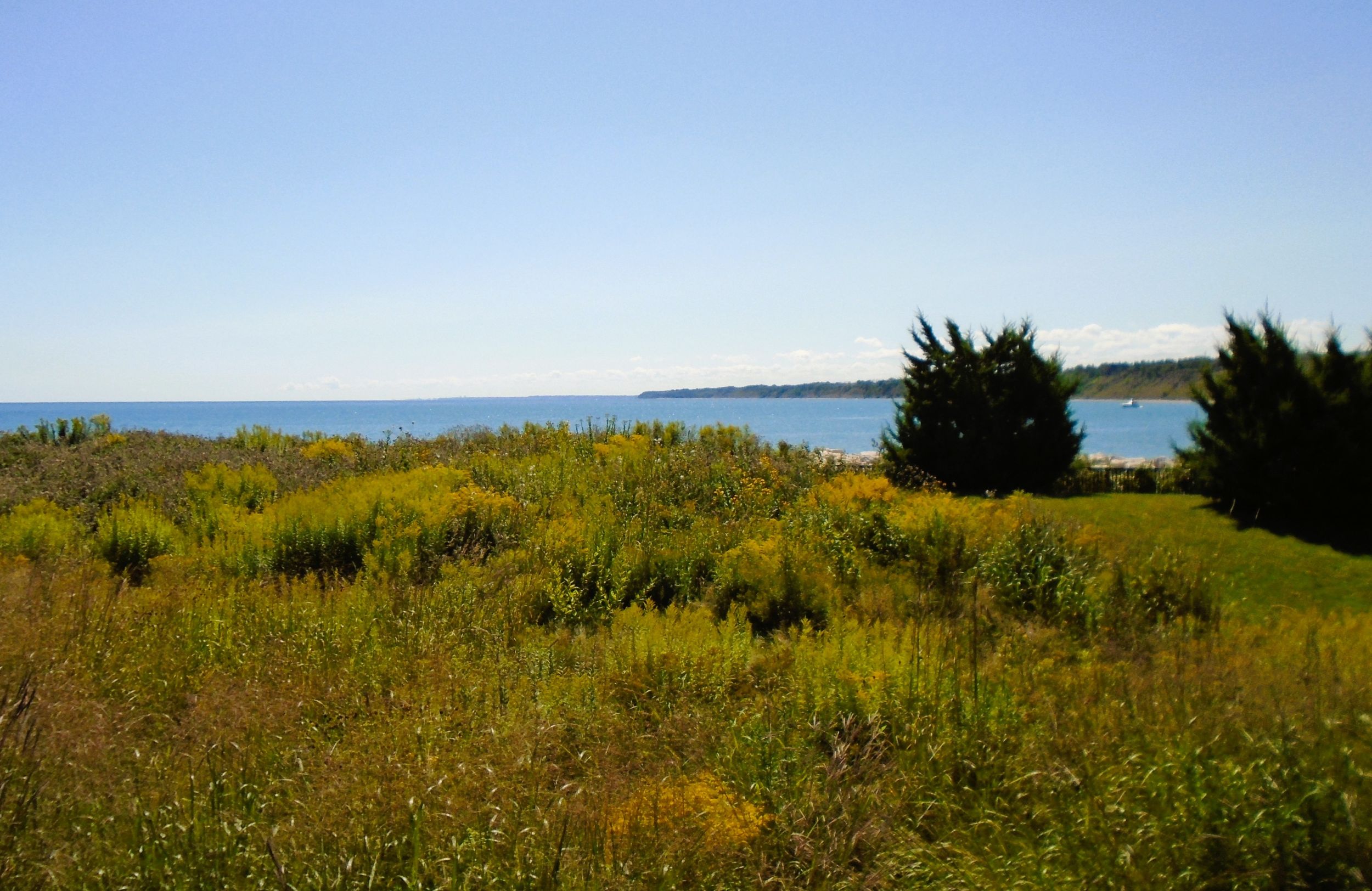
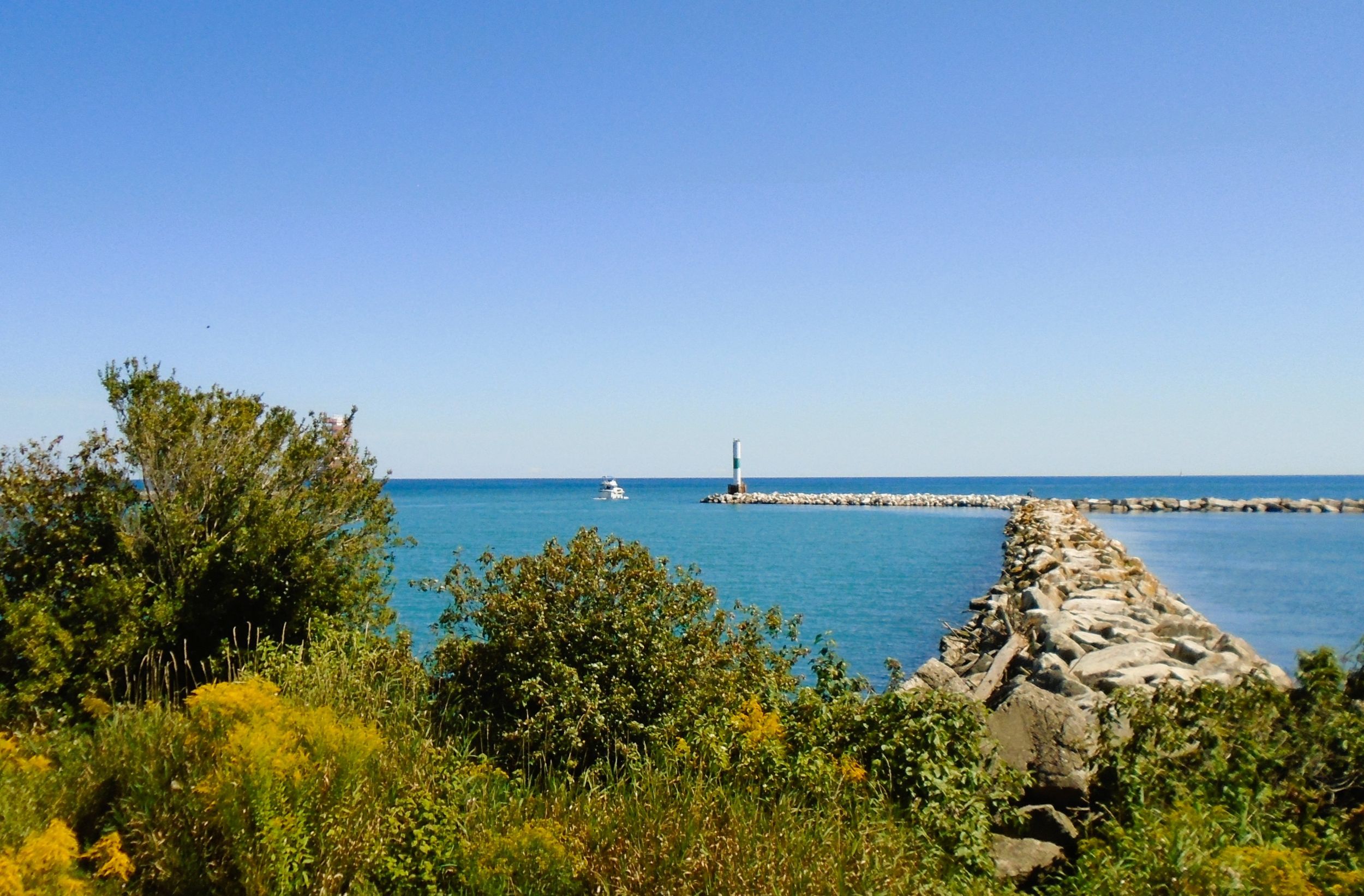
Port Washington is a picturesque lakeside city that caters to tourists. Across from the trailhead is Coal Dock Park, which sits next to a massive We Energies power station. Park trails provide a scenic view of the city’s downtown, marina, and Lake Michigan. The park has a long promenade on the water, a gazebo, park benches, and open prairie spaces. Several historical markers are found along the promenade.
Picturesque views of the harbor and lakefront can also be seen from Rotary Park, which is directly on the water. This park has a gazebo with panoramic vistas of the harbor’s lighthouse, and is home to the Commercial Fisherman’s Memorial. Port Washington has a 1.2 mile harbor front walk connecting Coal Dock Park to Upper Lake Park.
Port Washington’s vibrant downtown has many places to eat or drink. Popular coffee shops include Java Dock Café, Banjole’s Brews, and Sacred Bean Coffee Company. Tourists craving a different sort of brew may visit Inventors Brewpub, a trendy waterfront microbrewery that also serves food.
Frankie’s Ice Cream serves donuts and Cedar Crest ice cream from an Airstream trailer. It’s only open in summer. A few streets away, the Chocolate Chisel sells delectable chocolate treats and their own brand of Amazing Ice Cream, served with hand-made waffle cones.
Port Washington’s location on Lake Michigan makes it a history-filled city. Glimpses of that history are shared via historical markers around the city. One marker tells the sad story of the steamship Toledo. In October 1856, this ship was struck by a strong gale off Port Washington and pounded to pieces by massive rolling waves. Only two passengers survived.
The land that became Port Washington was first inhabited by the Menominee, Potawatomi, and Sauk nations. French explorers Louis Hennepin and René-Robert Cavelier, Sieur de La Salle may have stopped in this area in 1679. Their journals describe stopping north of the Milwaukee River, at a Potawatomi village on the mouth of a small river. This may have been Sauk Creek, a stream that still flows through the city and empties into its harbor.
Many of Wisconsin’s Native American tribes ceded land to the U.S. Government in the 1830s. Increments of land were then surveyed and sold. Wooster Harrison, a native of Connecticut, purchased land in 1835 that became Port Washington. Originally called “Wisconsin City,” the name was later changed to “Washington” and then “Port Washington.”
Map of trailheads and addresses along this section of the trail.
Port Washington became the seat of Ozaukee County in 1853. The population had grown due to an influx of immigrants from Germany and Luxembourg. During the Civil War some of these immigrants were conscripted into military service. In late 1862, several hundred immigrants marched on the courthouse in protest, attacked draft officials, burned records, and wreaked havoc in the city. The riot ended when Union troops from Milwaukee arrived.
Port Washington saw economic growth in the late 19th century, with a growing maritime industry and advent of the railroad. In 1882, Port Washington incorporated as a city. The Wisconsin Chair Company opened in 1888, and became the county’s largest employer in the early 20th century. Its subsidiary, Paramount Records, recorded African-American blues music and had a studio in nearby Grafton. The Wisconsin Chair Company closed in 1954.
The mid-20th century saw a decline in commercial fishing on the Great Lakes. Railroad traffic and manufacturing in Port Washington also waned after World War II. Today the city flourishes as a suburban community of Milwaukee, and a tourist destination on Lake Michigan. It attracts many visitors from Milwaukee and Chicago.
It’s nearly ten miles from Cedarburg to Port Washington on the Interurban Trail. The bike ride is enjoyable, and offers a variety of scenery. There is a lot to observe and learn along the route. Additionally, Cedarburg, Grafton, and Port Washington offer many attractions and places to enjoy a meal, refreshing beverage, or tasty treat.
Trail last ridden and document in August, 2025.