Interurban Trail: Port Washington to Belgium
The Interurban Trail journeys north from the bustling small city of Port Washington to the quiet village of Belgium. This trail section travels 9 miles on a paved path in very good condition. The route includes elevation, mostly in the first 2 miles. In other areas, the Interurban Trail travels over gently sloping hills.
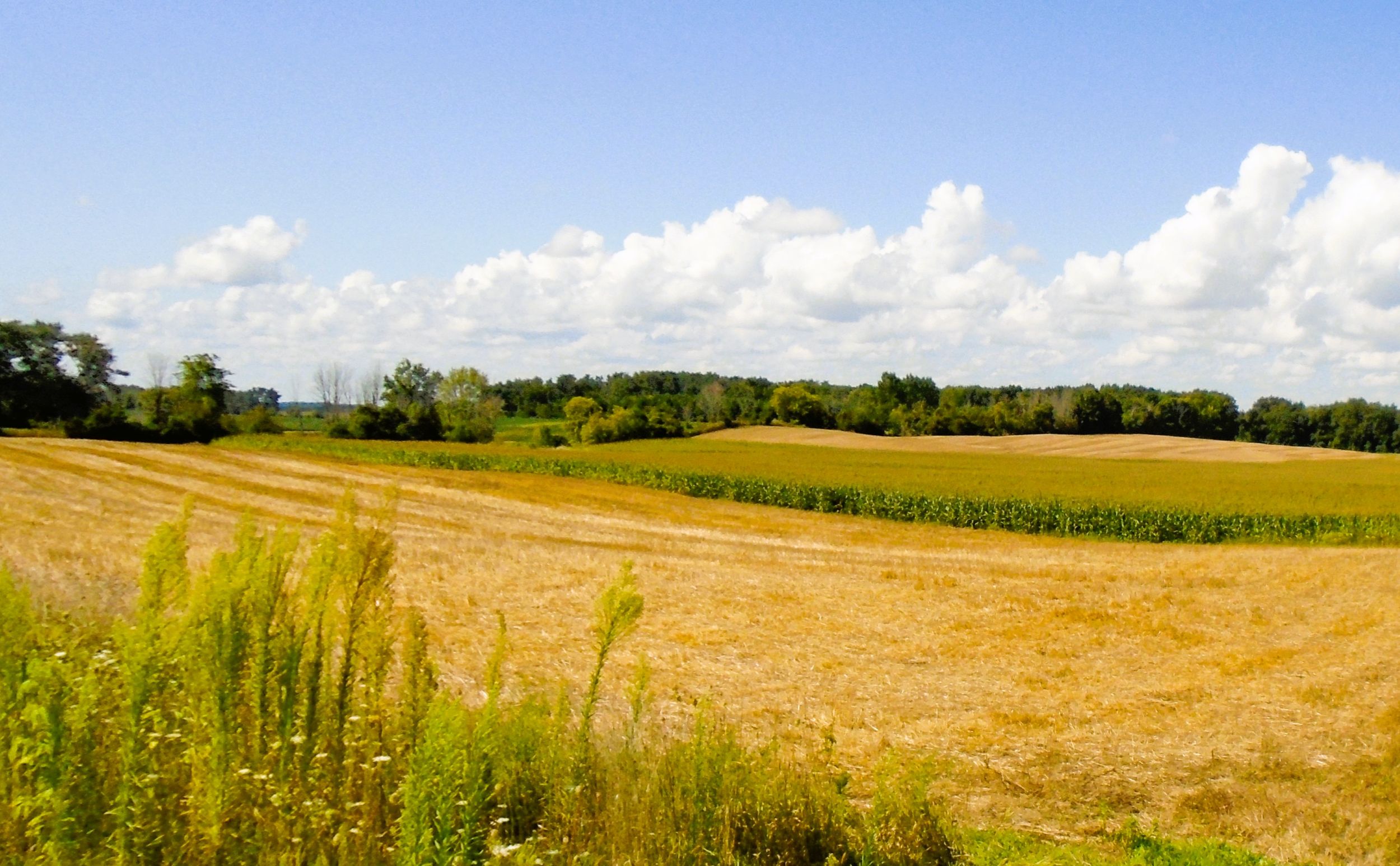
Port Washington gives way to serene, rural scenery as the Interurban Trail treks north in a straight line. The landscape is mostly agricultural countryside. Along much of the route, trees and bushes have grown to create a wooded corridor.
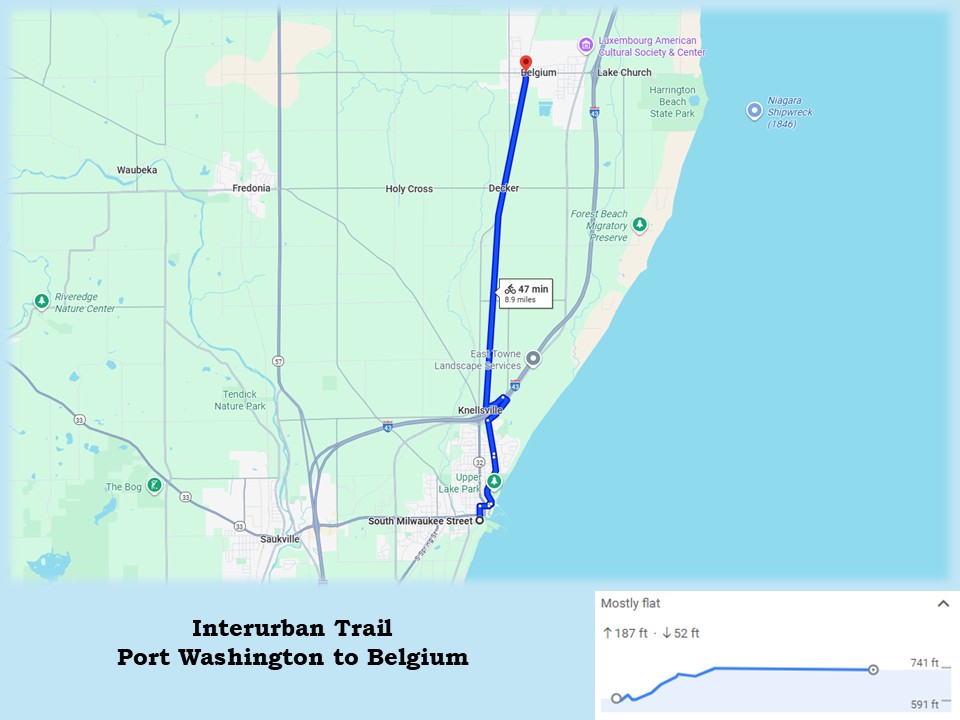
There are two good trailheads in downtown Port Washington. The Lions Club Comfort Station is on the Interurban Trail at the corner of Wisconsin and Milwaukee Streets. The address is 123 S. Wisconsin Street. Built in 2002 by the local Lions Club, it has a parking lot, information kiosk, picnic table, bike rack, restrooms with flush toilets, and drinking water. It also has a fish cleaning station.
Another trailhead option on the north side of downtown Port Washington is Veterans Memorial Park and Guenther Picnic Area. Parking, restrooms, picnic tables, and a playground are found there. Set on the shoreline of Lake Michigan, the park is less than 200 yards off the Interurban Trail. The address is 410 N. Lake Street.
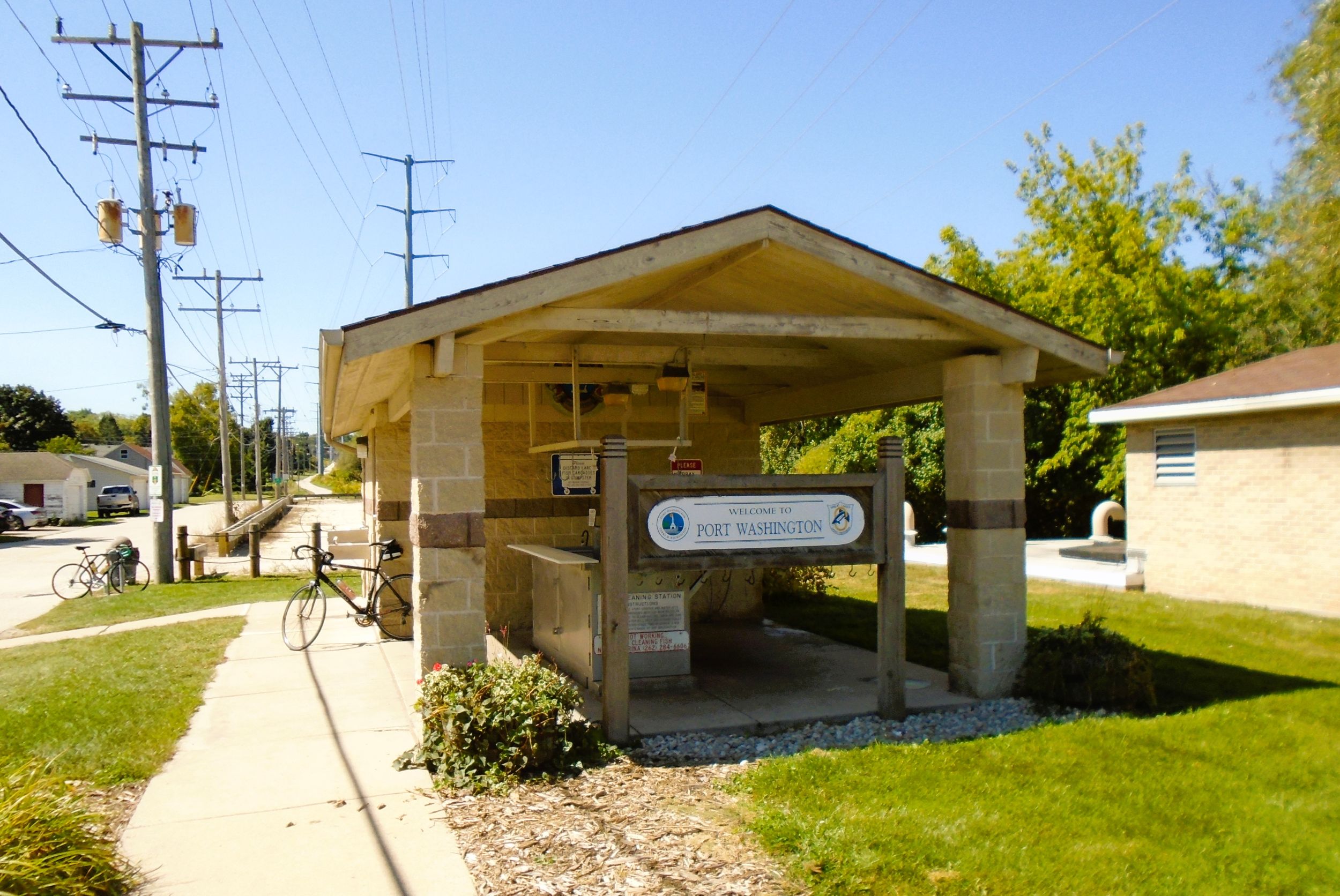
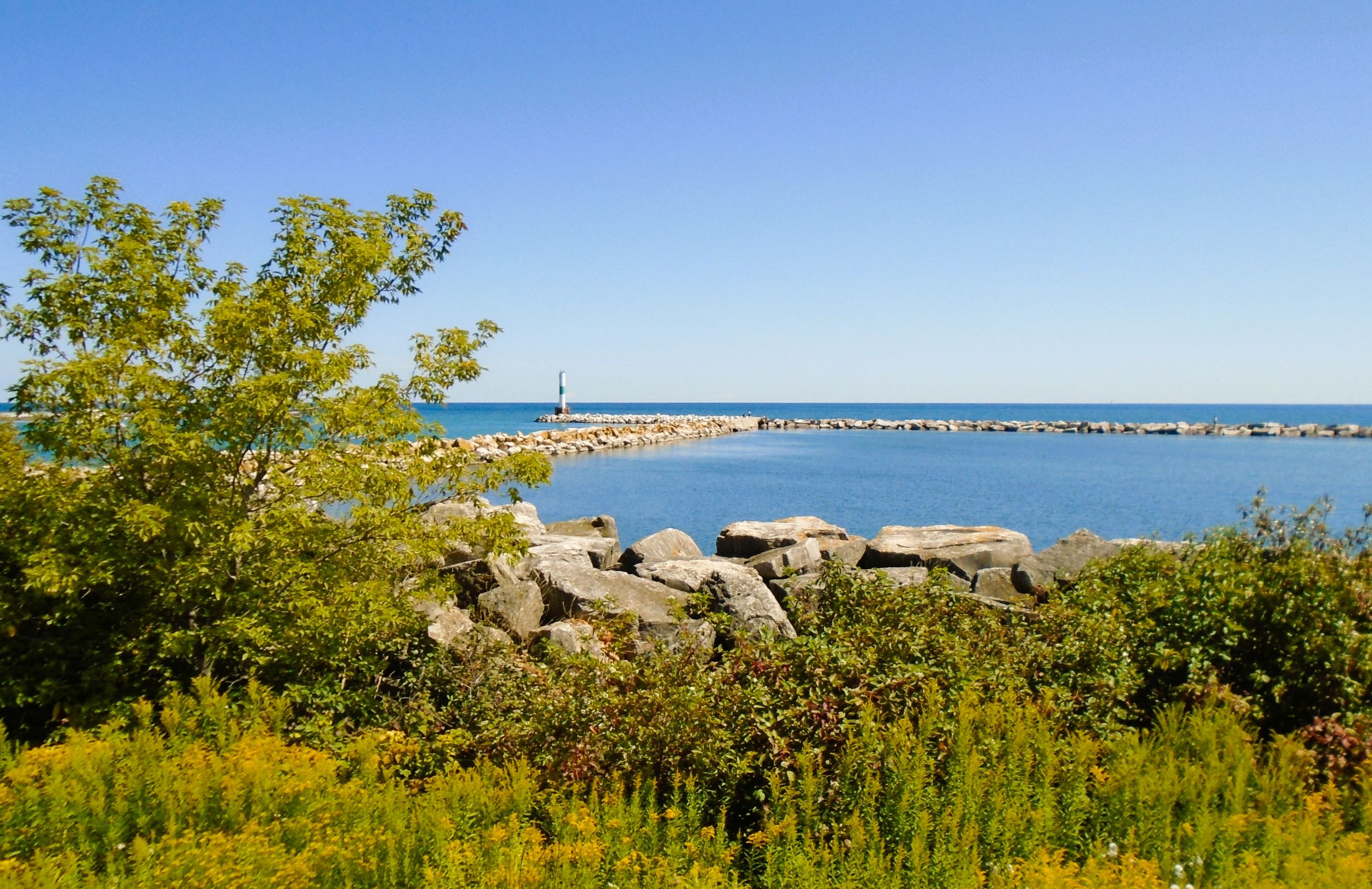
There is a lot to see and do in downtown Port Washington. Across from Lion’s Club Comfort Station is Coal Dock Park. Its wide trails offer a scenic view of Port Washington’s downtown, the marina, and Lake Michigan. The park has a long promenade, gazebo, park benches, and prairie spaces. Several historical markers are found along the promenade. Coal Dock Park sits next to a massive We Energies power station.
Rotary Park offers picturesque views of the Port Washington’s harbor and lakefront. Facing the water, this park’s has gazebo has panoramic vistas of the harbor marina and lighthouse. Rotary Park is home to the Commercial Fisherman’s Memorial. There is also a 1.2 mile harbor walk from Coal Dock Park to Upper Lake Park.
Port Washington’s vibrant downtown has quite a few businesses that cater to tourists. There is no shortage of places to eat or drink. Popular coffee shops include Java Dock Café, Banjole’s Brews, and Sacred Bean Coffee Company. Tourists craving a different sort of brew may visit Inventors Brewpub. This trendy and well-liked microbrewery also serves food.
Ice cream-lovers may visit Frankie’s Ice Cream, directly on the downtown bike route. Throughout the summer they serve Cedar Crest ice cream and donuts from an Airstream trailer. Not too far away, the Chocolate Chisel sells delectable chocolate treats, and also serves their own Amazing Ice Cream with handmade waffle cones.
Port Washington’s site on Lake Michigan makes it a city filled with history. Trail-goers may divert from the bike route to read multiple historical markers, one of which tells the story of the steamship Toledo. In October 1856, the ship was struck by a strong gale off Port Washington and pounded to pieces by massive rolling waves. Only two passengers survived.
The land that became Port Washington was first inhabited by the Menominee, Potawatomi, and Sauk nations. French explorers Louis Hennepin and René-Robert Cavelier, Sieur de La Salle may have stopped here in 1679. Their journals describe pausing north of the Milwaukee River, at a Potawatomi village on the mouth of a small river. This may have been Sauk Creek, a stream that still flows through the city and empties into its harbor.
Wisconsin’s Native American population ceded land to the U.S. Government during the 1830s. Land was then resold for as little as a dollar per acre, and speculators snatched up large tracts of property. Wooster Harrison, a native of Connecticut, bought land that would become Port Washington in 1835. The settlement was originally named “Wisconsin City.” It later was changed to “Washington” and then “Port Washington.”
In 1853, Port Washington became the seat of Ozaukee County. By then, the population had increased from an influx of immigrants from Germany and Luxembourg. During the Civil War, some of these immigrants were conscripted into military service. In late 1862, several hundred immigrants marched on the courthouse in protest, attacked draft officials, and burned records. The riot ended when Union troops from Milwaukee were sent north.
Port Washington saw economic developmentin the late 19th century with its growing maritime industry and the advent of the railroad. In 1882, Port Washington incorporated as a city. The Wisconsin Chair Company opened in 1888, and by the early 20th century had become the county’s largest employer.
After the Panic of 1907, the Wisconsin Chair Company began diversifying by creating subsidiaries. One of its subsidiaries, Paramount Records, produced phonographs for Thomas Edison. It then began making its own recordings. The company was also a leader in recording African-American blues music. Paramount also operated in nearby Grafton until closing in 1935. The Wisconsin Chair Company closed in 1954.
The mid-20th century saw a decline in Great Lakes commercial fishing. Railroad traffic and manufacturing in Port Washington also waned after World War II. Today, the city flourishes as a Milwaukee suburb and a Lake Michigan tourist destination. Ozaukee County consistently ranks as one of Wisconsin’s healthiest and wealthiest counties.
Returning to the Interurban Trail at the Lions Club Comfort Station, the trail heads north on downtown streets a half mile. It moves north on a bike route following Wisconsin Street for 0.3 mile. The route then turns right (east) on Pier Street for 2 blocks. It travels one block after turning left (north) on Harborview Lane. On Jackson Street, the route turns right (east) and travels 225 feet. The paved path begins on the north side of Jackson Street.
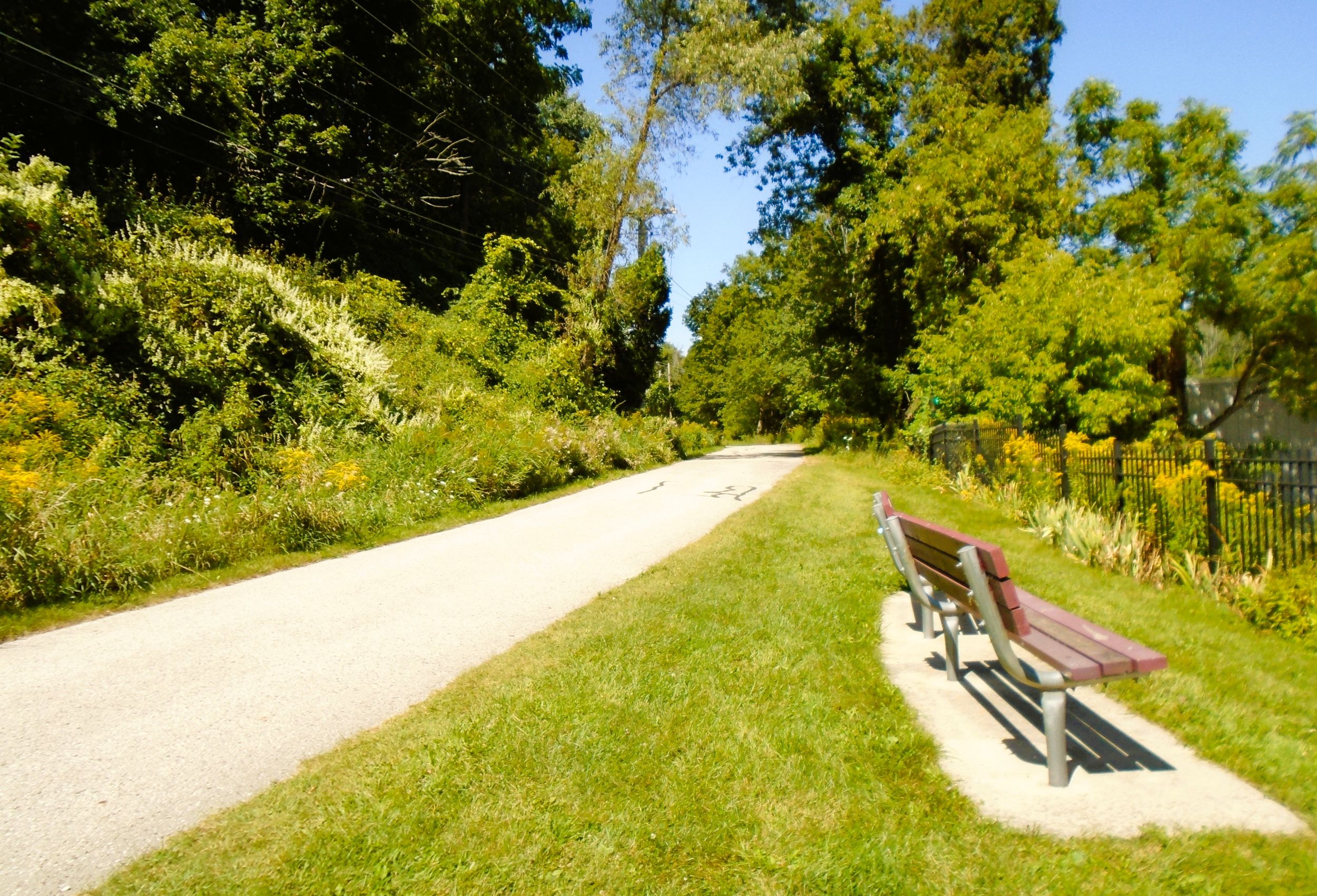
A bicycle sculpture, trail sign, self-service bicycle repair station, and bench sit next to the trail’s start. The path climbs uphill through a ravine. It is nearly a mile to Hales Trail. The route ascends 75 feet in that distance. 350 yards further, it crosses Norport Drive and climbs 25 feet. The last section ascends 30 feet over 0.4 mile and crosses Seven Hills Road.
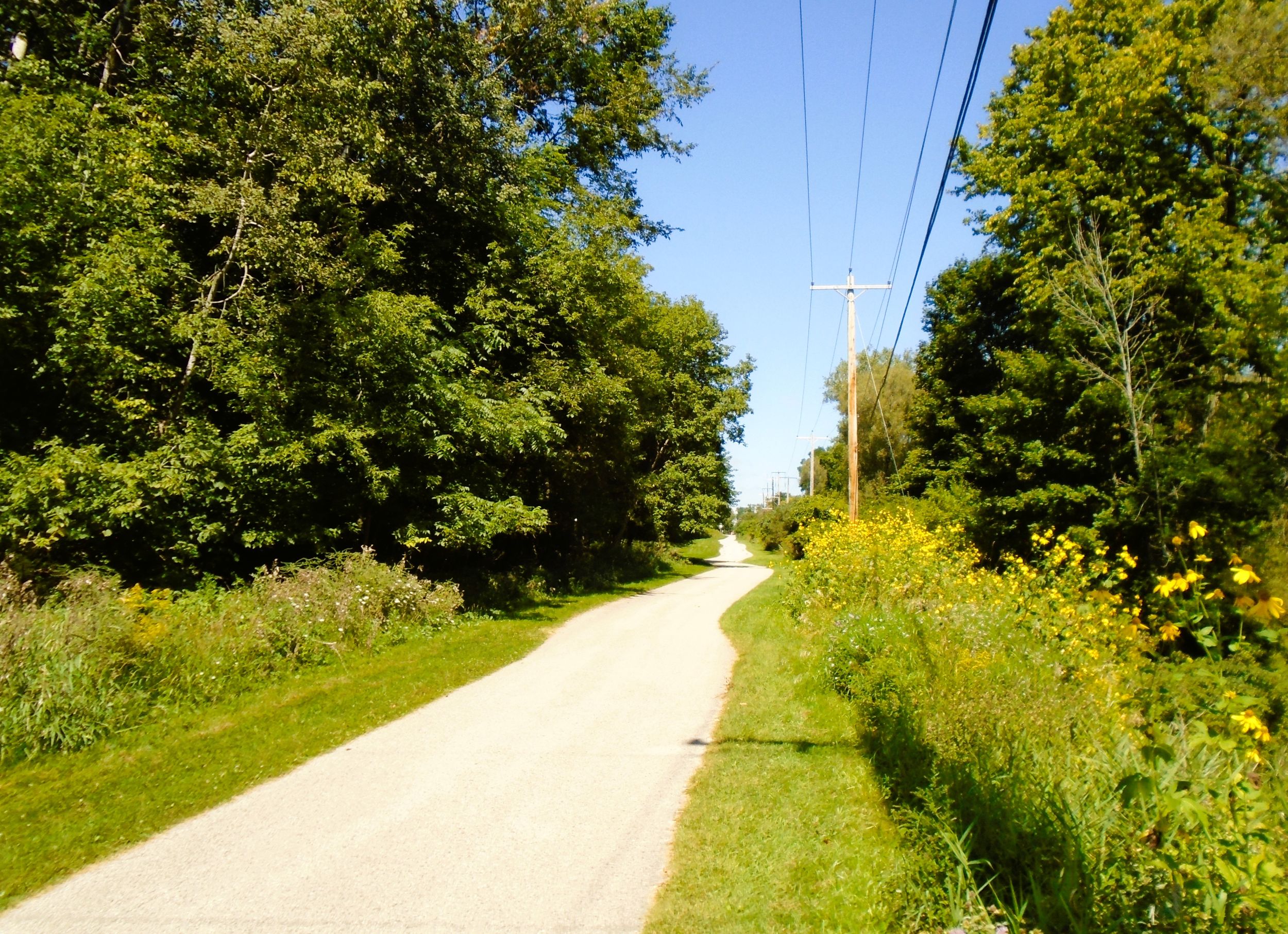
From the north side of Port Washington, the Interurban Trail progresses northeast aside Seven Hills Road for a half mile. Along the way, it passes a Holiday Inn Express Hotel. The trail next turns left (north) by Highland Lane and heads under Interstate Highway 43. It crosses Highland Drive, and travels beside it to the southwest for 0.3 miles. Finally, the trail curves to the right and resumes its regular northward route.
The Interurban Trail travels through Knellsville, and continues north into the countryside. It’s nearly 2 miles and a gradual uphill climb to Lake Drive. The next intersection comes after a mile and a gentle downhill ride. It is another mile from Dixie Road to County Highway A. Along the way, the trail passes The Bunkhouse, a farm-like retreat center offering lodging, banquet space, and conference rooms.
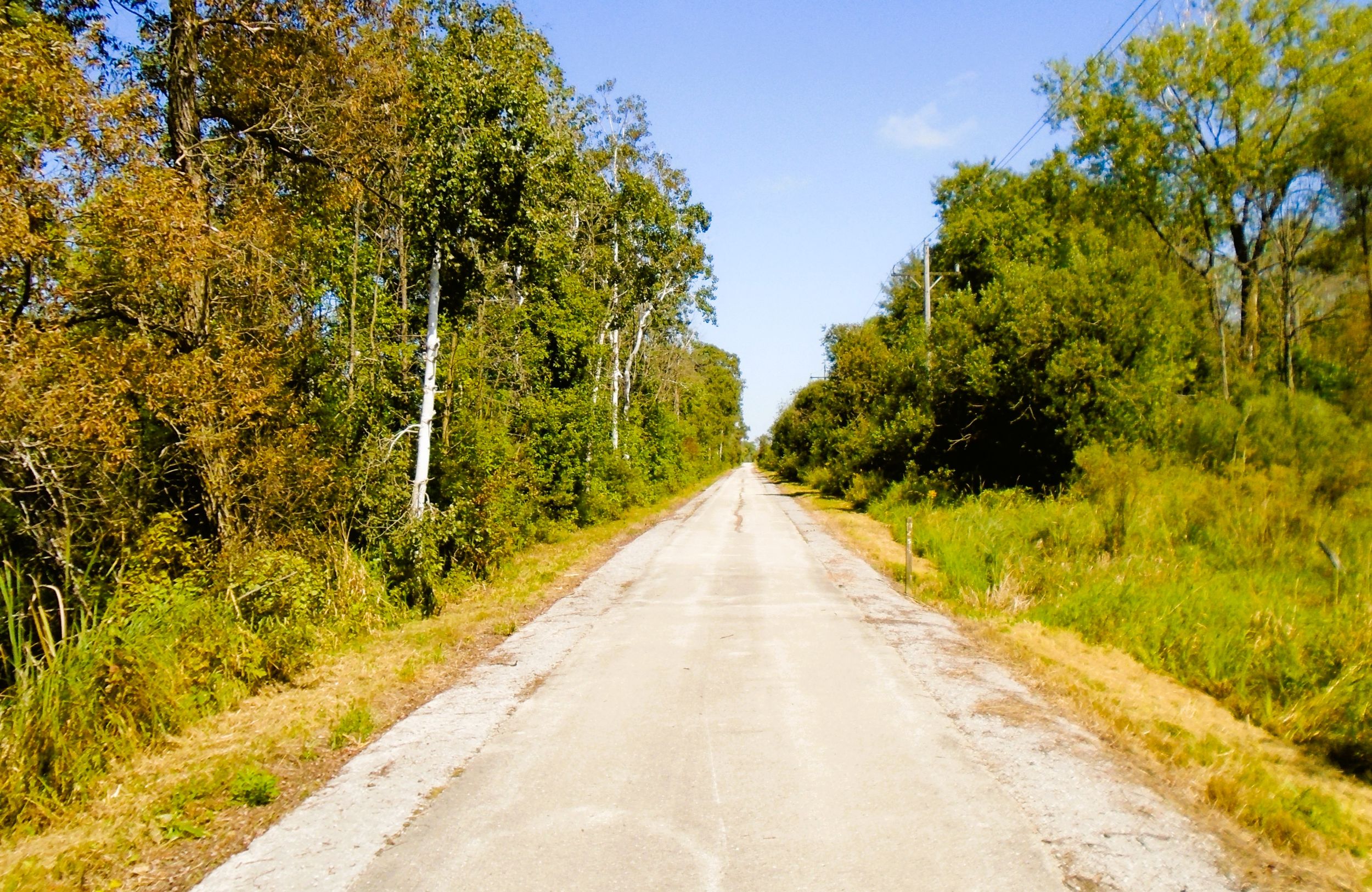
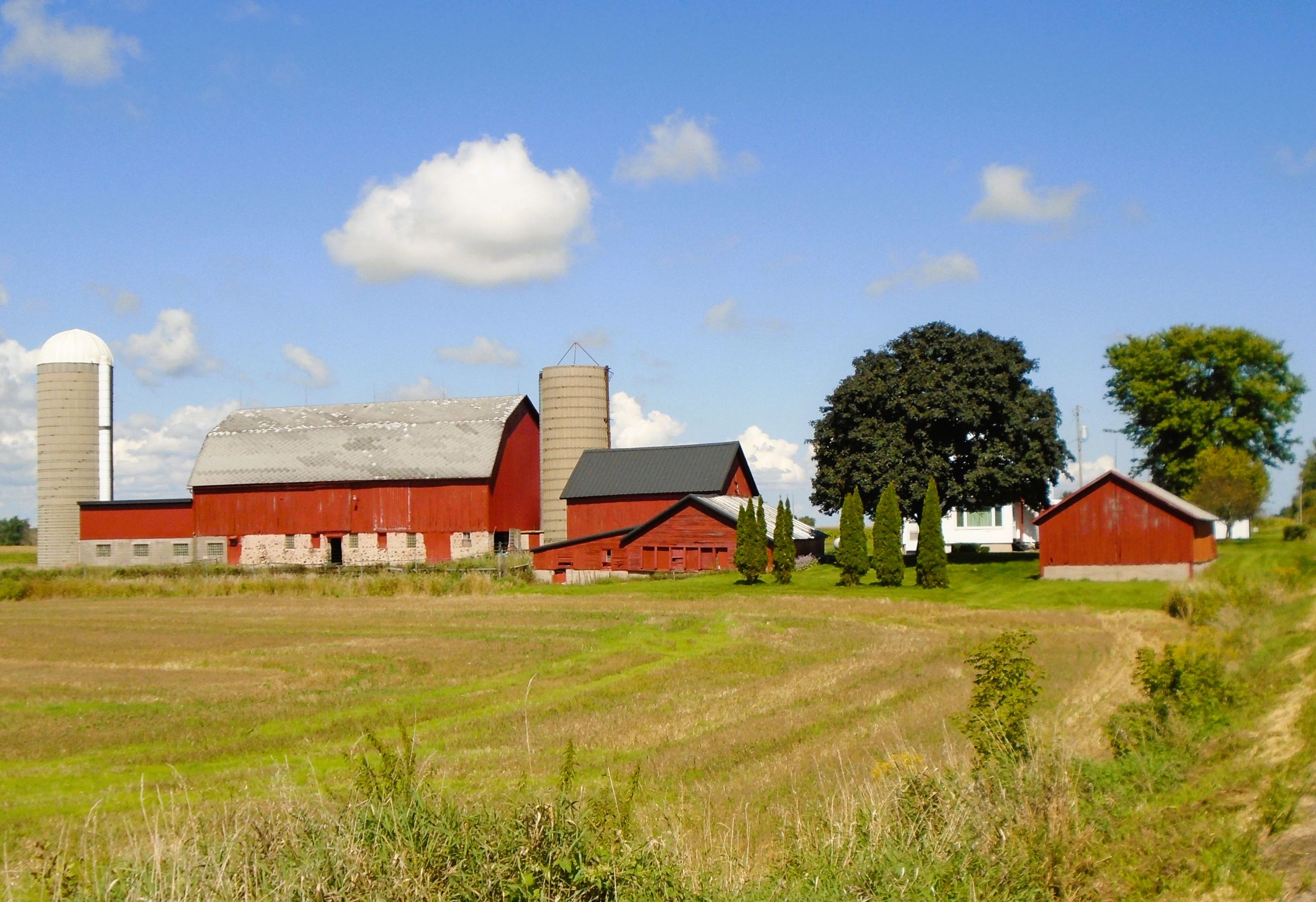
County Highway KW comes into view to the left (west) and runs along to the trail for 2.5 miles to Belgium. From County Highway A, it is 2 miles to County Highway D in downtown Belgium. The trail crosses Cedar Beach Road along the way. The landscape is rural, as the trail cuts through farmland amidst a corridor of trees and brush.
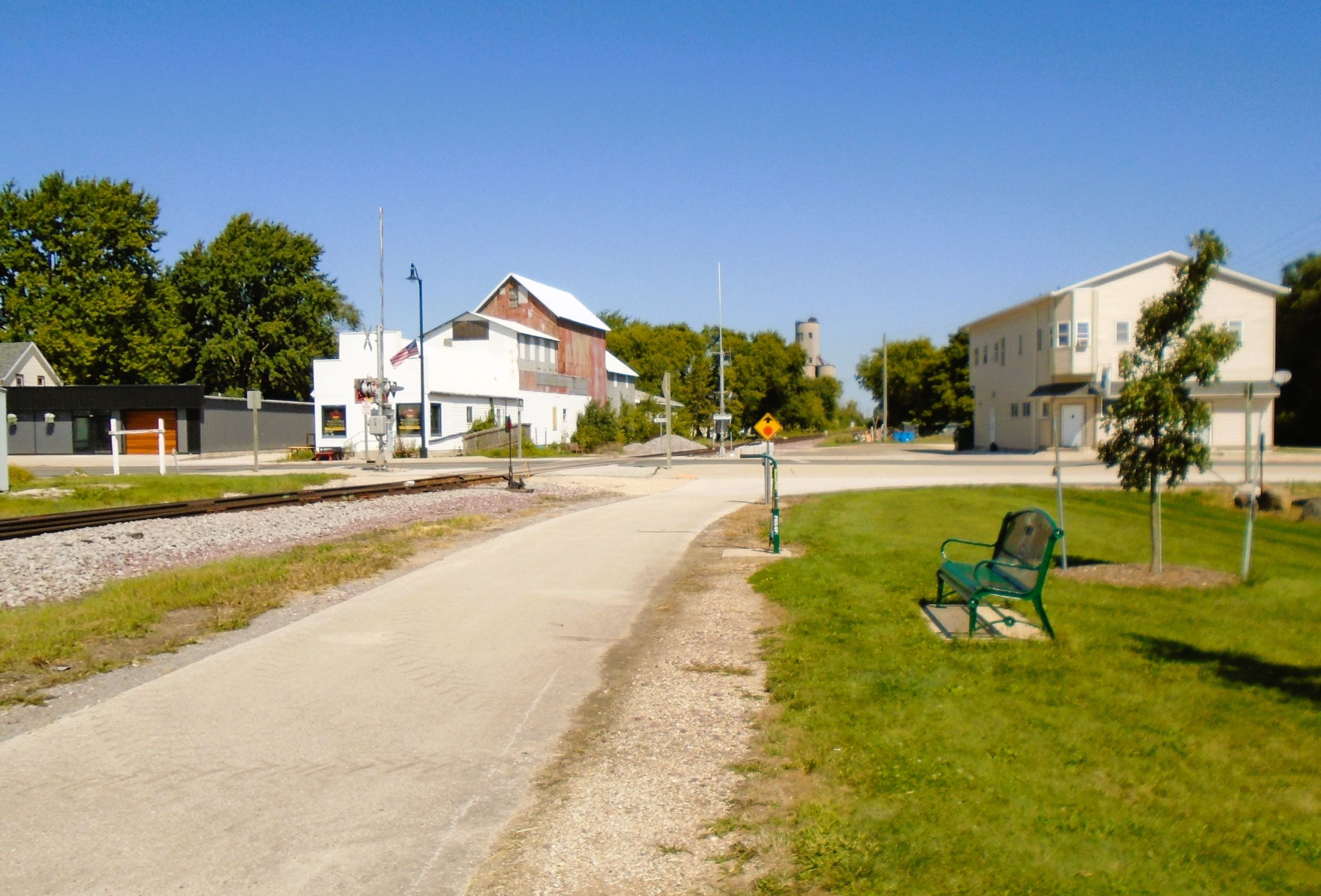
The Interurban Trail crosses railroad tracks in Belgium. Signs warn cyclists of the crossing, and the path curves to enable a perpendicular approach. There is no trailhead in Belgium, but street parking is available. Trail amenities are found on both sides of County Highway D (Main Street). The south side of the street has a bench and self-service bicycle repair station. The north has an information kiosk and more benches.
Another trailhead option is nearby Community Park. Just 0.2 mile east on Main Street, it has drinking water and public restrooms. The park also has a picnic shelter, concession stand, and lighted athletic fields and courts.
To reach Community Park by car from Interstate Highway 43, take exit 107 and go west 1.2 miles on County Highway D (Main Street). The park is on the right (north) side of the street. It’s another 350 yards west to the trail intersection. Belgium has a few restaurants, taverns, and convenience stores to meet the needs of trail-goers. There also is a small hotel.
Immigrants eager to farm the rich soil came here starting in the mid-1850s. The advent of railroads fueled more growth. The Northwestern Railway Company arrived in 1864, and the Chicago, Milwaukee, and St. Paul Railway followed in 1872. Belgium was also a stop on the Interurban Line. The village was incorporated in 1922.
There is a paradox to the name of Belgium and the Kewaunee County village of Luxembourg. In 1857, “Luxembourg” was submitted to the U.S. Postal Service by it citizens. At the same time, Belgian Americans further north submitted “Belgium” as the name for their town. Due to a clerical error, the names were switched. “Belgium” was given to the Luxembourg-American settlement, and “Luxemburg” issued to the Belgian-American community.
Today Belgium maintains strong ties with the Grand Duchy of Luxembourg. Members of the royal family have visited the village, and the Luxembourg Government sponsors the local Luxembourg American Cultural Society and Museum. The center promotes Luxembourg culture and traditions through its museum, cultural festival, and other events and activities.
Map of trailheads and addresses along this section of the trail.
A ride on the Interurban Trail from Port Washington to Belgium presents varying landscapes and experiences. In Port Washington, the trail follows bike routes on bustling streets. There’s a lot to take in and do in this small city. Then, the ride north to Belgium offers tranquility and secluded farm country. It’s the best of both worlds: amenities and serenity.
Trail last ridden and documented in August, 2025.