The “400” State Trail: La Valle to Wonewoc
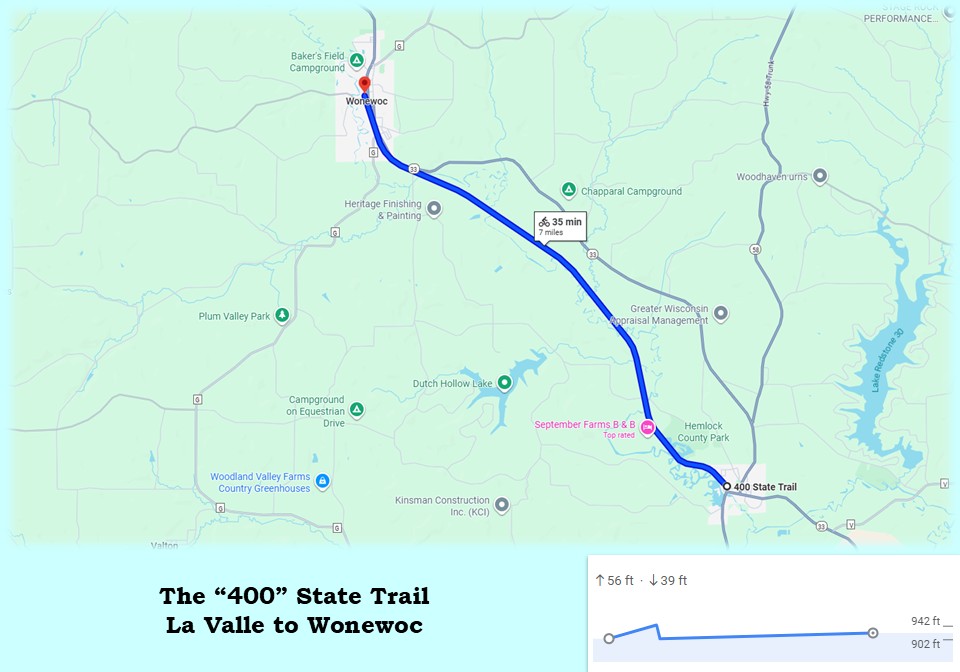
The section of the “400” State Trail from La Valle to Wonewoc journeys northwest through the Baraboo River Valley. The terrain is level, and the landscape is diverse. Sloughs and wetlands border the trail where it runs by the Baraboo River. Forests and meadows fill much of the valley. Bluffs with sandstone outcroppings tower off in the distance.
The scenic countryside along the “400” State Trail adds to a satisfying and stimulating seven-mile bike ride. The names of topographic features are intriguing, with landforms including Hemlock Slough, Horse Bluff, and Buckwheat Valley.
A ride on this segment of the “400” State Trail begins in the village of La Valle. Its name comes from the French word for “the valley.” Long before white Americans arrived in the area, members of the Ho Chunk Nation lived here. Some made their homes at the confluence of the Big and Little Baraboo Rivers. Many Native Americans, including the Ho-Chunk, were removed from their lands through treaties in the 1830s with the U.S. Government.
The first white American settlers arrived here in 1849, drawn by the Baraboo River’s waterpower potential. Mills and industries developed, and the settlement grew. La Valle was incorporated in 1856. Its period of prosperity was fueled by lumber, milling, and the arrival of the railroad in 1872. Today La Valle is a charming small village in Sauk County. Visitors looking for a bite to eat may consider Trail Break Cafe Pizzeria and Patio Bar for a tasty sandwich, burger, or pizza. It’s adjacent to the trailhead.
La Valle’s trailhead on Trail Street is accessed from Wisconsin State Highway 58 via North Street. A sign there presents the history of La Valle. The trailhead has restrooms with flush toilets, a drinking fountain, self-registration station, and self-service bicycle repair station. A parking area for vehicles with horse trailers is found a short distance north on the trail.
From La Valle to Wonewoc, the “400” State Trail runs seven miles, leaves Sauk County and enters Juneau County. A grassy horse trail runs adjacent to the bike path, The two paths converge at bridges. Bicyclists should yield to horseback riders. The trail’s surface is in good condition, consisting of two lanes of compacted earth and crushed limestone.
Heading northwest out of La Valle, the trail crosses Madison Street and moves past the parking lot for horse trailers. The Baraboo River is visible to the left (west). The next half mile travels through one of the river’s sloughs. This one is called “Hemlock Slough .37,” not to be confused with the approaching “Hemlock Slough” at Hemlock County Park.
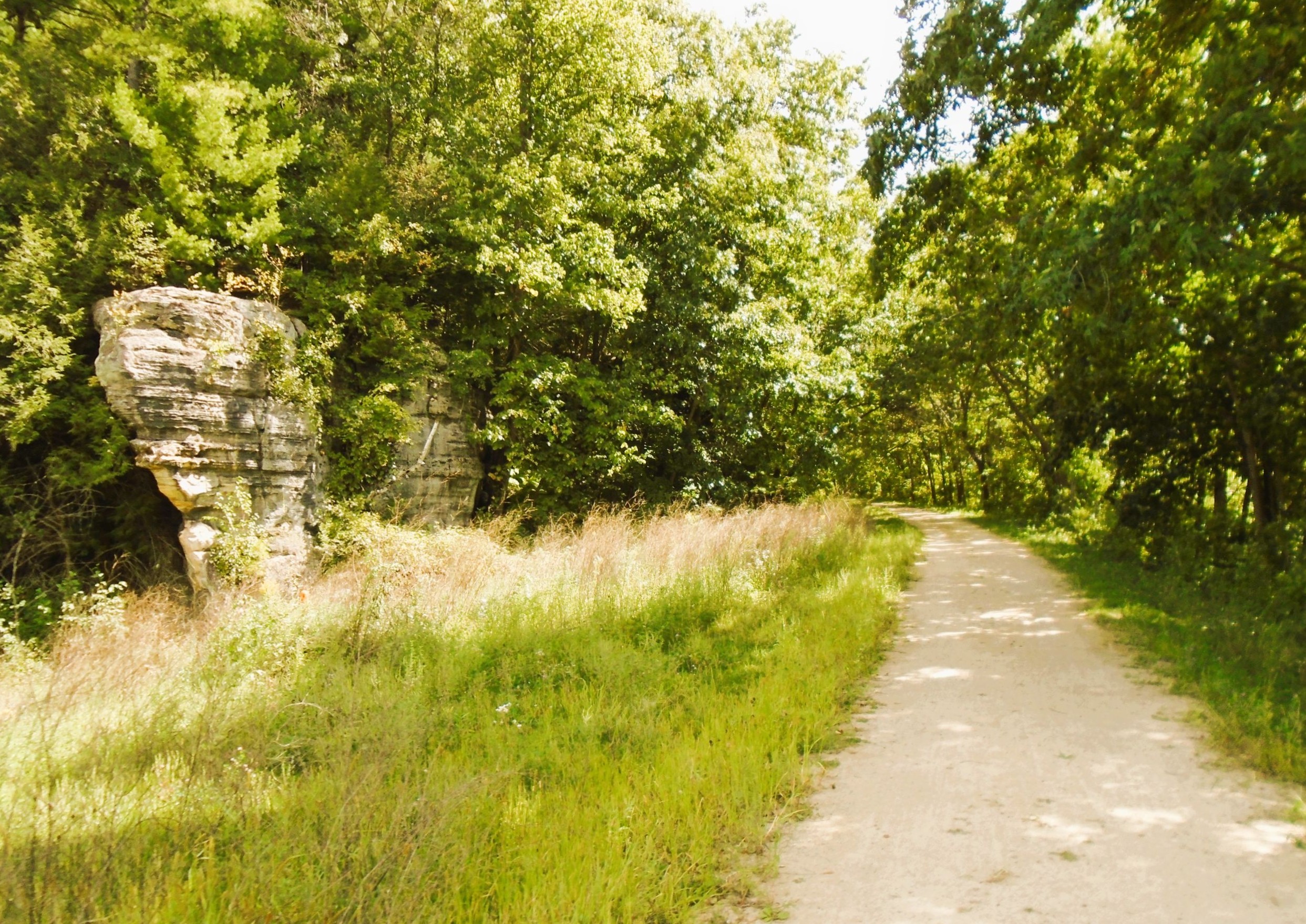
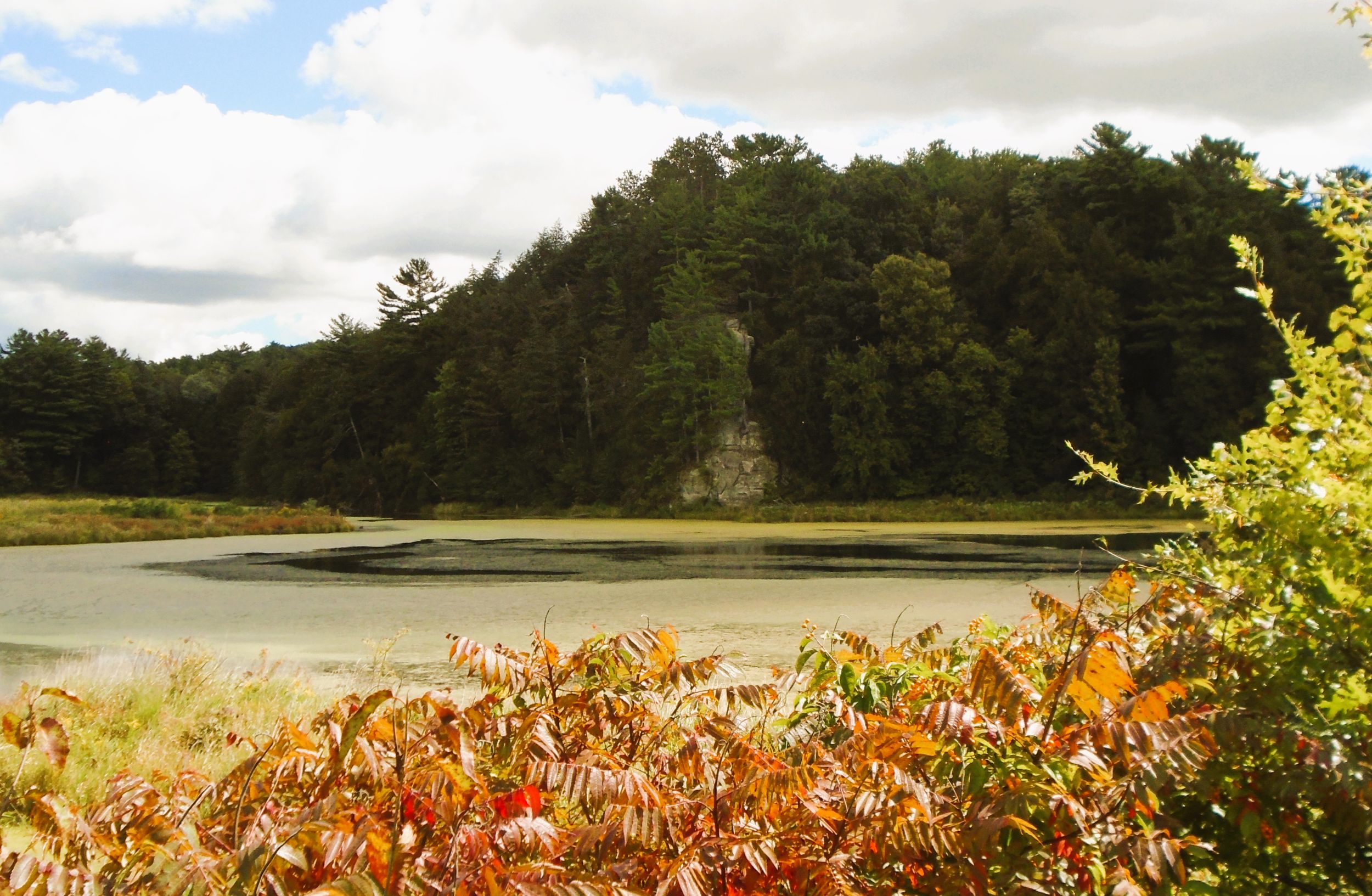
After passing a rock outcropping at the edge of a bluff, Hemlock Slough comes into view. The land opens up to reveal the 22-acre slough to the right (east). This pond has a depth of 12 feet, and contains panfish, bass, and northern pike. The slough is part of 73-acre Hemlock County Park. Amenities include picnic tables, grills, restrooms, boat ramp, and hiking trails.
After crossing McKenney Road, the trail leaves the county park. September Farms is located on the road to the left (west). This bed and breakfast inn sits on 90 acres of picturesque woods, marshes, and farmland. The historic 1880s farmhouse is tucked into Horse Bluff with the Baraboo River encircling the property. The inn is visible from the trail.
After McKinney Road, the “400” State Trail travels through a cut in Horse Bluff. Legend decrees that the bluff is named after a saddled horse found there with no rider in sight. A gap was cut in the ridge during railroad days, with two walls of solid rock. The bluff is completely forested. A park bench in the shade invites trail-goers to pause and reflect about railroad crews blasting their way through the ridge in the 1870s.
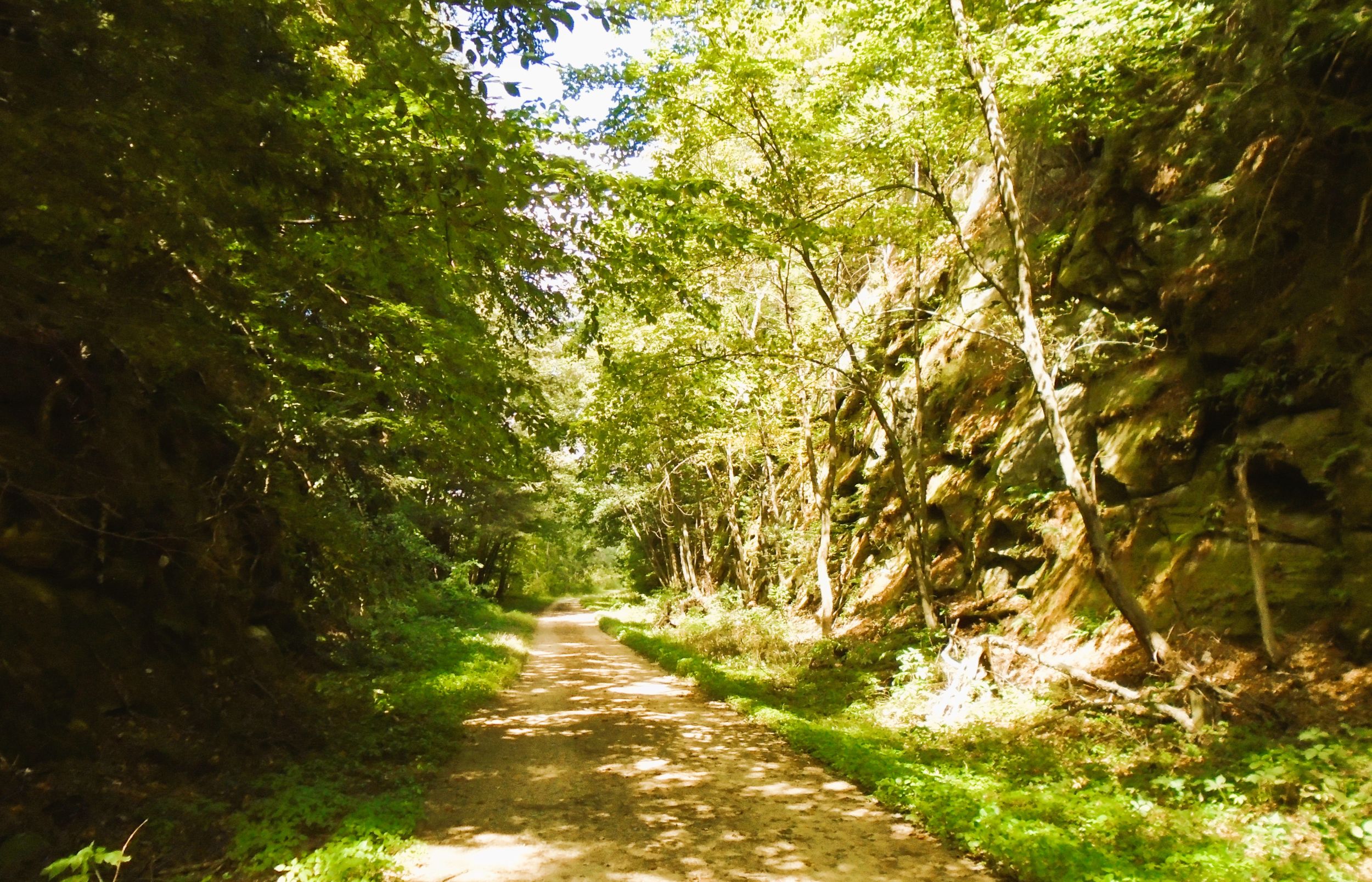
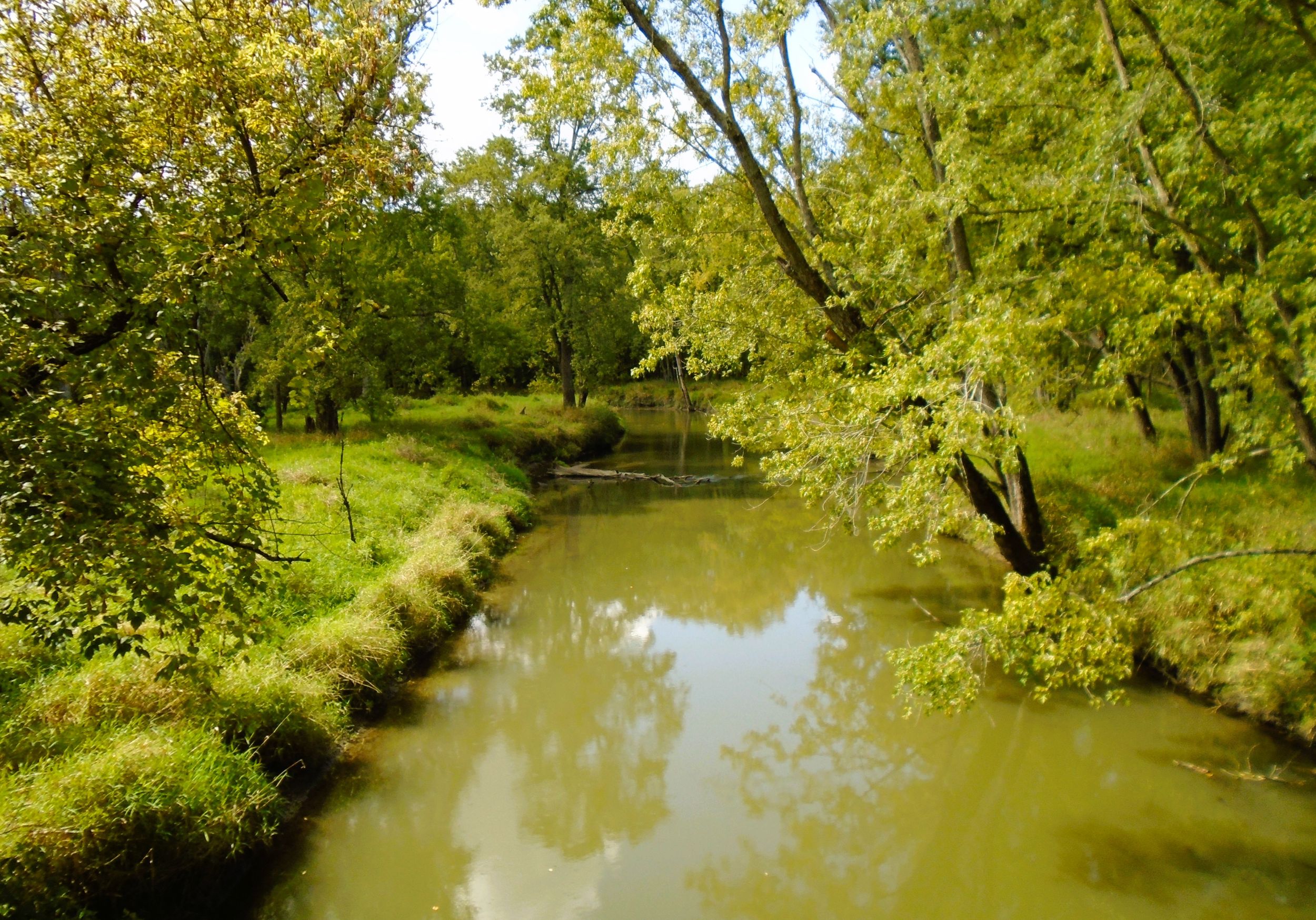
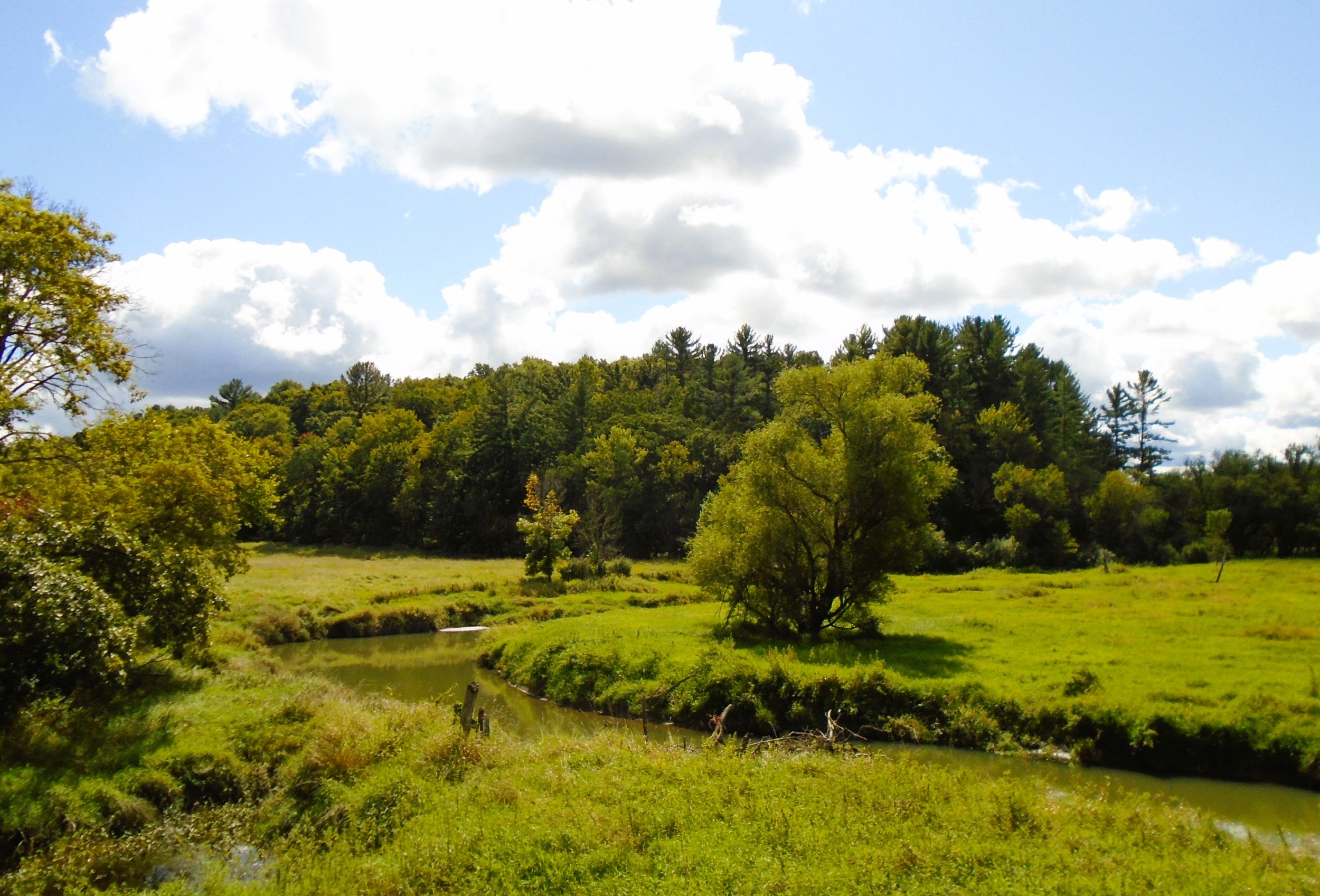
After the cut in Horse Bluff, the “400” State Trail bridges the Baraboo River. It crosses Dutch Hollow Road, and heads out into Buckwheat Valley. This vast floodplain has pastures and bushy meadows. Hardwood forests of silver maple, ash and elm grow near the river. The name “Buckwheat Valley” suggest that buckwheat was a crop grown there by early settlers.
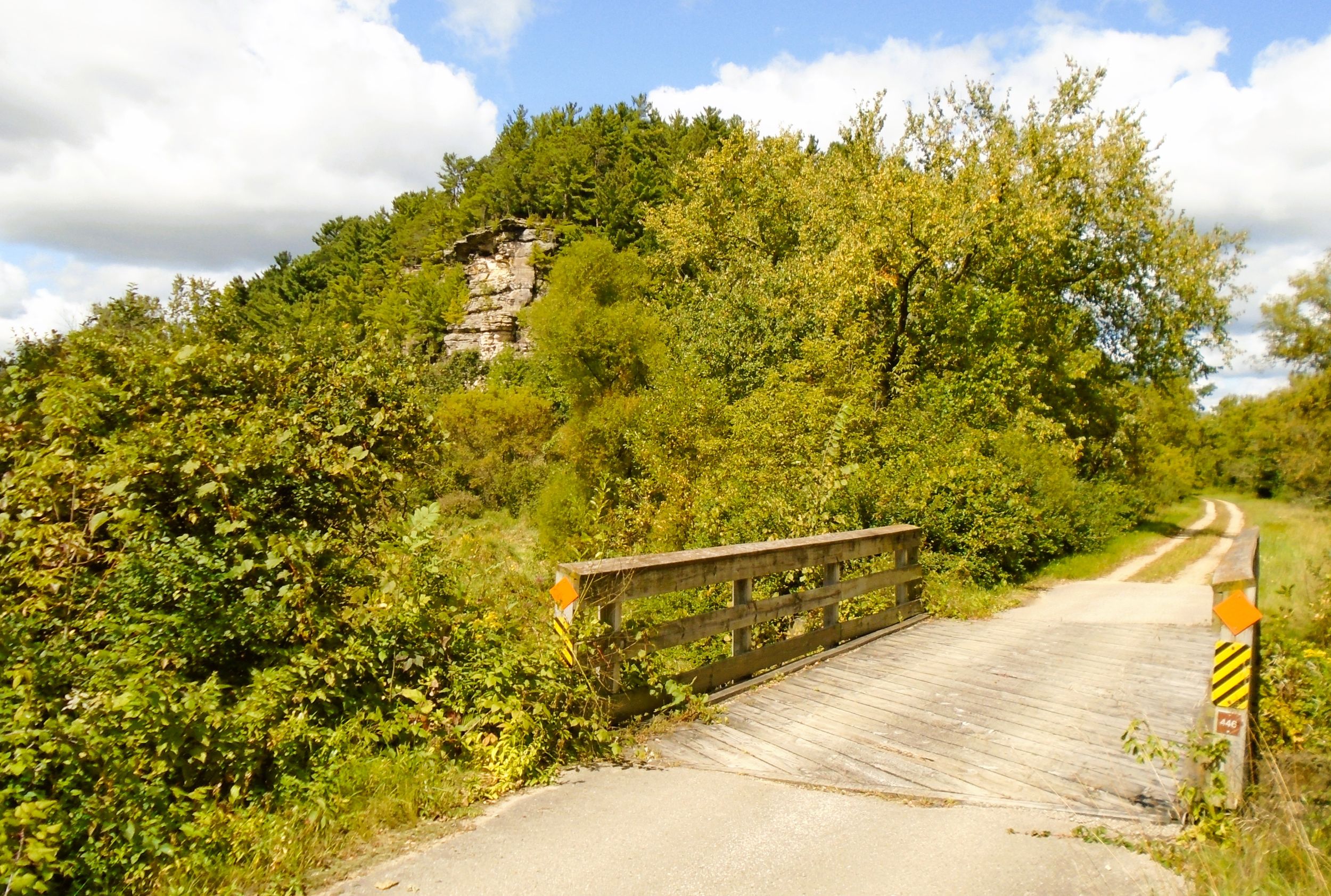
It is 4.2 miles across Buckwheat Valley from Dutch Hollow Road to a wayside park. In that distance, the “400” State Trail crosses the Baraboo River three times. At the bridge over Dutch Hollow Creek, a stunning view of a rocky outcropping may be seen at the end of an encroaching ridge. The creek flows west to Dutch Hollow Lake.
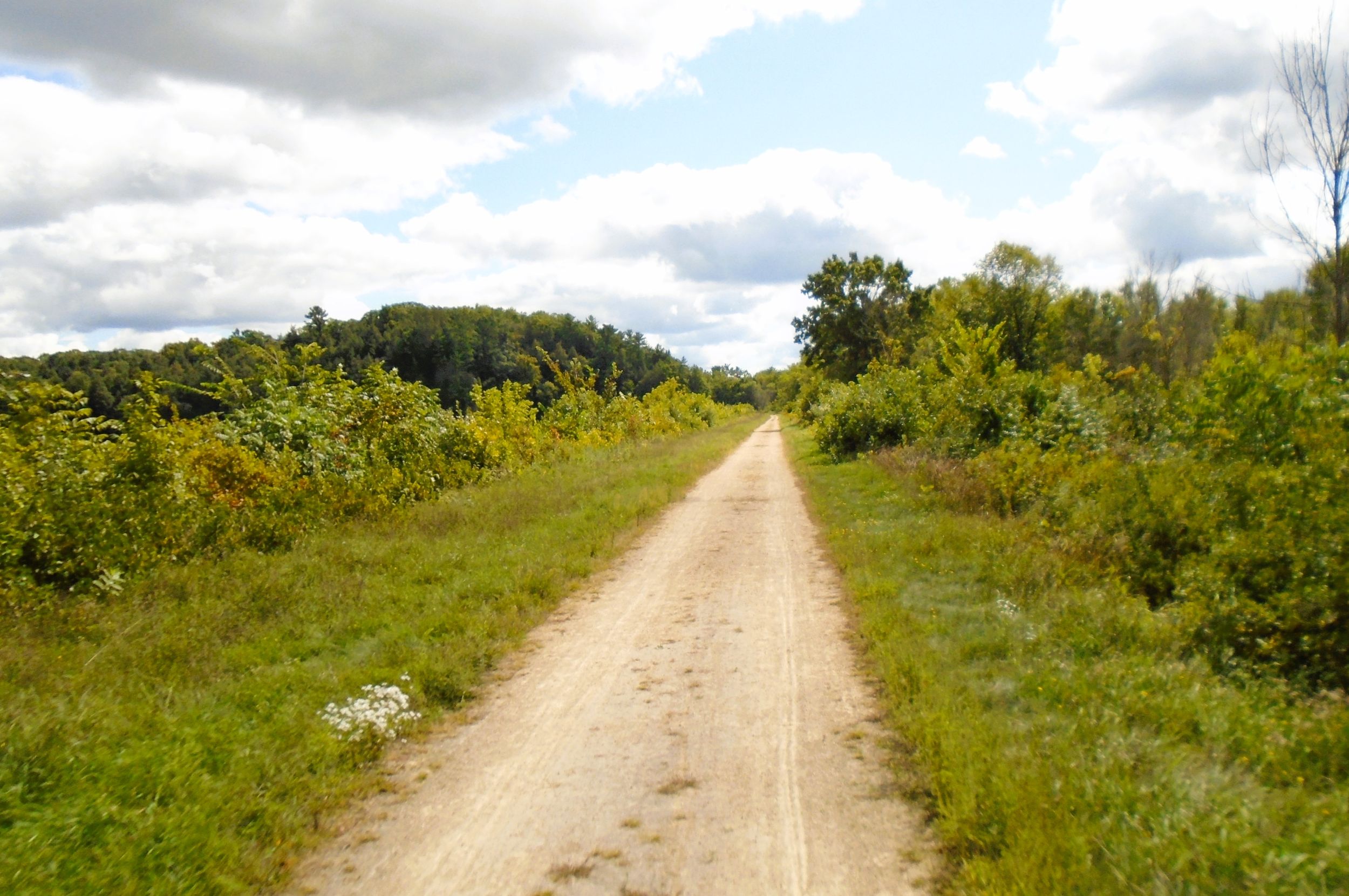
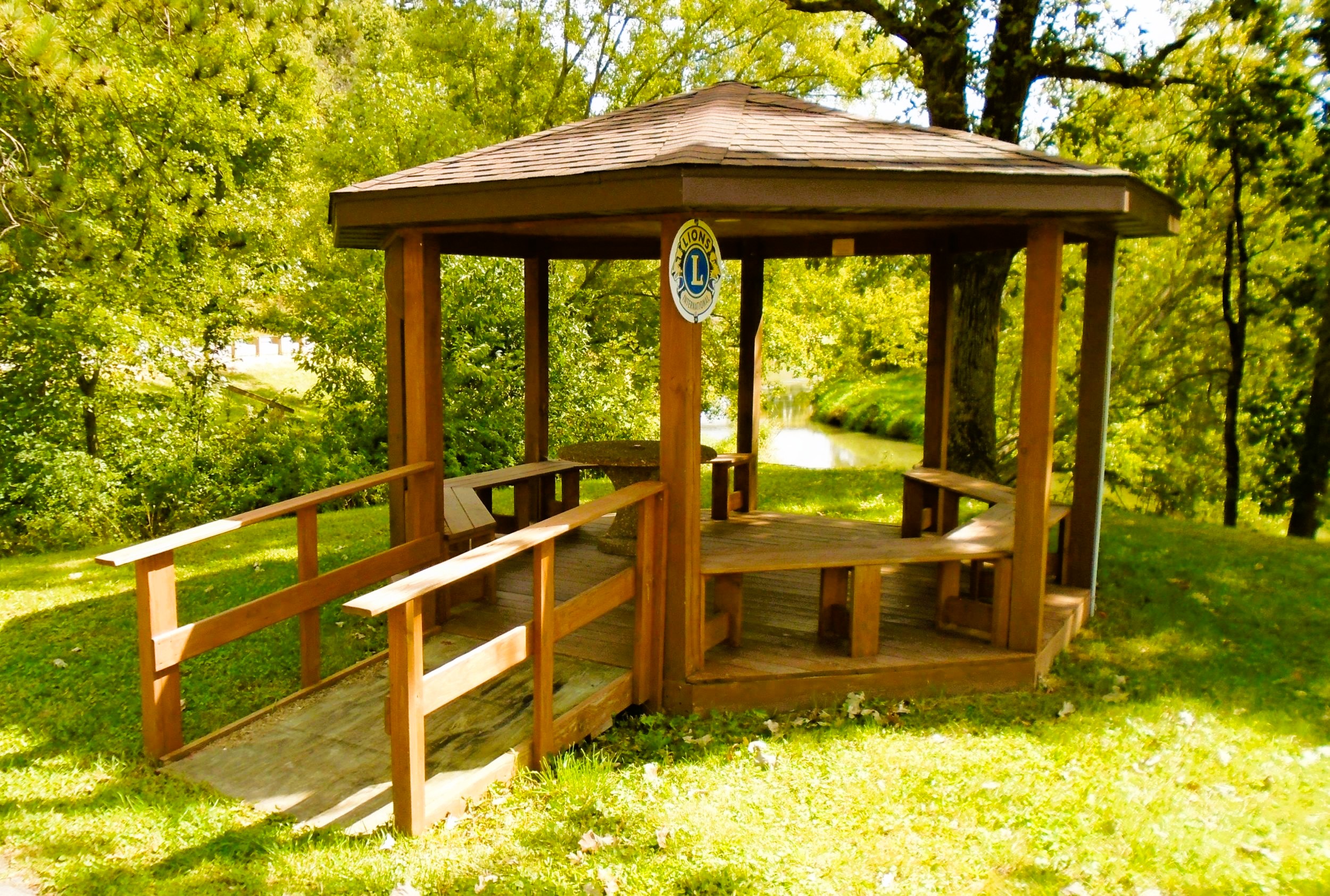
The trail also crosses Crossman Creek, about a mile south of where the bluffs close in to form a narrow gap at the northern end of the valley. The Baraboo River, Wisconsin State Highway 33, and the “400” State Trail all pass through this small dell. Wayside Park is located in the gap. It is accessed from the trail and highway by Strawbridge Road, and may serve as a trailhead. The wayside has a large parking lot, gazebo, and restrooms.
From Wayside Park, it is 1.2 miles to the trailhead in Wonewoc. In this distance, the path crosses County Highway G and three other city streets. Less than a mile north of Wayside Park, the “400” State Trail leaves Sauk County and moves into Juneau County.
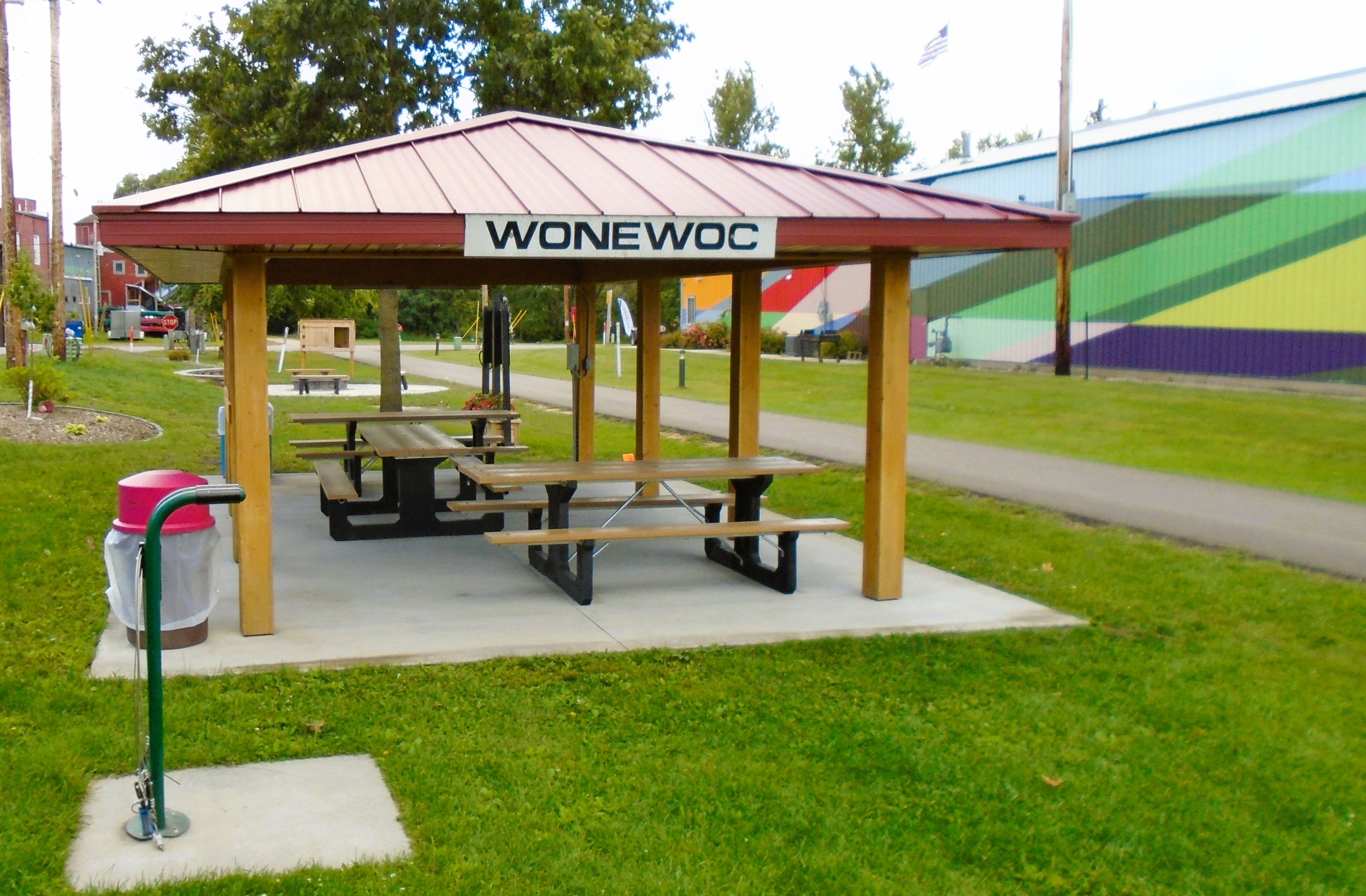
The trailhead in Wonewoc is on the right (east) side of the path, north of Washington Street. It has a large parking lot, flush toilets, drinking fountain, covered picnic shelter, self-service bicycle repair station, bike rack, firepit with benches, and historical marker. To reach the Wonewoc trailhead by car, turn west on Gordon Street off Wisconsin State Highway 33.
The seven-mile horse trail ends in Wonewoc. A short distance north on the trail, within the village, is a designated camping area named Baker’s Field Campground. No facilities are present; but firewood and a fire ring are provided. Trail-goers who overnight there must carry in what they need and pack out their refuse. There is no fee to use the campsites.
A half mile from the trailhead is Wonewoc Legion Park. It is a full-service park with a campground, outdoor swimming pool, restrooms and hot showers. Campsites have electrical hookups, picnic tables, firewood, and fire rings. The park is on Pine Street in Wonewoc.
Several establishments offer food and beverages in Wonewoc. A convenience store, restaurant, and several taverns are found on Center Street, one block off the trail. Beyond Boundaries Canoe, Kayak, and Bike Adventures can’t be missed. Located on the trail, the company offers outdoor activity rentals and provides shuttle services.
Wonewoc’s name is interpreted as “howling hills” in the Ho Chunk language. Another version offers a little more levity- Wonį́wąk has also been understood to mean “naughty or foolish thinking” in Ho Chunk. According to a local legend, a settler asked a native resident what the place was named, and the Native American replied that the man was a fool.
Lumber prospectors first came to this area in 1842. Before that, it was home to the Ho-Chunk nation. They ceded their land to the U.S. Government during the 1830s. White American settlers arrived in 1851. The village was incorporated in 1878, and grew with the advent of the railroad. When the rail line closed, the village’s growth diminished.
The seven-mile section of the “400” State Trail from La Valle to Wonewoc is filled with scenic views, and the attractive landscape is charming. The path runs in both shady areas and open sunlight. On summer days with a still wind, horseflies may pester cyclists. Despite these minor annoyances, a ride on the “400” State Trail is pleasant and serene.
Trail last ridden and documented in September, 2025.
Map of trailheads and addresses along this section of the trail.