Military Ridge State Trail: Dodgeville to Ridgeway
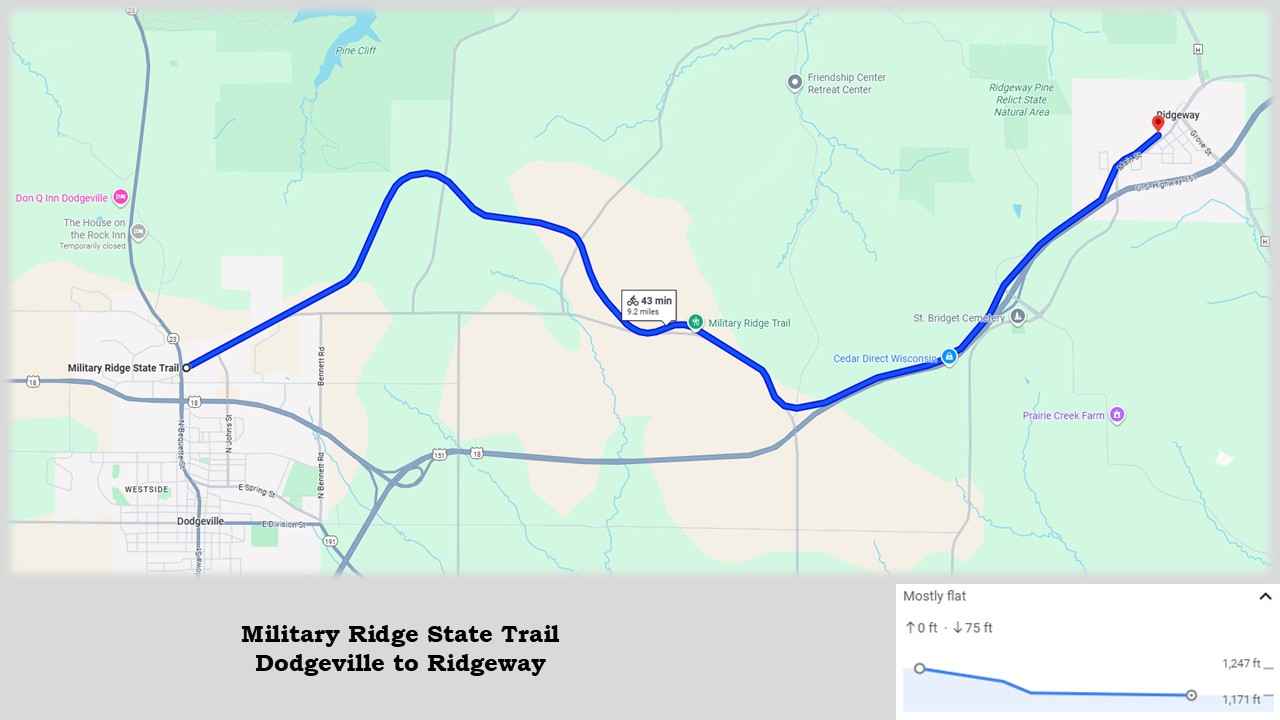
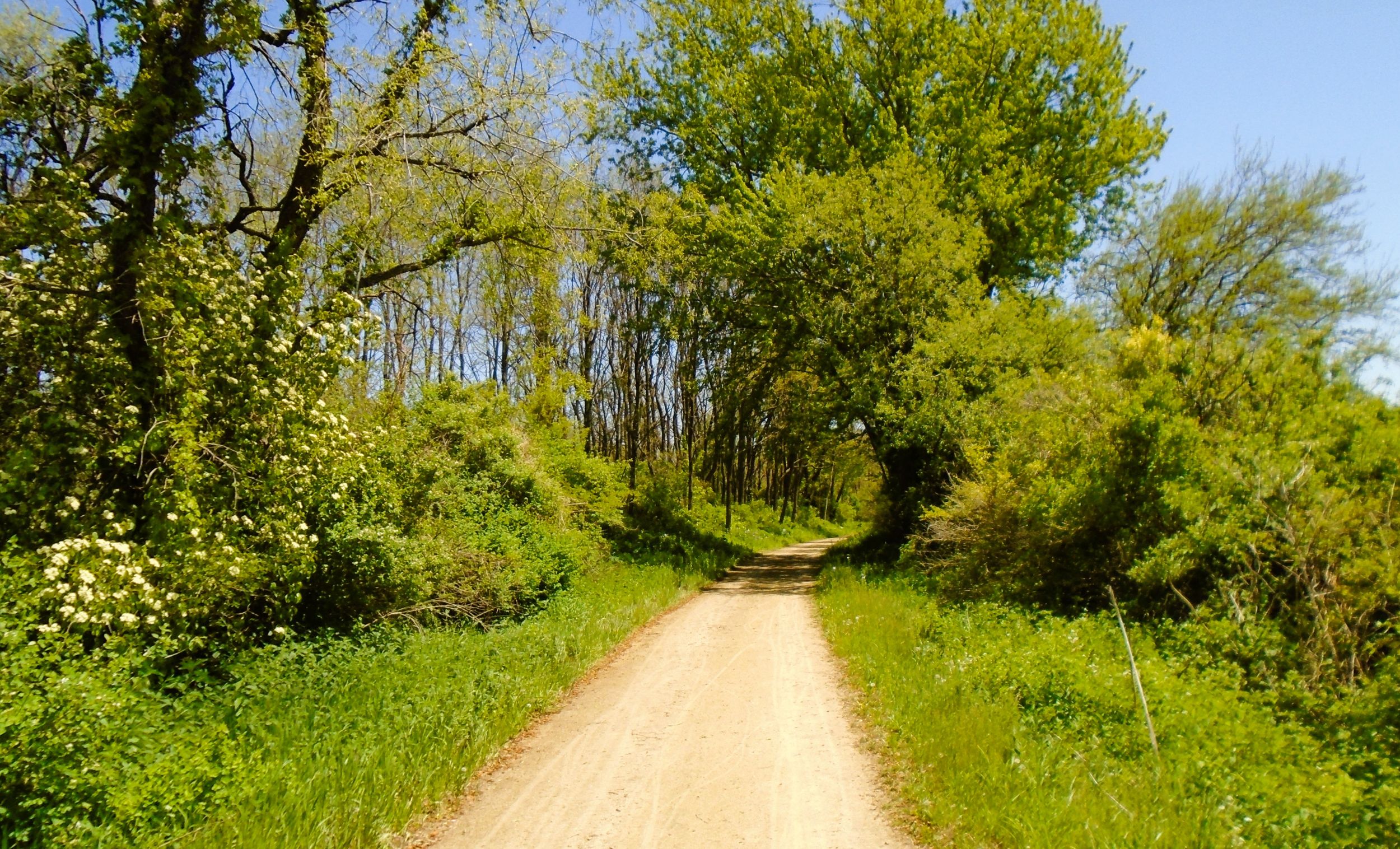
A ride on the Military Ridge State Trail from Dodgeville to Ridgeway is 9.2 miles long and is an enjoyable experience. The surface of the path is composed of crushed limestone, in good condition. Since a corridor of trees and bushes surround much of the trail, sticks and small branches may litter the path after strong rainstorms. Also, cyclists should attentively watch for holes in the trail’s surface, from gophers and other small animals.
Biking east from Dodgeville, the trail’s elevation descends nearly 65 feet over its distance to Ridgeway. Two medium-sized hills are found along the route. The Military Ridge State Trail offers stunning views of the countryside. Traveling along the crest of a high ridge, trail-goers are presented with picturesque views of neighboring valleys, ravines, and hills. The route itself is historic, as it retraces the old military road.
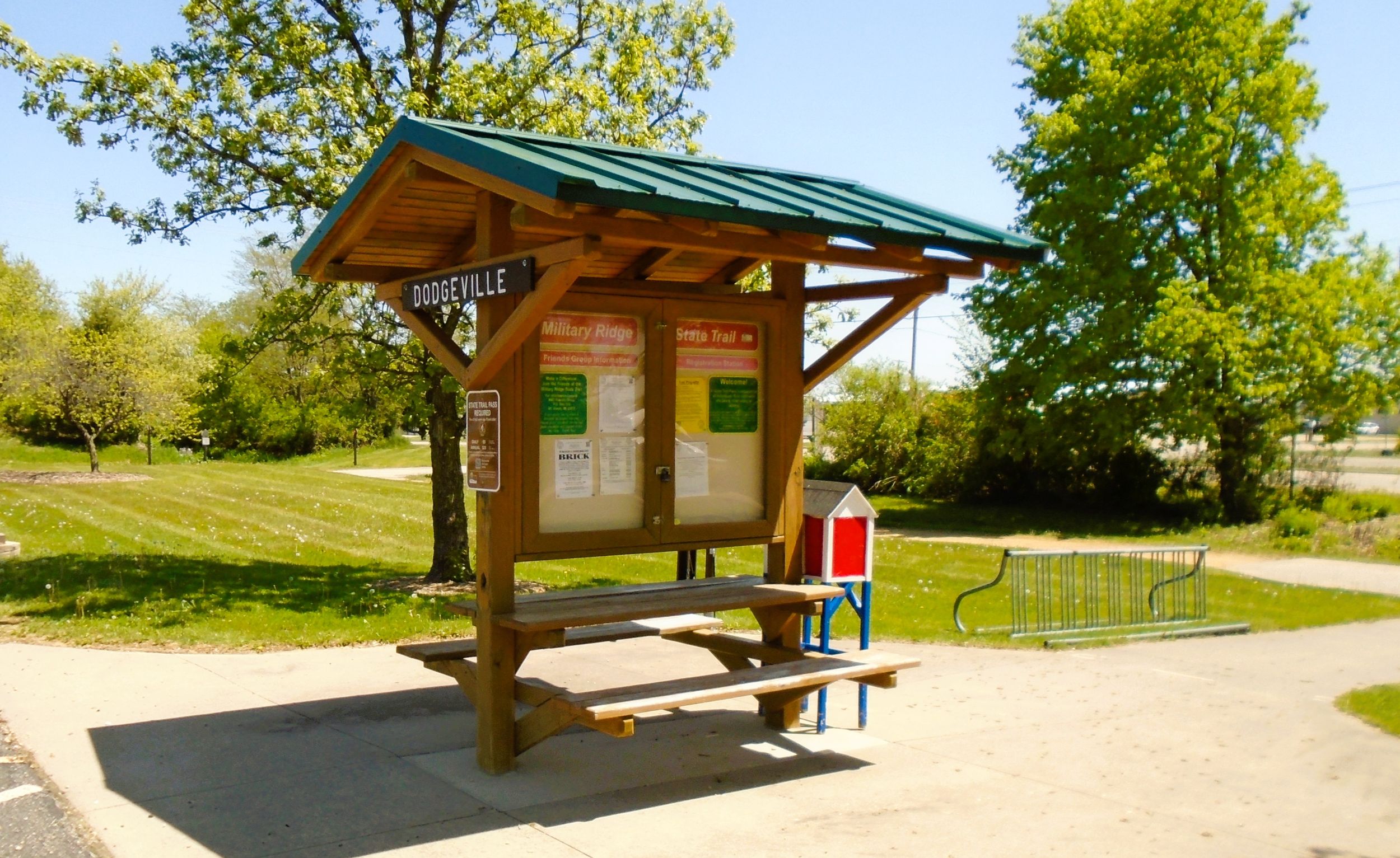
The main trailhead for the Military Ridge State Trail is located at a DNR Service Center on County Highway YZ in Dodgeville. Ample parking, restrooms, a self-service bicycle repair station, picnic tables, bike rack, and an information kiosk are found there. The Dodgeville DNR Service Center is open Monday through Friday from 11:00 a.m. to 2:00 p.m. To reach the center by car, turn north on Johns Street from U.S. Highway 18 (Dodgeville Expressway) in Dodgeville. Drive 0.4 mile to the center’s entrance.
The Military Ridge State Trail actually begins 350 yards west of the DNR center at the junction of County Highway YZ and Wisconsin State Highway 23 in Dodgeville. While biking enthusiasts may want to begin at the trail’s exact origin, no trail amenities are located there, including public parking. The service center works best as a starting point.
Dodgeville offers visitors all the necessary amenities, including a few hotels. It has several restaurants, fast food chains, gas stations, and convenience stores. A bakery, restaurants, and taverns are located in downtown Dodgeville. A local diner, café, and a few fast food restaurants are near the start of the trail and offer visitors different dining options.
Dodgeville, the seat of Iowa County, dates to 1827 when Henry Dodge arrived with a group of settlers intent on mining lead in the area. Historically, the land surrounding Dodgeville was the home to the Ho-Chunk Nation. They were displaced in the 1830s under federal treaty, due to the influx of miners on their reserved land. The Iowa County Courthouse in Dodgeville, built in 1859, is the oldest functioning courthouse in Wisconsin. Henry Dodge became Wisconsin’s first territorial governor, and his mining shack is still located in town.
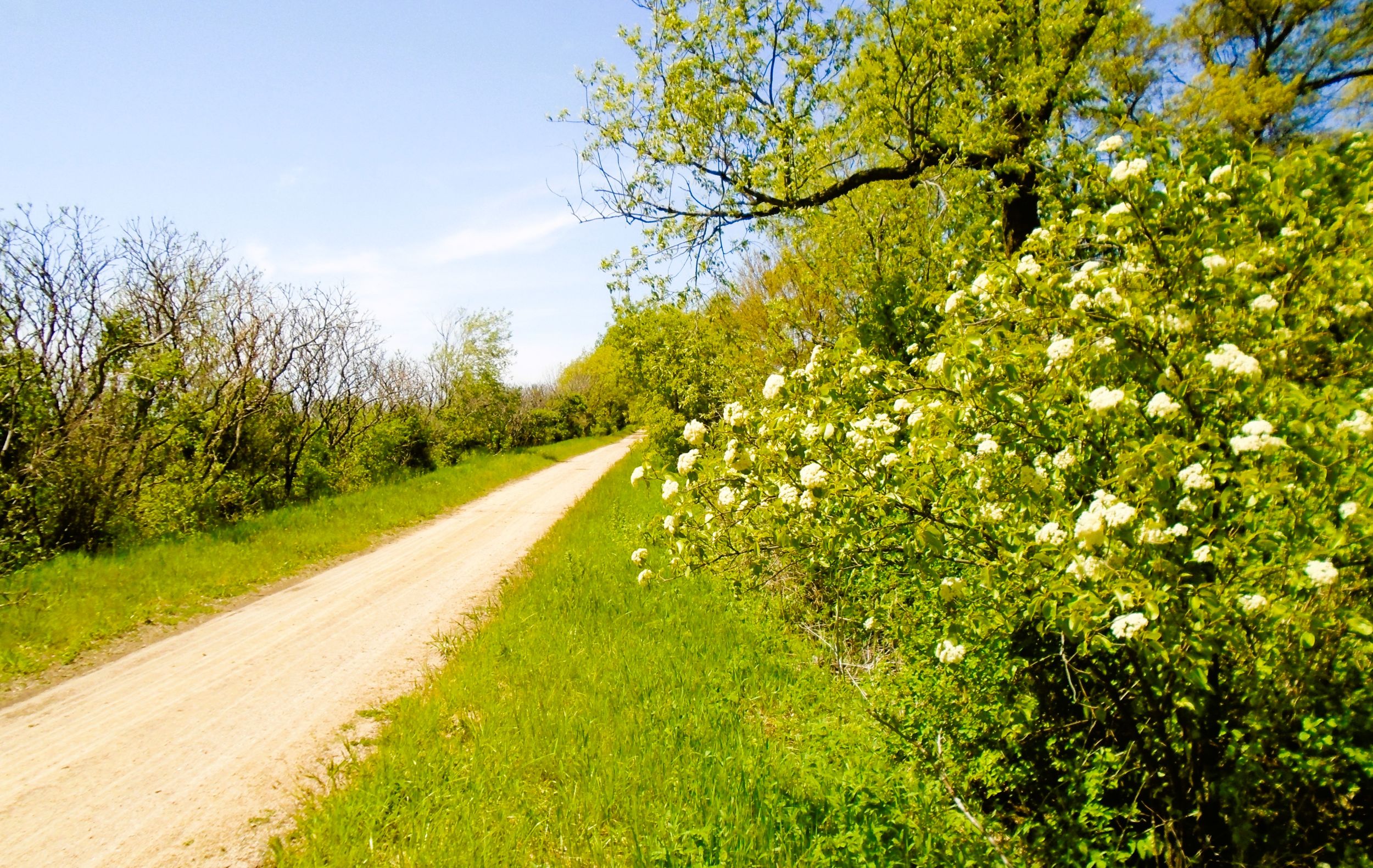
Returning to the Military Ridge State Trail, upon leaving the DNR center going east, the route travels along a flat and shaded route. During the spring season, purple wild geraniums (Geranium maculatum) and dame’s rocket (Hesperis matronalis) grow next to the trail. Japanese honeysuckle (Lonicera aureoreticulata), an invasive bush, grows prolifically along the path and blooms in late spring. Amateur botanists will also identify Nannyberry Viburnum (Viburnum lentago) growing by the trail and blossoming during spring time.
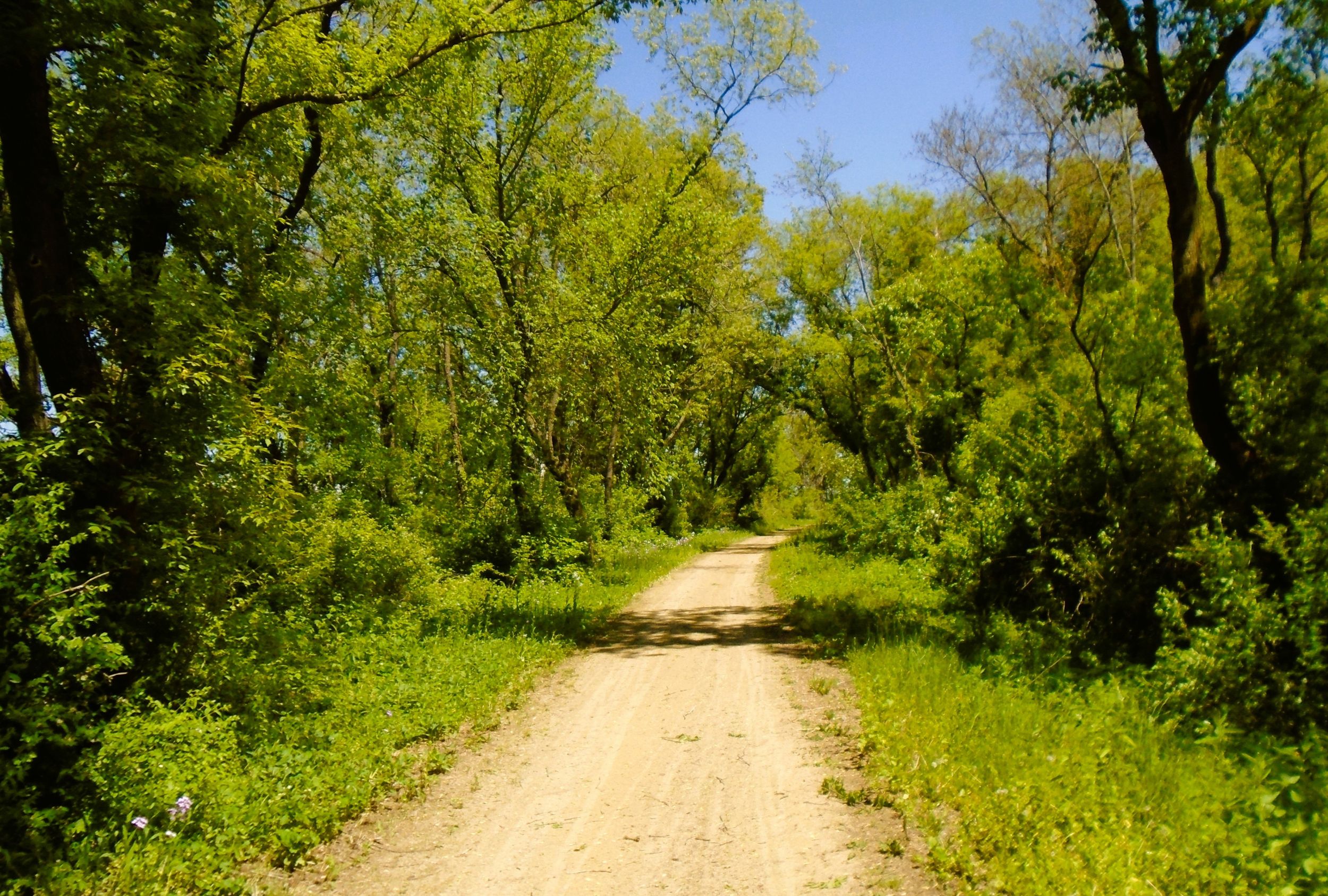
Summer months bring a canopy of lush vegetation surrounding much of the trail. Poison ivy and wild parsnip (Pastinaca sativa) grow in open places next to the path. Contact with these plants may cause a painful rash or burns to the skin. Periodic swarms of gnats may also bother trail-goers. Autumn offers scenic views from the trail of farmers harvesting their last crop of hay and colorful forested valleys that fall away from the ridge.
It is 2.2 miles from the DNR center to County Highway Z. At that junction, bicyclists may choose to go north for a half mile to connect with a paved trail leading to Governor Dodge State Park. The county road descends and then climbs a hill to where the spur trail leads off to the state park. The long descending path in the park is winding and certainly exciting. The climb back up the hill to return to Military Ridge State Trail may be challenging.
Governor Dodge State Park is named after Henry Dodge, Wisconsin’s first territorial governor who settled in the area. It’s one of the largest state parks with over 5,200 acres. The park features steep hills, bluffs, and deep valleys. Two lakes and a waterfall are main attractions. The state park offers camping, picnicking, hiking, canoeing, biking, hunting, fishing, off-road biking, and horseback riding opportunities. An admission fee is required to enter the park.
Back on the Military Ridge State Trail, the path next crosses County Highway Y. A mile further, it meets County Highway YZ and travels east adjacent to it. The thick vegetation limits a view of the road. While not immediately apparent from the trail, an interesting Wisconsin historical marker is found on County Highway YZ. The marker tells the history of the military road built in 1835 by troops from Fort Crawford in Prairie du Chien. The trail closely follows the old road. To view the marker, turn right (south) from the trail on Canyon Park Road. Travel 250 feet to County Highway YZ to the marker site.
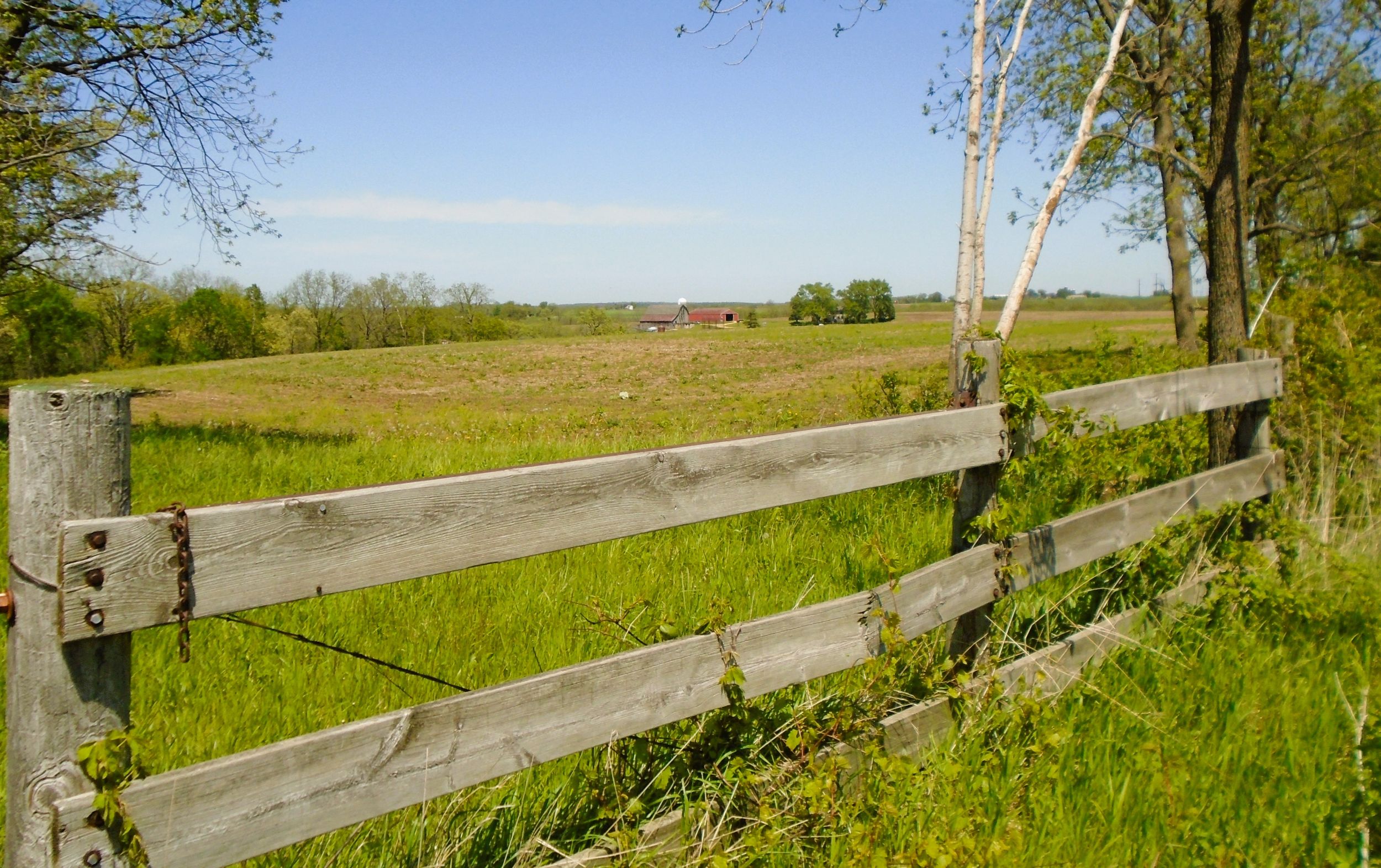
The landscape surrounding the trail features the rolling countryside of the Driftless Area, a region of Wisconsin untouched by ancient glaciers. Patches of forest are surrounded by farm fields. By open meadows and pastures, Red-wing Blackbirds let intruders know that this is their territory. Cyclists may expect to be pestered by these dive-bombing birds. Eastern Bluebirds, Northern Cardinals, and Blue Jays are often spotted darting across the trail. Also, it is not uncommon to see white-tailed deer, red fox, and other wildlife from the path.
It is 2.2 miles from County Highway Y to Evans Quarry Road. From there, the Military Ridge State Trail parallels busy U.S. Highways 18 and 151 for nearly three miles. Even when the highway isn’t visible, the sound of traffic is noticeable. It is 1.8 miles from Evans Quarry Road to Ridgeview Road. The landscape is open here, with little shade provided to trail-goers. The path’s grade fluctuates in this section by 40 feet over two separate hills.
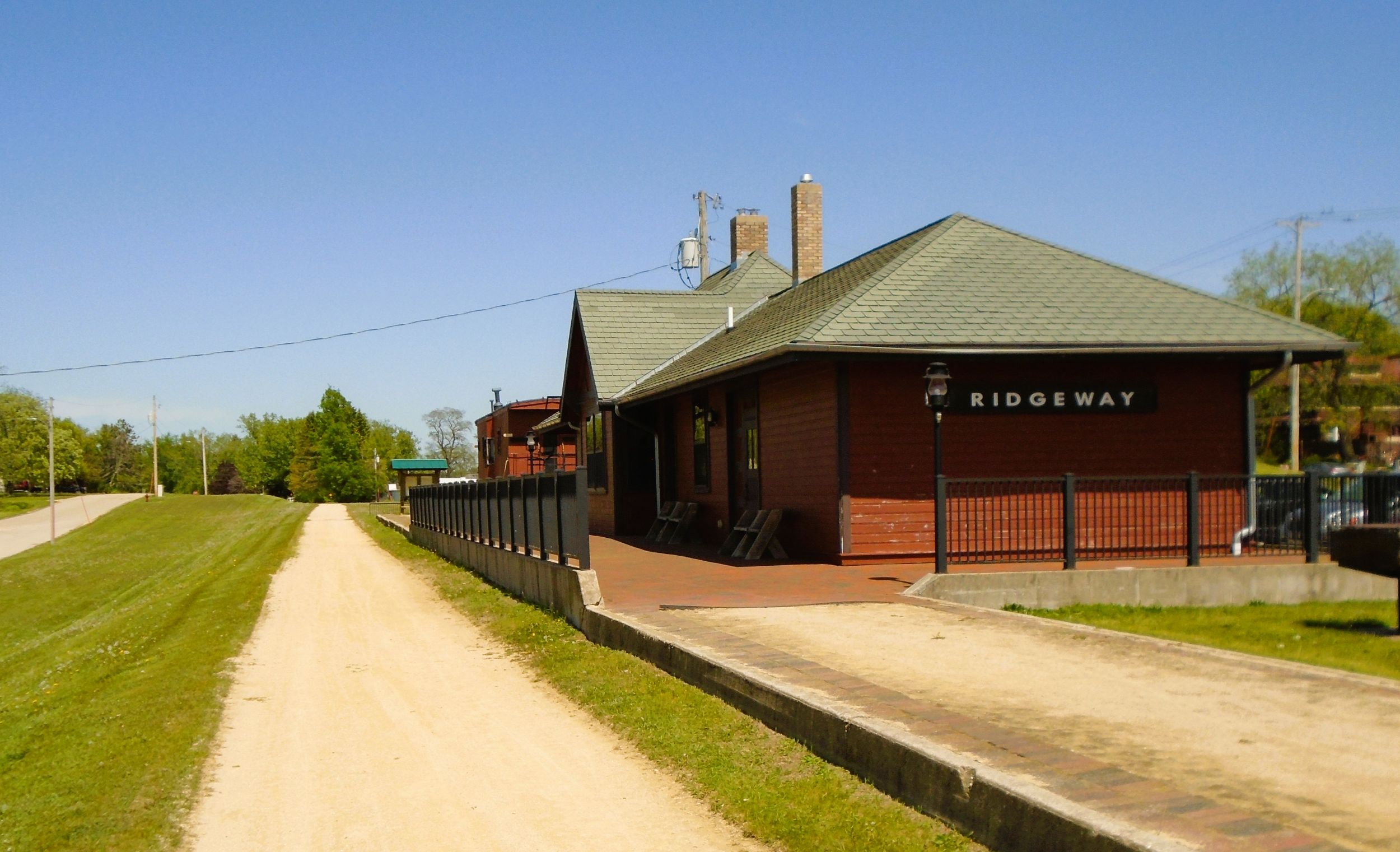
From Ridgeview Road, it is 1.6 miles to the trailhead in Ridgeway. Upon entering the village, bicyclists are greeted by a looming white water tower, recreational complex, and historic depot. The village park offers restrooms, playground, drinking water, and picnic shelter. Parking is located by the old depot, where there are park benches, a bike rack, and information kiosk. A few small businesses in town cater to trail-goers. On spring through autumn Sundays, a farmer’s market is held in Ridgeway right off the bike trail.
It is easy to reach the Ridgeway’s old depot trailhead by car. When driving west on U.S. Highways 18 and 151, exit right (north) on County Highway HHH. The road turns west and becomes Main Street. Drive 1.1 miles to the trailhead at the historic depot, north of Main Street and next to the water tower. When traveling eastbound on the U.S. highways, take exit 52 and follow County Highway HHH for two miles into Ridgeway to the trailhead.
The village of Ridgeway was settled in 1828 by J.B Skinner and other miners during the lead mining boom in southwest Wisconsin. By the 1840s and 1850s, Irish, Welsh, Norwegians, and Germans had made their home there. A disasterous fire ravaged the community in 1913. A new railroad depot was built that year to replace the 1883 structure. This depot is the only remaining one from the former Chicago and North Western Railway. A restored red caboose stands nearby, along with an interpretive marker conveying the depot’s history.
Ridgeway and the neighboring locality is known for its tales of a spook that haunted the community. Legend states that from 1840 to 1885, a ghost was seen on occasion along the old military road. Supposedly, the phantom’s appearance could change at will. Local anecdotes reveal that it appeared sometimes as one or two men, but also as domestic animals. Stories of apparitions have been handed down from generation to generation.
Nature enthusiasts may want to visit Ridgeway Pine Relics State Natural Area. From the intersection of County Highways HHH and H in Ridgeway, travel north on County Highway H for 0.6 miles to a small parking lot on the east side of the road. A trail on the west side of the road marked with a State Natural Area sign leads to the preserve. It features pine relicts set among high sandstone cliffs, rock outcrops, shallow caves, and rock shelters. These pine forests have lasted since the last glacier receded about 12,000 years ago.
Map of trailheads and addresses along this section of the trail.
The Military Ridge State Trail travels east from Dodgeville to Ridgeway over nine miles. The path follows the route of the old military road, cut by U.S. troops during the 1830s. It’s intriguing to travel the trail along its high ridge, and imagine soldiers advancing a road there through the frontier nearly 200 years ago, or think about the many trains of the Chicago and Northwestern Railway that chugged across the countryside until 1982. Adding to this nostalgic sentiment is the stunning scenery the path offers to its trail-goers.
Trail last ridden and documented in May, 2026.